When the electricity suddenly goes out, the first question is often simple: is only my apartment affected, or is there a wider grid problem? That distinction matters. A local fault in the breaker panel requires a different response from an outage affecting an entire neighborhood. A short five-minute check can usually help you classify the situation without touching dangerous electrical equipment.
Minute one is about safety. If you smell burned insulation, see sparks or smoke, notice water near electrical equipment, or hear unusual sounds from the breaker panel, do not touch anything. Switch off the main breaker only if it can be reached safely. If there is fire, smoke or immediate danger, leave the area and contact the appropriate emergency service. Never touch fallen power lines or damaged electrical equipment outside the home.
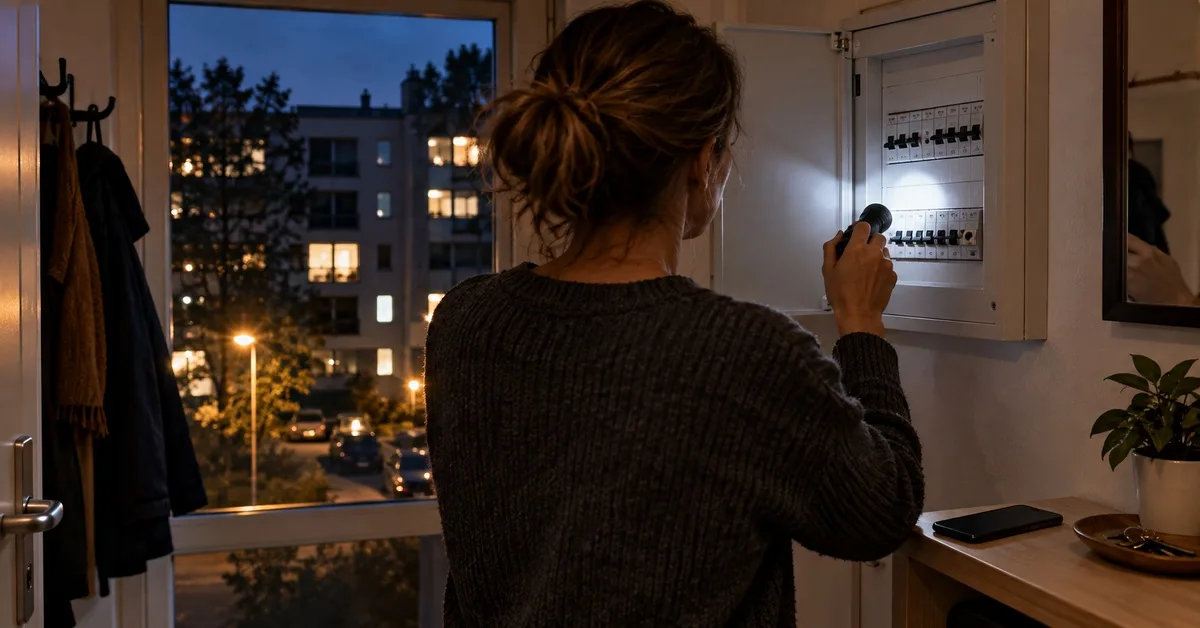
During minute two, check only controls intended for residents. Look at the household breaker panel to see whether a circuit breaker or residual-current device has tripped. If there is no burning smell, moisture or visible damage, a single reset attempt may be reasonable. If the breaker trips again immediately, leave it off and call a qualified electrician. Repeated resetting can make an existing fault more dangerous.
Minute three is for comparison. Check whether lights in the hallway work, whether neighbors also have no electricity, and whether streetlights or buildings across the road still have power. In a detached house, you can look outside from a safe window or doorway. There is no need to open communal electrical cabinets, meter boxes or technical rooms.
During minute four, use your phone while mobile service is still available. Open the official outage page or app of your electricity network operator and look for a known incident. Avoid relying mainly on rumors from social media. If the outage is not listed, report it through an official channel. Keep your address and customer number available in case they are requested.
Minute five is for interpretation. If only individual rooms or circuits are affected, the problem is probably inside the building. If the whole building is dark, the building supply or local feeder may be involved. If neighboring buildings and streetlights are also out, a network outage is more likely. This does not replace a professional diagnosis, but it helps you choose the next sensible action.
Once it is clear that the problem lies outside your apartment, protect your equipment. Switch off or unplug sensitive electronics and large loads so they are not unnecessarily exposed when voltage returns or fluctuates. Keep refrigerator and freezer doors closed. At least one lamp and one phone should remain ready for use.
People who depend on electrically powered medical equipment should not spend a long time investigating the cause. If the planned backup supply fails or available runtime becomes short, medical support or the person's established emergency plan should be activated early.
The key rule is: inspect, do not improvise repairs. Resident-operated breakers can be checked, but sealed meter compartments, service connections, substations and damaged power lines belong only in the hands of qualified professionals.
After the incident, note what happened and how quickly you identified the scale. Missing utility contact details, poorly labeled breakers or hard-to-find flashlights are weaknesses that can be corrected before the next outage.
Guides
General
17.09.2026
Power outage: the 5-minute check — home, building or grid?
A short, safe check helps determine whether the problem affects one circuit, the whole building or a wider grid area — without working on dangerous electrical equipment.