Many people keep all blackout supplies in one place: at home. That is logical, but not always enough. A power cut can happen while you are at work, in the car, shopping or visiting friends. Roads may be closed, public transport may stop or a building may temporarily become unreachable. In that situation, a perfectly stocked cupboard at home offers little immediate help. A simple solution is to keep a small second emergency kit at an independent location.
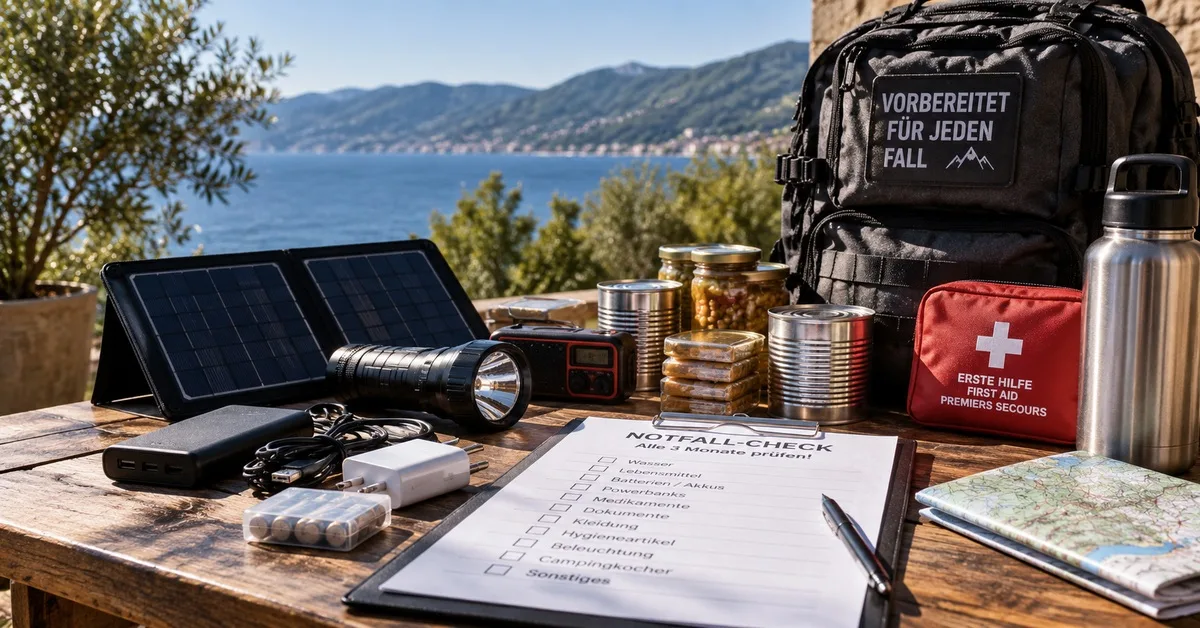
This second kit does not need to contain a full seven-day supply. Its purpose is to bridge the first few hours and help you get home safely or reach a previously agreed meeting point. Useful items include a compact torch, spare batteries, a power bank with the correct cable, some cash, a drinking bottle, a shelf-stable snack, a small first-aid kit, paper and pen, and important phone numbers written on paper.
Choose the storage location carefully. Possibilities include your workplace, a locker, an office, a workshop, the home of a close relative or, with limitations, your car. Vehicles can become extremely hot in summer and very cold in winter. Lithium batteries, medicines, some foods and water containers are not suitable for unlimited storage under those conditions. Anything kept in a car should tolerate temperature changes and be checked more often.
The key idea is redundancy rather than quantity. If every power bank, torch and document copy is stored in the same cupboard, they are useless when home is inaccessible. A small selection of essential items should exist twice. The second kit should cover light, communication, orientation, minor injuries, short-term thirst and the ability to pay cash for transport or an urgent purchase.
Documents need special care. Original passports or important certificates should not remain permanently in a vehicle. Paper copies of essential contact details or encrypted digital copies on protected storage are safer. A small card can list medicines, allergies and emergency numbers. Store only personal information that is genuinely necessary.
A second kit also needs a fixed inspection routine. Two to four times a year, check batteries, power bank charge, food, water containers and seasonal clothing. A light blanket may be useful in winter, while sun protection and extra fluids matter more in summer. If you use anything from the kit, replace it immediately.
The advantage is practical: you are no longer completely dependent on a single location. If the electricity fails while you are at home, you use normal household supplies. If you are away and cannot return, you still have light, energy, information and a minimum level of support.
This approach does not make blackout preparedness more complicated. It makes it more resilient. A small second kit costs far less than building another large stockpile and can be exactly what you need when the emergency begins somewhere other than the place where your main supplies are stored. Keep a small inventory list showing exactly what the second kit contains and when it was last checked. The storage location should remain reliably accessible while protected from theft. This backup is especially useful for people with long commutes, shift work or frequent travel.
Guides
General
05.09.2026
Keep a second emergency kit away from home: backup when your house is not reachable
The best supplies at home are little help if roads are blocked or a power cut prevents you from returning. A small second emergency kit creates practical redundancy.