When a grid operator announces a yellow or red alert, households get a rare advantage: the electricity is still on, but the risk of interruptions has increased. That period should be used to charge batteries deliberately. Instead of plugging in every device at once, use a simple priority plan. If the power later fails, the stored energy will then be available where it matters most.
Priority one is communication and lighting. Charge the cell phone as fully as practical and keep at least one reliable power bank in the household. Check a headlamp, flashlight and battery radio, and place the correct spare batteries beside them. If you use rechargeable cells, charge a complete set and store it separately from discharged batteries. In the dark, you can then tell immediately which batteries are ready.
Priority two covers devices with a special purpose. These may include medical aids, hearing devices, small coolers for temperature-sensitive medicines or essential communications equipment. If somebody depends medically on electricity, an ordinary power bank may not be enough. The correct backup solution and its real operating time must be worked out in advance. Manufacturer instructions and medical guidance always take priority over improvised solutions.
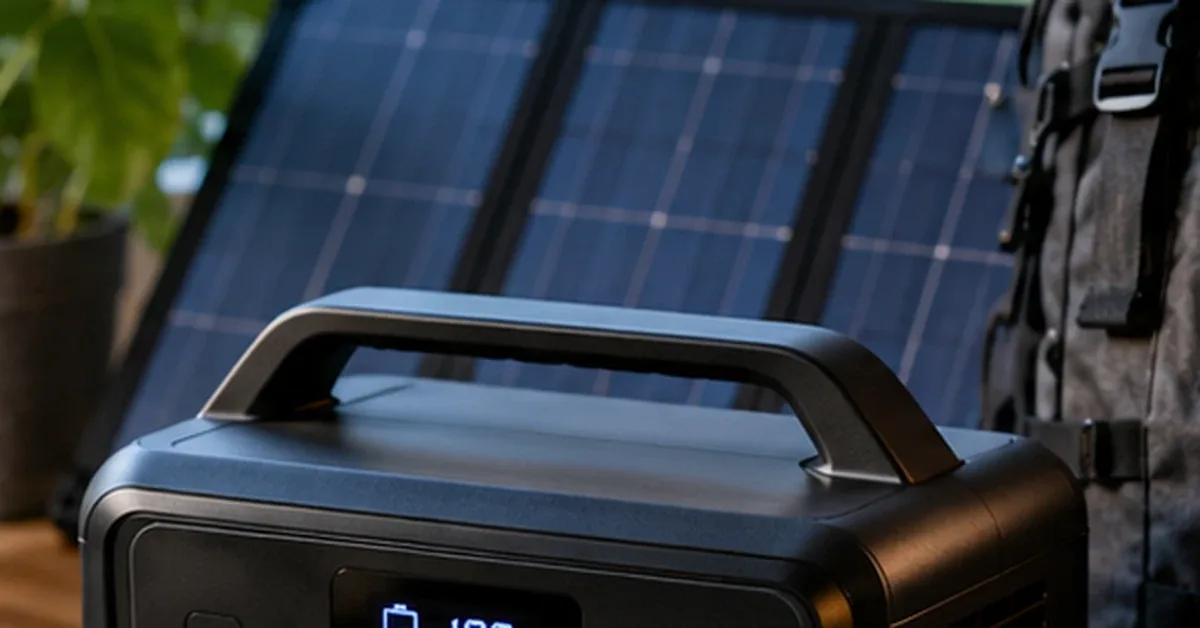
A portable power station can supply several devices, but it should not be connected completely empty shortly before a possible cut. During a grid alert, bring it to a high state of charge in good time. At the same time, decide which appliances will actually be powered later. Kettles, heaters and electric hotplates use large amounts of energy and can drain a small battery quickly. The same stored energy lasts much longer for lighting, communications, a router or small electronics.
If you have solar panels, check cables, adapters and the charge controller before a possible outage. The panel should be accessible and capable of being set up safely. Solar is useful backup, not a guarantee: cloud, rain, shade and time of day can greatly affect output. It is therefore better to use grid power for pre-charging while it is available and treat solar as a way of topping up later.
It also helps to keep a small charging box or a fixed location for emergency electronics. Keep charging leads, adapters, spare batteries and already charged power banks together. When an alert arrives, nobody has to search through several drawers. Damaged, swollen or unusually hot batteries do not belong in an emergency kit and should not continue to be charged.
Order matters as well. Charge devices that have no alternative power source first. Reserve batteries and comfort devices come afterwards. Several smaller power banks can be more useful than one large unit because they can be used separately or given to different people. Label them with capacity and the date of the last charge, and test them regularly.
During an announced shortage, avoid unnecessary high-power appliances as well. That alone will not solve the wider grid problem, but it prevents sockets, chargers and sensitive electronics at home from being loaded unnecessarily at the same time. Once an outage starts, unplug chargers so they are not left exposed to possible voltage fluctuations when supply returns.
The main point is simple: an alert is valuable preparation time. If you organize, prioritize and charge your energy sources early, you do not start a possible outage with ten per cent left on your phone. A clear charging plan costs little, requires no large stockpile and can make the first hours without grid power much easier.
Guides
General
23.09.2026
Use a grid alert as a charging window: prepare batteries before possible cuts
If the grid is still running but reserves are tight, it is time to charge: a clear plan keeps phones, lights and backup power available for longer.