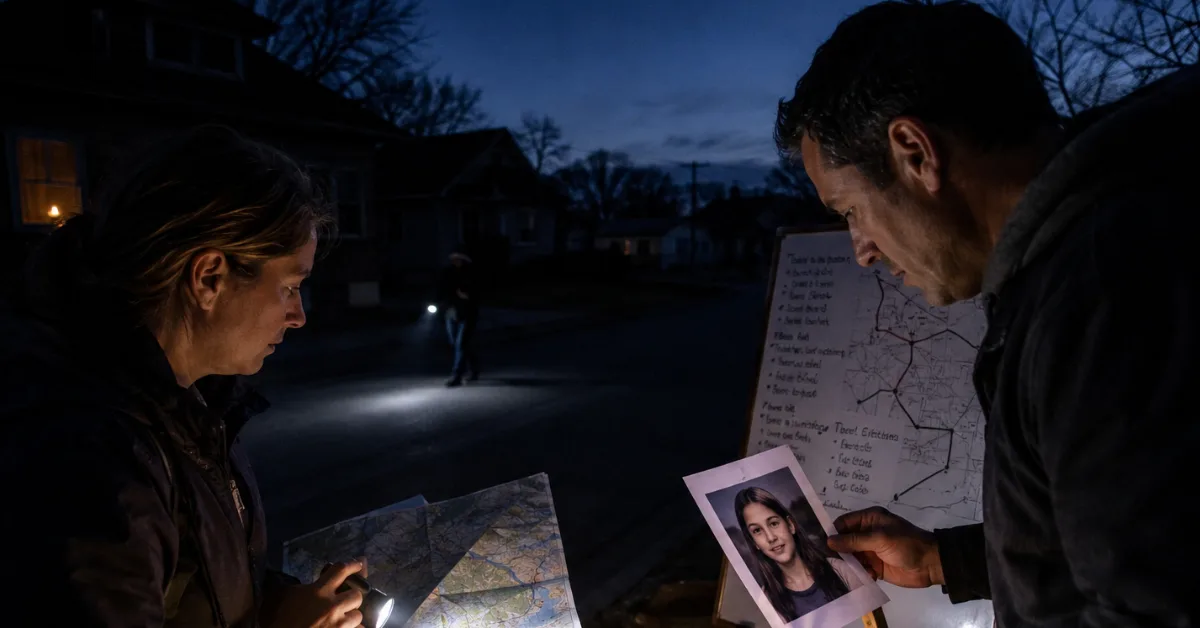
During a prolonged blackout, a simple communication problem can quickly become a serious missing-person situation. Mobile networks may fail, public transport can stop, traffic lights go dark and familiar routes may be blocked. When somebody does not return home as expected, the first instinct is often to leave immediately and search everywhere. That can make the situation worse. Several relatives may search different places at the same time, nobody knows which locations have already been checked, and eventually even the searchers themselves may become unaccounted for.
Start with a written search record. Note the person's name, age, clothing, distinguishing features, essential medication and, if possible, keep a recent photograph available. Record the last confirmed sighting with its exact time and location. “He probably stopped at the shops” is an assumption, not a verified lead. Keep confirmed information separate from guesses.
Next establish one reporting point. At least one person should remain there to collect information. It could be the home, a trusted neighbour's house or another safe public location. Do not change it spontaneously. Anyone leaving for or returning from a search sector reports the time, route and result there. This creates a simple paper search log.
Divide the surrounding area into small search sectors. Begin at the last confirmed location and check the most likely routes first: workplace, school, childcare, usual walking routes, familiar stops, friends and close relatives. Do not search randomly across the whole town. One clearly defined area that has been checked completely is more useful than ten places checked only partially.
Whenever possible, search in pairs. Two people can assist one another, spot hazards and bring information back more reliably. Each team should have a watch, torch, simple paper map and an agreed return time. If that time is exceeded, do not immediately launch another uncoordinated search. First establish why the team has not returned.
Also check hospitals, emergency treatment points, shelters, police stations, fire stations, community centres and official emergency assembly points. For children, include the school, childcare provider and their designated reunification locations. A facility may have taken somebody in even though the person could not contact family because communications had failed.
Leave information only in a controlled way. A note at an agreed message point can contain a name, time and destination. Do not display unnecessary personal information openly on the front door. Photographs and details of children should not be distributed indiscriminately. Once authorities or relief organisations coordinate an official search, information should flow through those channels.
Children, older people, people with dementia, health limitations or urgently needed medication require particular urgency. Inform police or responsible emergency services as early as possible rather than waiting for mobile networks and the internet to return completely. During large-scale disasters, Red Cross tracing and family-reunification services or the international Family Links Network may also assist.
Your own safety is the hard limit. Do not enter damaged buildings, tunnels, flooded areas, dark industrial sites or places with fallen or hanging power lines. A missing person does not need additional missing searchers. Pass observations about dangerous areas to emergency personnel.
Prepare this procedure before a blackout. A recent family photograph on paper, important addresses, usual routes, essential medical information and a simple street map need no battery. In an emergency, such a folder can save valuable time and turn a panicked search into a traceable, coordinated operation.
Sources and further guidance: American Red Cross – Contact and Locate Loved Ones; International Committee of the Red Cross – Reconnecting Families; CDC – Reunification with Children After a Disaster or Emergency.
Guides
General
11.08.2026
Someone missing during a blackout? Search systematically, not randomly
If someone fails to return home during a blackout, driving around without a plan wastes time and can put more people at risk. A last confirmed sighting, search sectors and a fixed reporting point keep the search organized.