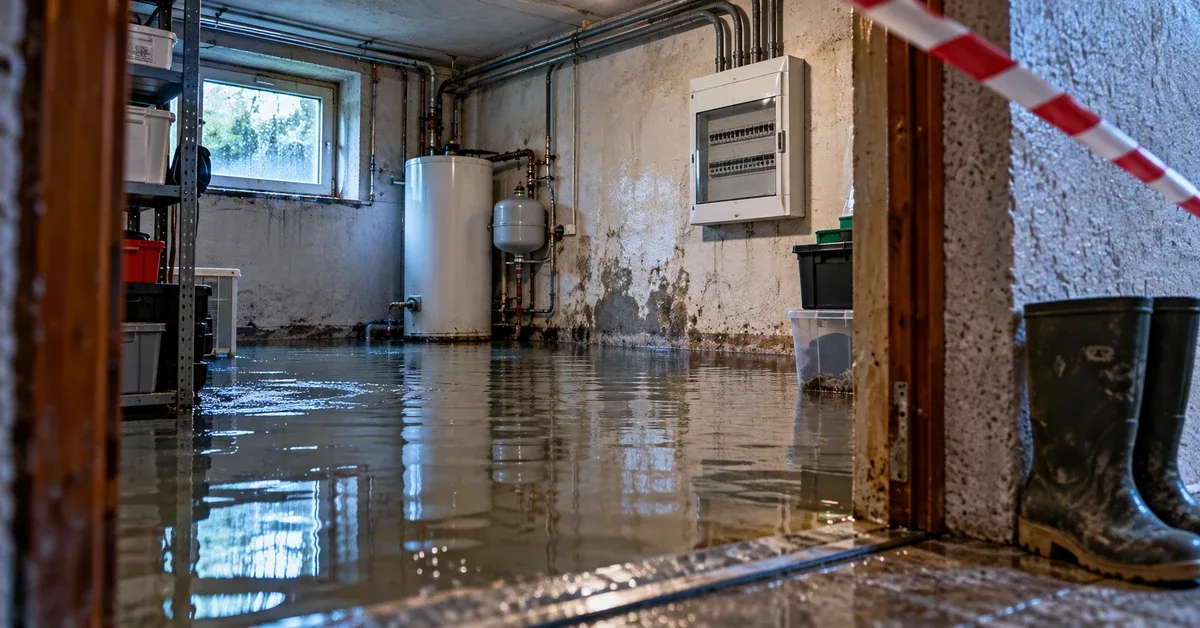
After heavy rain or flooding, one danger is easily underestimated: water and electricity may be present in the basement at the same time. A flooded basement is therefore not an ordinary cleanup area. Even if the rest of the house is dark, wiring, breaker panels, inverters, outlets or connected equipment may still be energized, or may suddenly become energized again when utility power returns.
The most important rule is simple: do not enter a flooded area until you know that the electrical supply to that area has been shut off and the space is safe. Water does not conduct electricity equally in every situation, but salts, dirt and building materials can make it conductive. If water is near electrical equipment, damaged insulation or a wet device can be enough to create a dangerous shock hazard.
Turn off the main power only if you can reach the main switch with dry feet and without touching water. If you would have to walk through standing water or lean across a wet surface, do not do it. Contact the utility, fire department or a qualified electrician instead. Personal safety is more important than protecting property.
After a flood, breaker panels, outlets, pumps, heating systems, inverters, batteries and other electrical devices should not simply be switched back on. Moisture can remain hidden inside. Mud and dirt may bridge contacts or cause corrosion. Equipment that looks dry on the outside may still be dangerous internally. A professional inspection before re-energizing is therefore advisable.
Portable generators do not automatically solve the problem. They must never be operated in a basement, garage or other enclosed space. Their exhaust contains carbon monoxide, an odorless gas that can be fatal. A generator belongs outdoors, well away from doors, windows and ventilation openings, while also being protected from rain and floodwater.
Before storm season, check what technology is stored in your basement. Keep power banks, batteries, flashlights, documents, power strips and mobile chargers off the floor. A higher shelf or a dry area on the ground floor can prevent important emergency equipment from becoming useless as soon as water enters. Extension cords should never be routed through wet areas.
If water enters the basement, document damage only from a safe distance. Photos may be useful for insurance or a landlord, but no picture is worth entering an electrically unsafe room. Wait until qualified personnel have declared the area safe.
After pumping out the water, allow the basement to dry thoroughly. Only then should the technical inspection begin. Outlets, distribution equipment and appliances that were submerged may need to be cleaned, tested or replaced depending on their design and exposure. Improvised drying with extension leads and fan heaters in a still-damp environment can create additional hazards.
The practical preparedness rule is therefore: treat a flooded basement as an electrical danger zone. Do not enter it, disconnect power only from a safe and dry location, do not re-energize wet equipment, and store important emergency technology above likely flood level. This prevents a flood emergency from becoming an electrical accident as well.
A useful household rule is that nobody enters a flooded utility room alone and nobody resets breakers until the cause and condition of the electrical system are understood. Especially at night or under stress, a clear agreement helps prevent dangerous snap decisions and ensures that professionals check the system before power is restored.
Guides
General
27.09.2026
Flooded basement: recognize electrical danger and respond safely
Flooded basement: recognize electrical danger and respond safely.