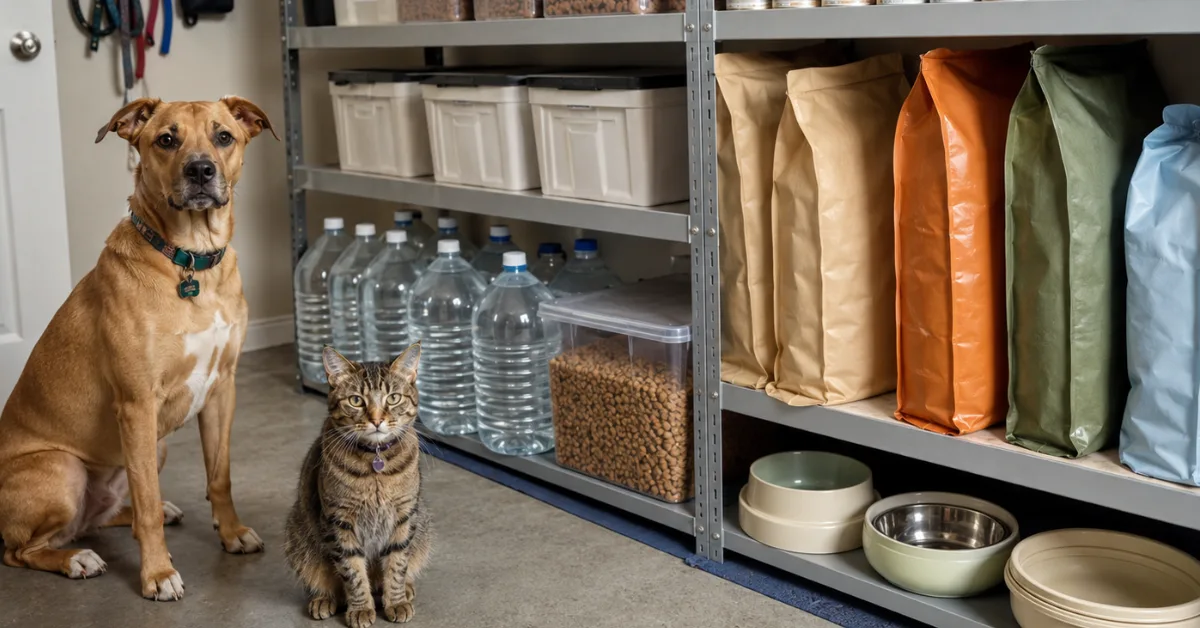
Blackout preparedness often focuses on water, rice, canned food and batteries, while food for dogs and cats is easily forgotten. A prolonged power cut can make supplies difficult to obtain: shops may remain closed, card payments may fail, and chilled or frozen pet food can spoil. Anyone with pets should therefore include a dedicated food reserve in their emergency planning.
A practical minimum is a seven-day reserve; if you have enough space, planning for around two weeks gives more flexibility. Quantity is not the only issue: your pet should already know and tolerate the food you store. A blackout is a poor time for an abrupt diet change. Calculate the reserve from the normal daily ration and add a small buffer. If your animal needs specialist food, has allergies or follows a veterinary diet, replenish the reserve early and rotate it regularly.
Dry food is well suited to emergency storage when it is handled correctly. The FDA recommends storing dry pet food and unopened canned food in a cool, dry place below 80 °F, or about 27 °C. Keep dry food in its original packaging whenever possible. The bag helps protect the product and retains the lot number, best-before date and manufacturer information. Better still, place the entire closed bag inside a clean, tightly sealed storage container. This adds protection against moisture, insects and rodents. Do not simply pour a new bag on top of old crumbs. Clean and completely dry the container between bags.
Do not store pet food directly on a damp floor, beside cleaning chemicals or in places that become very hot, such as a hot shed, vehicle or poorly insulated attic. Check the reserve regularly for damaged packaging, moisture, mould, unusual odors and signs of pests. Use the oldest food first and replace it continuously with new packs. This creates a rotating supply instead of an emergency stockpile that is forgotten for years.
Wet food in cans or pouches is also useful, particularly because it contributes extra fluid. During a blackout, smaller portion sizes are often more practical. An opened can that would normally require refrigeration can quickly become a problem when the fridge is not working. Choose portions that your dog or cat can finish in one meal or within a short period. Partly used wet food should not be kept for later when safe refrigeration cannot be guaranteed.
Do not forget water. Dry food increases the need for drinking water, while cats often obtain part of their fluid intake from wet food. The household water reserve should therefore include an additional amount specifically for pets. Keep bowls, a manual can opener and any necessary medication together with the pet emergency supplies.
A good pet-food reserve is not complicated: familiar food, correctly stored, regularly rotated and in a quantity suited to your animal. That simple preparation prevents a power outage from becoming an avoidable feeding problem for your dog or cat.
Sources: U.S. Food and Drug Administration (FDA), Proper Storage of Pet Food & Treats; American Veterinary Medical Association (AVMA), Pets and disasters; AAFCO, Product Handling Safety.
Guides
General
09.08.2026
Storing pet food properly: building a blackout supply for dogs and cats
Dogs and cats also need a well-planned blackout supply. Here is how to store dry and wet food safely, rotate it and avoid spoilage when refrigeration is unavailable.