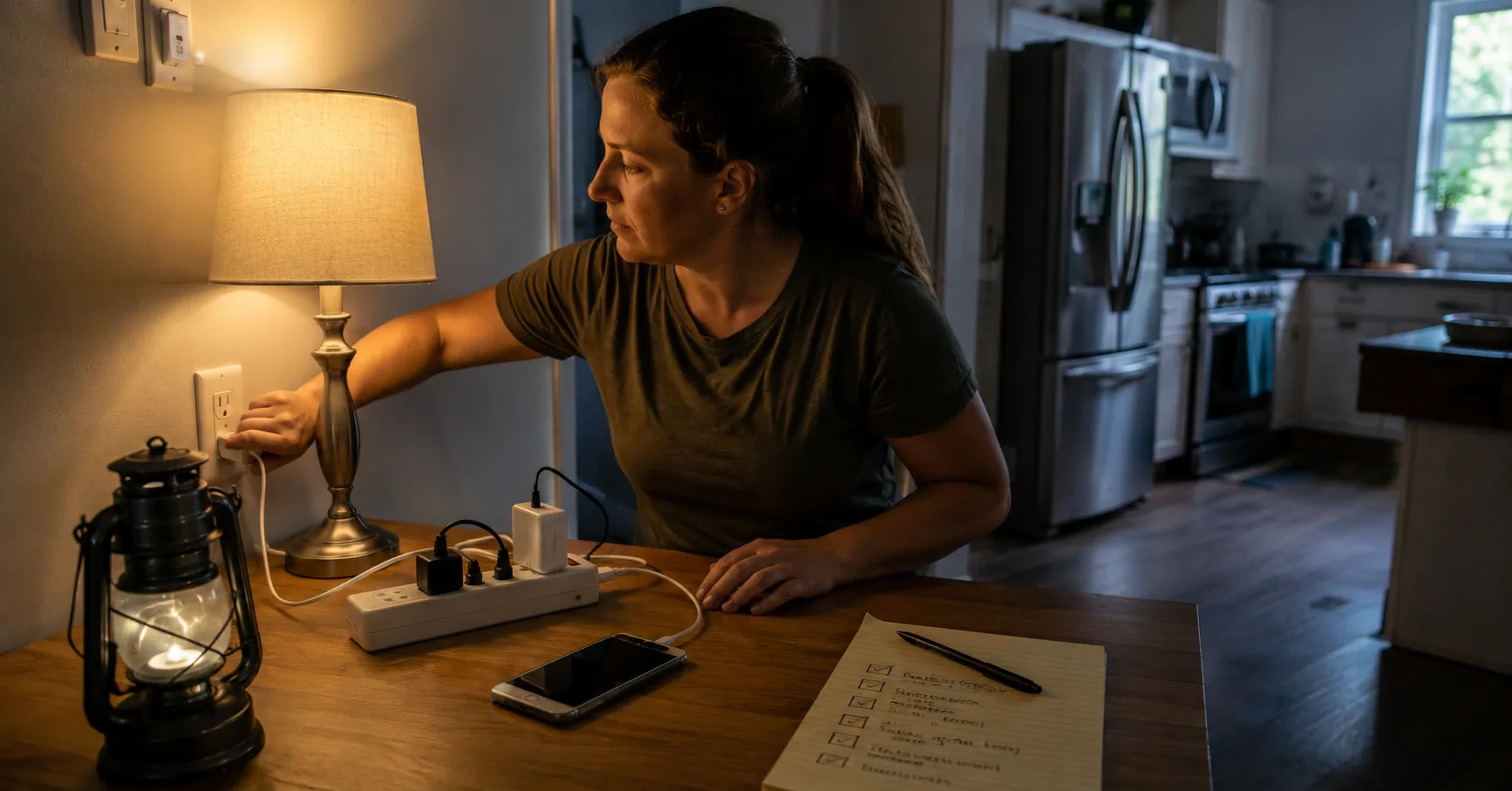
When lights and sockets start working again after a blackout, it is tempting to switch everything back on immediately. That is not always a good idea. After a major grid disturbance, supply may still be fragile while utilities reconnect lines and sections step by step.
Start with lights, phone chargers and other small loads. Watch for a few minutes to see whether supply remains stable. Refrigerators and freezers can then resume normal operation.
Delay large loads where possible. These include electric water heaters, washing machines, dryers, dishwashers, ovens, air conditioning, electric heating and powerful pumps. If thousands of homes restart such equipment at the same time, a large restoration demand spike can develop.
After a major outage, wait roughly 10 to 20 minutes before reconnecting non-essential high-power appliances when practical. Always follow any different instructions from the local utility.
Also check appliances that were switched on before the outage. Cooktops, irons, space heaters and tools must not restart unnoticed. Reconnect sensitive electronics once the supply appears stable.
If power fails again shortly afterwards, switch large loads off and wait for utility information. Repeated rapid cycling can also be hard on compressors in refrigerators and air conditioners.
The key rule is simple: power returning does not necessarily mean the grid is fully stable. Restore small and essential loads first, then larger appliances with a short delay.
Guides
General
25.08.2026
Power back on? Why you should not switch everything on at once
After a blackout the grid may still be fragile. If many households restart large loads at once, a new demand spike can develop. A staggered restart is safer.