When the power suddenly goes out after a severe summer storm, everything feels urgent at the same time: the air is hot, your phone battery starts dropping, the refrigerator becomes a worry and outside there may be downed wires, broken branches or flooded roads. That is why you do not need a complicated disaster manual in that moment. You need a clear routine for the first 30 minutes. That half hour often decides whether the rest of the outage stays manageable or turns into chaos.
Minutes one to five: stay indoors unless there is immediate danger. Check briefly whether only your home is affected or the whole street is dark. If you smell smoke, gas or burned electrical equipment, leave the area and call emergency services. If power lines are down, keep your distance and warn others. No photo or video is worth stepping close to a damaged power line.
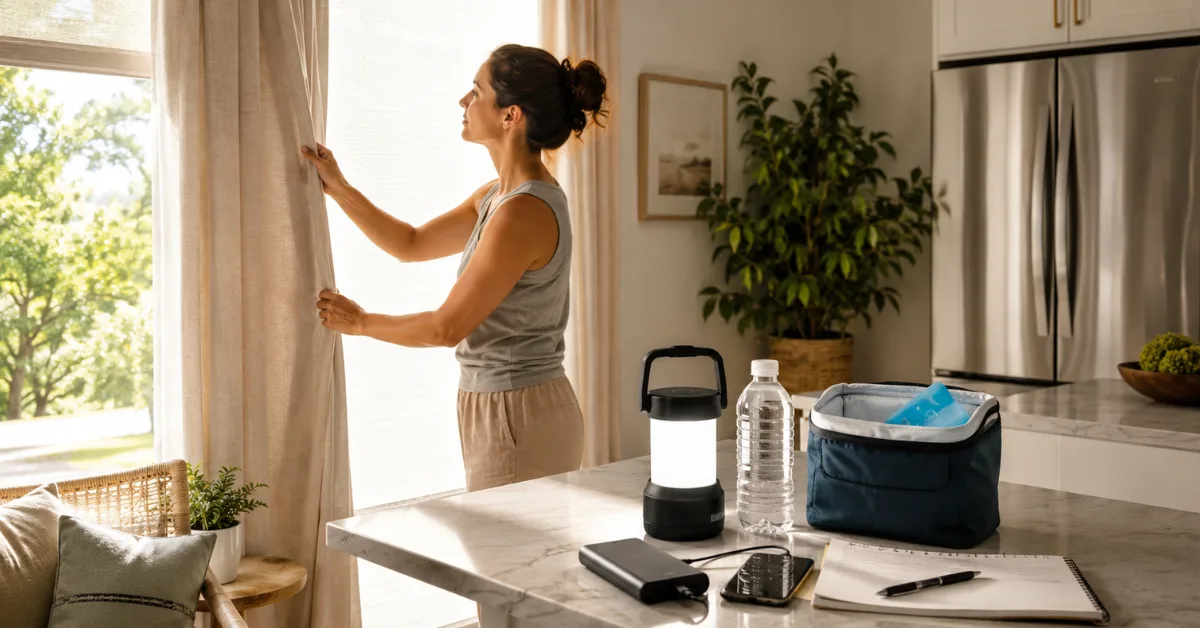
Minutes five to ten: turn off or unplug sensitive equipment. Computers, televisions, routers, air conditioners and chargers do not all need to start at once when power returns. Put a small LED lamp, flashlight or headlamp on the table. Candles are the weaker choice when children, pets, tired people or storm conditions are involved.
Minutes ten to fifteen: choose one cool room. Close curtains, blinds or shutters on the sunny side. Do not keep opening doors and windows if hot air is outside. Use the coolest corner of the home, drink water in small amounts and avoid unnecessary movement. Heat becomes dangerous for older people, babies, sick people and pets faster than many households expect.
Minutes fifteen to twenty: keep the refrigerator and freezer closed. Do not look inside out of curiosity. A closed refrigerator can keep food cold for about four hours. A full freezer lasts much longer, often up to 48 hours, while a half-full freezer lasts about 24 hours. Write down the time the outage started. That note helps later when you decide what is still safe and what must be thrown away.
Minutes twenty to thirty: organize communication. Put one phone into power-saving mode. Use mobile data only briefly, send text messages instead of long calls and follow updates with a battery radio or hand-crank radio. Report the outage to the utility if possible, but do not block emergency lines just to ask when the lights will come back.
Most important: generators, camping stoves, charcoal grills and gas appliances never belong inside an apartment, house, garage, poorly ventilated balcony or partly enclosed space. Carbon monoxide is invisible, odorless and deadly. Use these devices only outdoors, far away from doors, windows and vents.
After the first 30 minutes, the goal is not heroics. The goal is rhythm: drink, cool down, stay informed, keep the refrigerator closed, check briefly on neighbors and avoid unnecessary risks. A summer power outage does not have to become a disaster. But without a plan, heat, darkness and uncertainty can turn into stress very quickly.
Sources: Ready.gov, CDC and FDA, accessed 05.07.2026.
General preparation
General
05.07.2026
Summer power outage after a storm: the 30-minute home plan
When storms and heat knock out the power, the first minutes matter. This plan helps you organize cooling, water, phones, food and safety right away.