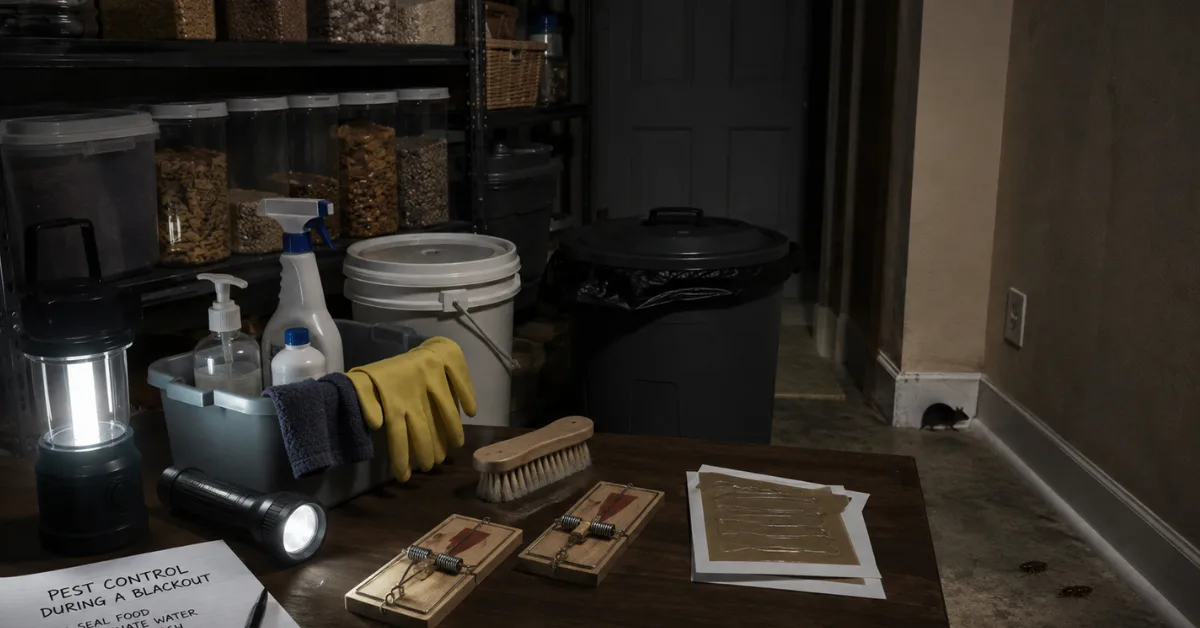
A blackout creates ideal conditions for pests: refrigerators warm up, food spoils faster, trash may remain indoors for longer, and open windows or doors give flies, cockroaches, ants and rodents new ways into the home. Spraying poison indiscriminately may make the situation worse. The sensible plan is to remove food, eliminate water, close entry points and use only targeted control.
Start in the kitchen. Dry supplies such as rice, flour, oats, pasta, sugar, pet food and spices belong in tightly closing containers made of sturdy plastic, glass or metal. Thin original packaging does not reliably stop moths, beetles or mice. Inspect every packet for holes, webbing, larvae, droppings or gnaw marks. Infested food should not be sorted in an attempt to save part of it; seal the entire product and dispose of it.
Treat waste as a hazard of its own. Food scraps, spoiled refrigerated food and used packaging should go immediately into strong, tear-resistant bags. Press out the air, tie the bags securely and place them in a container with a firm lid. If trash collection stops, keep that container shaded, as cool as possible and clearly away from living and food-preparation areas. Flies and rats must not have free access to it. Do not pour liquid waste into open buckets or onto the ground.
Remove water sources. Dry the sink, countertops and floor after cleaning. Repairs may not be possible during a blackout, but a dripping pipe can be controlled temporarily with a collection container. Empty the water regularly and clean the container. Do not leave pet bowls out overnight. Open bottles, cans, plant saucers and rainwater in small containers can also attract insects or provide breeding places for mosquitoes.
Close entry points before setting traps. Check gaps under doors, damaged insect screens, openings around pipes, ventilation grilles and cracks behind cupboards. Small holes can be secured temporarily with metal mesh, steel wool or sturdy covers. Reduce cardboard boxes, paper piles and loose bags because they create hiding places and make inspection harder.
For a few flies, a fly swatter, sticky trap or fine mesh is often better than spraying an entire room. Enclosed bait stations for ants and cockroaches should be used only as directed and kept away from children and pets. For mice, mechanical snap traps placed along walls are usually easier to control than loose poison. Check traps daily and never touch dead animals or droppings with bare hands.
Rodent droppings and urine must not be swept or vacuumed while dry. Ventilate the area, keep children and pets away, wear gloves and wet the contamination with a suitable disinfectant according to its instructions. Pick everything up with disposable towels, seal it in a bag and then clean hands and equipment. Discard food that may have been in contact with rodents.
Never mix different pest-control products or use more than the label states. Sprays do not belong near food, drinking water, open flames or improvised cooking stations. With a heavy infestation, unknown animals, several rats or dangerous nests, professional help is safer than experimenting in a dark home.
Prepare a small pest-control kit before the blackout: sealed food containers, strong trash bags, containers with lids, gloves, paper towels, disinfectant, a fly swatter, suitable traps, metal mesh, a flashlight and adhesive tape. Cleanliness and barriers work immediately, require no electricity and prevent a supply failure from becoming an additional health problem.
Sources: US Environmental Protection Agency, Do’s and Don’ts of Pest Control and Smart Pest Control to Protect Your Health; Centers for Disease Control and Prevention, Controlling Wild Rodent Infestations.
Guides
General
05.08.2026
Pests during a blackout: Protect food and your home
Failed refrigeration, accumulating trash and open windows attract pests. Cleanliness, sealed containers, barriers and safe traps keep the situation under control.