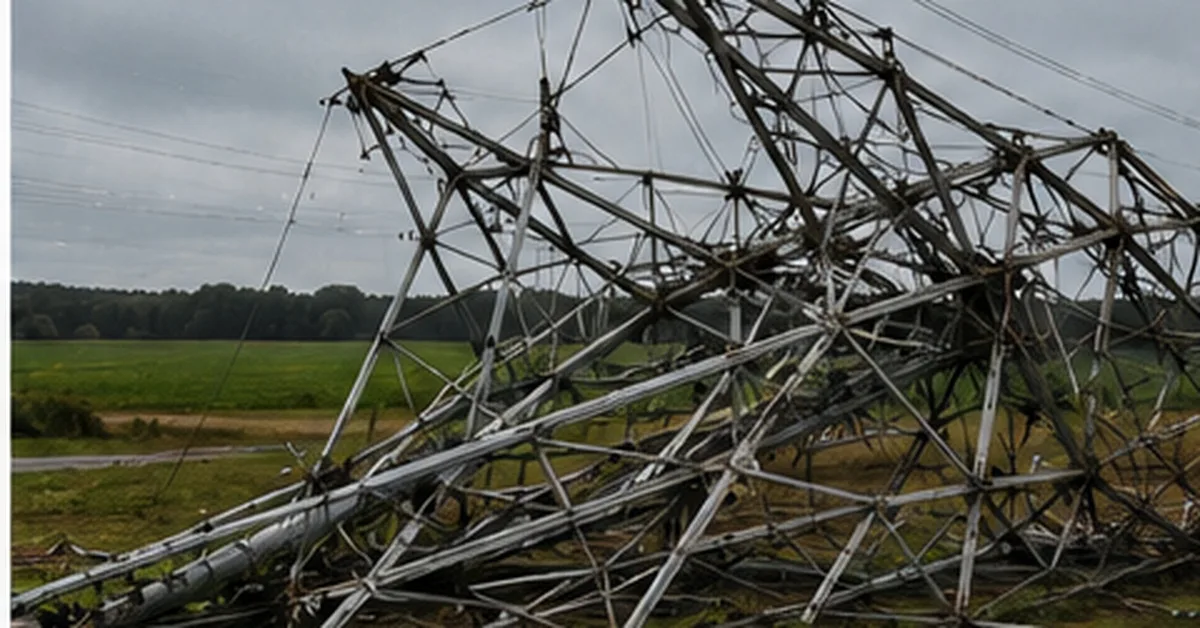
On Sunday, August 30, 2026, tens of thousands of people in San Antonio, Texas, were still without electricity after a violent storm struck the city on Friday night. The system brought powerful straight-line winds, heavy rain and widespread tree damage. CPS Energy said about 26,000 customers remained without service on Sunday morning and crews were still working through hundreds of active outages. At the peak, well over 100,000 customer connections had lost power, while other local reports placed the total affected during the storm as high as roughly 250,000.
Damage to electricity infrastructure was extensive. CPS Energy had responded to more than 600 reports of downed or damaged wires by Sunday. Crews also faced a large number of tree-removal jobs because branches and fallen trees were blocking lines or damaging poles. The utility repeatedly warned residents to stay away from fallen power lines and to treat every wire as energized, even when it appears harmless.
The consequences were especially visible on the roads. City officials said more than 100 traffic signals were completely offline on Sunday morning, while around 40 others were operating in flashing mode. That quickly turns a power outage into a traffic and safety problem. Intersections without normal signals create congestion, uncertainty and longer travel times for emergency services, repair crews and ordinary drivers.
The city opened resilience hubs and other cooling locations. These facilities offered residents a safe, air-conditioned place as daytime temperatures again climbed above 30 degrees Celsius. CPS Energy advised customers who still had no electricity to make plans to stay somewhere cool and safe overnight. Officials warned that restoration would take several more days because many faults required individual field repairs rather than one central fix.
The disruption spread into everyday services. Some schools and public buildings still lacked power, businesses had to alter operations and dark intersections made travel more difficult. Longer outages also increase the risk of spoiled food, unusable electric garage doors, unreliable internet and problems with medical equipment or refrigerated medicines.
San Antonio shows how a local storm can become a broad infrastructure emergency without any collapse of the wider regional grid. Hundreds of individual line and tree failures can take longer to repair than one central technical fault. Household preparedness therefore needs to cover several days and include mobility, heat, communication and safe routes, not merely flashlights and batteries.
The number of customers without power is only part of the picture. What matters is which systems fail together. A household may regain electricity while roads remain blocked, signals stay dark or communications remain unreliable. A practical emergency plan should therefore include alternative routes, meeting points, cooling options and offline contact information.
Residents in an affected area should follow official city and utility updates, avoid downed wires, reduce unnecessary driving and know where cooling or resilience facilities are located. When power, traffic signals and communications are disrupted at the same time, a technical outage rapidly becomes a whole-community problem.
Sources: CPS Energy, City of San Antonio, Axios San Antonio and MySA, updates published August 30, 2026.
Latest updates
General
31.08.2026
San Antonio: tens of thousands still without power after storm as traffic lights and lines remain damaged
After the severe storm of 28 August, tens of thousands of customers in San Antonio were still without power on Sunday. Hundreds of lines were damaged and more than 100 traffic signals were offline.