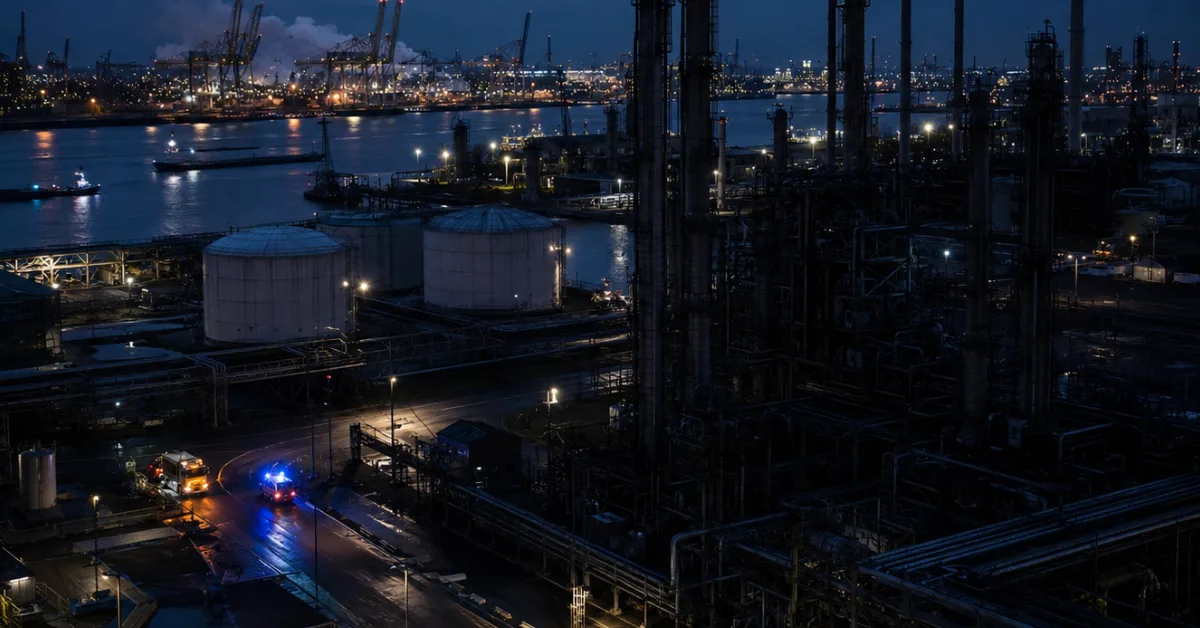
Europe's largest seaport had an unsettling Thursday. Several power outages were reported across the Port of Rotterdam, and the electricity supply to ExxonMobil's refinery was temporarily interrupted. At almost the same time, an explosion shook a facility operated by energy trader Gunvor. One person was killed and six others were injured. One point is crucial, however: according to the port and local safety authorities, the power outages and the explosion were not connected.
Even so, the events show how sensitive a modern energy and industrial hub can be when the electricity supply is disrupted. Rotterdam is not just another industrial estate. It is Europe's largest port and a major gateway for crude oil, fuels, liquefied natural gas and other energy products. Large refineries operated by companies including Shell, BP, ExxonMobil and Vitol are located there. A loss of power at such a site therefore means far more than dark offices or lights going out.
Reuters reported that the sprawling port experienced several power outages during the day. ExxonMobil confirmed a power interruption at its refinery, which has a processing capacity of about 191,000 barrels per day. The company later said the problem had been resolved and operations were back to normal. ExxonMobil declined to confirm a Wood Mackenzie alert cited by Reuters that said all monitored units at the refinery had shut down.
There was also unusual movement at the Gate LNG terminal. Data from European gas transmission group ENTSOG showed a temporary fall in gas send-out followed by volatile flows. It was initially unclear whether this was actually related to a power outage. The port said the LNG terminals had not been affected by the explosion.
The separate explosion at Gunvor was the most dramatic event of the day. It happened at around 11:30 a.m. during maintenance work on a petroleum-products storage tank. One person died and six were injured. Police are investigating the cause, and there was no immediate indication of sabotage. Because the incidents occurred on the same day inside the same vast industrial complex, a connection may seem obvious at first glance. Authorities explicitly rejected that conclusion and said the power problems were unrelated to the blast.
The situation on Europe's gas market added to the sensitivity. Reuters noted that Dutch gas storage sites were only around 40 percent full ahead of winter. A prolonged disruption at an important import or processing facility would therefore draw close attention. Shell, however, said its operations at the port were unaffected by the explosion.
Rotterdam is a sensitive node in Europe's energy supply system. The Gate terminal in particular is an important entry point for liquefied natural gas into north-western Europe. Any extended disruption involving refineries, terminals or electricity supply would therefore be watched closely by energy markets.
For households, the story carries a simple lesson: dependence on electricity does not end at the wall socket. Ports, refineries, tank farms, pumps, communications systems and transport chains also need reliable power. A local failure at the wrong place can therefore have consequences far beyond the site immediately affected.
In Rotterdam, the power problem appears to have been resolved quickly. But the day shows how tightly energy supply, industry and infrastructure are linked, and how rapidly technical problems at a strategically important location can attract attention across Europe.
Source: Reuters, 13 August 2026, “Blast at Rotterdam port energy facility kills one person”.
Latest updates
General
14.08.2026
Alarm at Europe's largest port: power outages hit Rotterdam refinery
Several power outages hit the Port of Rotterdam. ExxonMobil reported an interruption while a separate deadly explosion added to the tension.