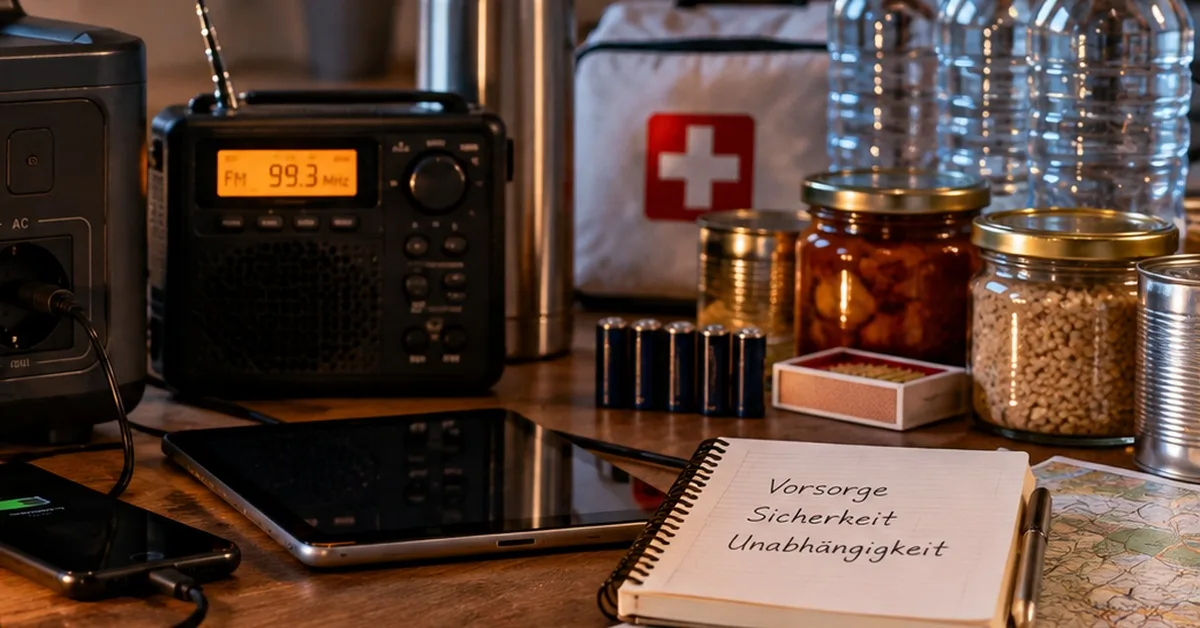
During a power outage, most people instinctively reach for a smartphone: open a map, find a pharmacy, contact family or locate a shop. That habit can become a weakness when mobile networks, internet access or digital map services are disrupted. A simple paper emergency map for your own neighbourhood is therefore useful. It costs almost nothing, needs no electricity and can be surprisingly valuable during the first hours of a blackout.
Start with a current street map or print a section of your local area. Do not make the map too large. A radius of five to ten kilometres around your home is enough for most situations. Mark your home clearly first.
The most important entry is an agreed family meeting point. If calls and messaging fail, everyone should know where to go when getting home is impossible. This could be a relative’s house, community centre, school or another easy-to-find location. A second meeting point outside the immediate neighbourhood is useful in case roads are blocked or a local incident makes the first place inaccessible.
Next, mark possible water sources. This does not mean that every marked source is automatically safe to drink. Include known public distribution points, wells, service stations, shops or facilities where water may be available during an emergency. Add a note indicating whether the source normally provides drinking water or whether treatment would be required.
Then add medical locations. Mark a pharmacy, doctor, clinic and preferably a second pharmacy. During a large outage, the closest location may be closed or unable to process electronic prescriptions. Having an alternative already marked saves time. Anyone who relies on regular medication should also keep drug names, doses, phone numbers and useful opening information on paper.
Food and cash access also belong on the map. Mark two or three grocery stores, a market and, where useful, banks or cash machines. ATMs may not work during power or data failures. The locations can still be useful once individual areas regain service.
The fifth category is communication. Mark police, fire services, municipal offices or known public information points. During prolonged outages, authorities may establish locations where residents can receive updates, water or assistance. Add important landline numbers and emergency numbers directly to the paper. Do not keep every critical contact only inside the phone.
Draw two safe walking routes to the most important locations. Prefer streets you already know. Avoid routes that depend on lifts, electronic gates or poorly lit underpasses. During darkness and failed street lighting, the shortest route may not be the safest route.
Keep the map with a small flashlight, pen and some cash in a fixed, easy-to-reach place. Put a second copy in the car or emergency bag. Every household member should know where the map is stored and what the markings mean.
Test the map once in daylight. Walk one of the selected routes and check whether streets, entrances and facilities are still accessible. Update the map at least once a year and after moving home.
A paper map does not replace supplies or a communication plan. It solves one very specific problem: when digital navigation disappears, you still know where you are, where you can go and what alternatives are available.
Guides
General
11.09.2026
Paper emergency map: find help when phones and internet fail
If mobile service, internet and digital maps fail, a prepared paper map still works. Mark meeting points, water, medical help, food, information points and safe walking routes.