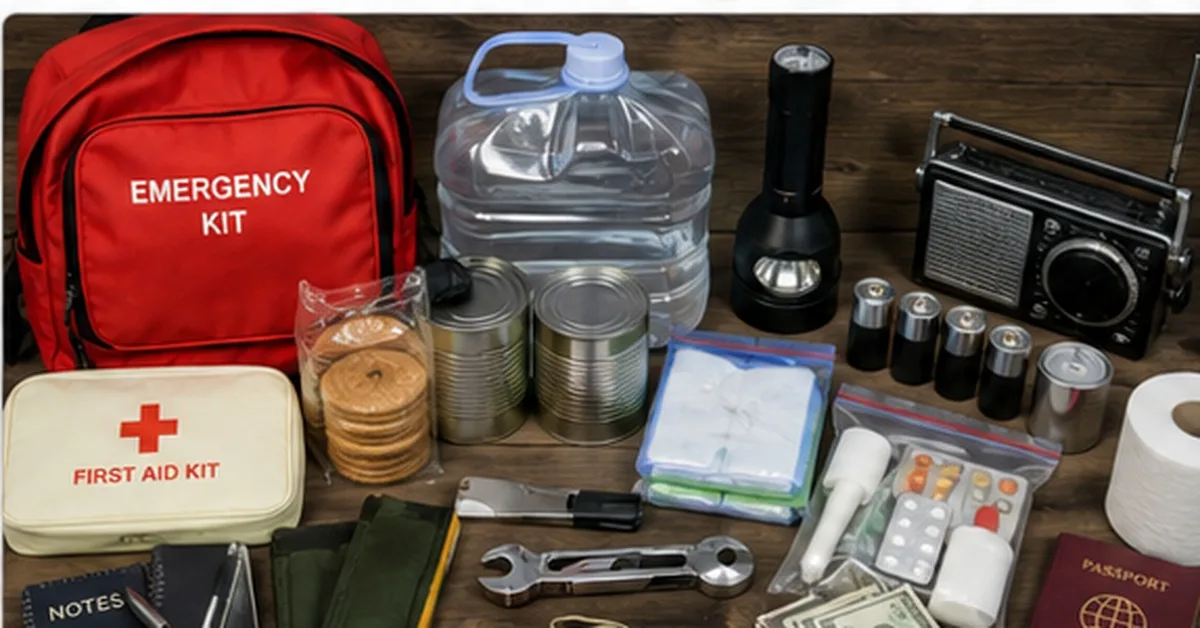
An emergency backpack can create a reassuring sense of preparedness. The problem starts a few months later: batteries discharge, water and food age, prescriptions change, documents become outdated and children grow out of the clothing that was packed. A useful go-bag therefore needs to be inspected regularly rather than packed once and forgotten.
A practical interval is every three months and again before a forecast period of severe weather. Put the entire contents on a table and start with the backpack itself. Check that it is dry, clean and complete and that zips, buckles, straps and carrying handles are undamaged. A bag that cannot be carried safely is not an emergency solution.
Next inspect water and food. Check best-before dates, seals and packaging for leaks, swelling or damage. Rotate older items into normal household use before they expire instead of throwing them away. Pack foods that can be eaten without cooking or with very little water. With bottled water, an intact, clean container matters just as much as the printed date.
Then test light and power. Switch on every flashlight briefly, inspect batteries for corrosion and fully charge power banks. Confirm that the correct charging cables are still in the bag; after replacing a phone, an old connector may be useless. Test a small battery radio as well. Spare batteries are best kept in their packaging and away from loose metal objects.
Review personal items. Medicines, glasses, hearing-aid batteries and hygiene supplies must match the people who will actually use the bag. Children quickly outgrow clothing and footwear. Adjust the contents for the season by adding a rain layer, warm clothing, sun protection or a hat. The aim is not to carry a wardrobe, but to have a workable reserve if the household has to leave quickly.
Documents need their own check. Copies of identification, insurance information, important telephone numbers and medical details should be current and protected from water. Sensitive papers should not sit loose in an outside pocket. If you carry an encrypted USB drive, make sure it still works and that the password can actually be recovered.
Finally lift the backpack and carry it for several minutes. If it is too heavy, it may be left behind when it is needed most. Remove unnecessary duplicates and, in a multi-person household, distribute weight sensibly. Everyone should know where the bags are stored and which one belongs to them.
Write the inspection date on a small card inside the bag and put the next check in the calendar. Ten to fifteen minutes every three months is usually enough. That simple routine turns a one-time shopping list into equipment you can still rely on half a year later.
Also confirm that a small paper list of emergency contacts is still current. Numbers for family, doctors, schools, insurers and local assistance can change. An outdated list may be almost as unhelpful as a flat battery. After any real use, perform a fresh inspection immediately instead of waiting for the next calendar date.
Guides
General
04.09.2026
Check your emergency backpack: keep equipment usable months after packing it
A packed go-bag only helps if water, food, batteries, documents and clothing are still suitable. A short three-month inspection keeps it genuinely ready.