After a storm or flood, it is tempting to turn the electricity back on as soon as utility power returns. That can be dangerous. If floodwater, mud or heavy moisture reached electrical installations, the home's system should not simply be energized again.
The most important rule is simple: never step into water to reach a breaker panel, outlet or electrical appliance. Water may be energized even when there is no visible sign. If the main disconnect can only be reached through a wet or flooded area, stay away and contact emergency services, the utility or a qualified electrician.
If you safely switched the power off before water entered, leave it off while electrical components are wet or contaminated. This includes breaker panels, subpanels, outlets, switches, wiring connections, heat pumps, heating equipment, inverters, battery storage systems and permanently connected appliances.
Even after the water is gone, a dry-looking surface does not automatically mean the system is safe. Moisture can remain inside enclosures, cables, terminals and electronics. Mud and contaminated water can leave conductive deposits that later cause short circuits, leakage current or fires.
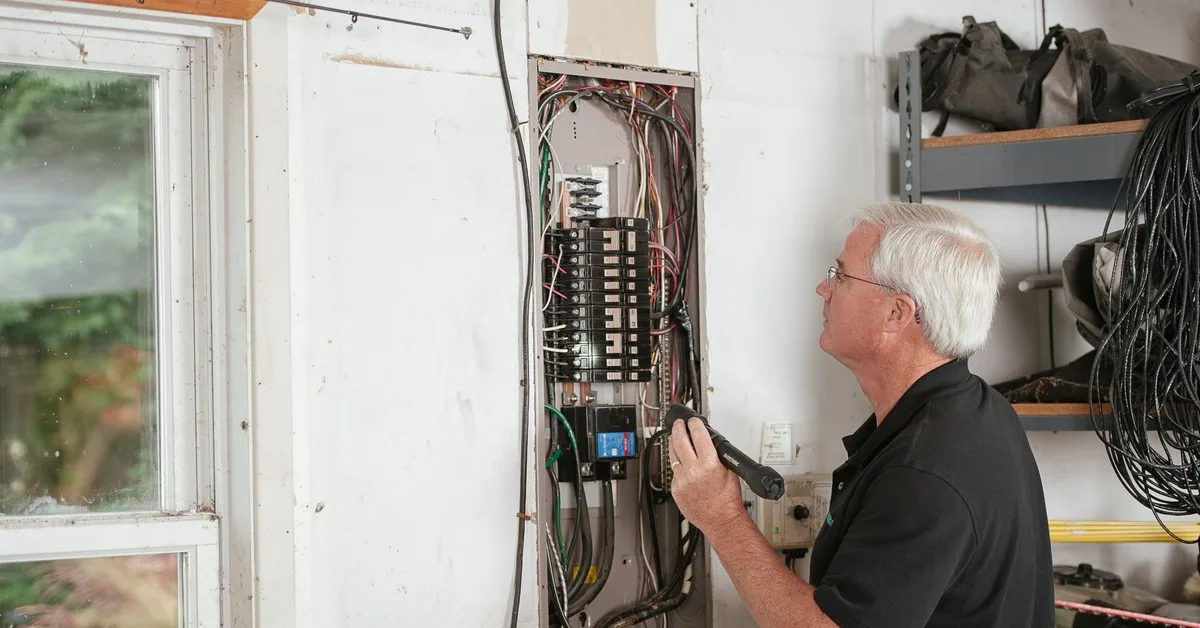
Breaker panels and protective devices deserve special attention. If a panel was directly exposed to water, it should be inspected by a qualified electrician before it is energized again. The same applies to appliances that stood in water. Letting an appliance dry and then plugging it back in is not a reliable safety test.
Solar installations require extra caution. Even when the utility grid is off, solar panels can produce DC voltage in daylight. Flooded inverters, batteries or DC wiring should not be touched or opened by homeowners. A qualified solar or electrical contractor should inspect the system.
If the storm damaged your property without flooding the electrical system, still look for obvious problems such as damaged service cables, broken exterior outlets, wet distribution equipment or lines hanging near the building. Do not touch suspicious equipment and stay well away from downed utility lines outside.
Power should only be restored when the installation is known to be dry, undamaged and safe. After significant storm or water damage, that decision should be made by a qualified electrician. When power is restored, leave large appliances off at first and bring equipment back online gradually.
A common mistake after flooding is to assume that once the utility restores the neighborhood, the electrical system inside the house must also be safe. The utility can only restore the public network. Damage to your own outlets, wiring and equipment has to be evaluated separately.
The rule is straightforward: if water reached electrical equipment, or if damage cannot be ruled out with confidence, keep the power off. A few extra hours of caution are far better than an electric shock, short circuit or fire.
Guides
General
23.08.2026
After a storm or flood: When you should NOT turn your home's power back on
If water reached outlets, wiring or the electrical panel, restoring power can be dangerous. These checks help you know when the system must stay off.