A power outage in an apartment building has one special feature: it affects more than the individual flat. Lifts may stop, stairwells can become dark, electrically operated entrance doors or garage gates may stop responding, intercom systems can fail and neighbours may suddenly need assistance. It is therefore worth preparing a simple lift and stairwell plan for your own building. It costs almost nothing, but it can prevent dangerous improvisation in darkness.
The first step is a survey. In daylight, check which routes from your flat to the outside still work without electricity. Does the main entrance open mechanically? Is there an electric lock? Can the garage door be released manually? Where are the stairs, and is emergency lighting installed there? People living on higher floors should also remember that a lift must not be used during a power outage, even if it appears to respond again after a brief interruption. The supply can fail again and the lift may stop between floors.
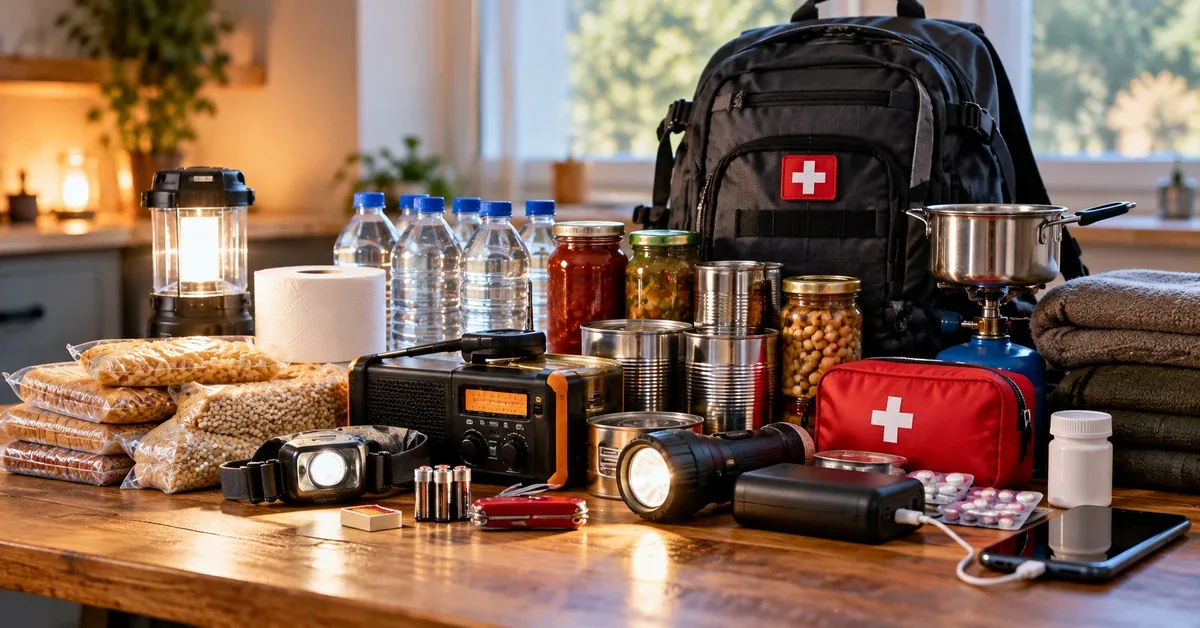
Keep a small kit in a fixed place near the flat door: a torch or head torch, spare batteries, sturdy shoes and your key. A head torch is particularly useful because both hands remain free for the handrail. Candles are a poor solution in stairwells. Open flames increase the fire risk in narrow escape routes and can easily be knocked over. A mobile phone should not be planned as the only light source either, because its battery is more valuable for communication.
Discuss the plan with everyone in the household. Children should know not to run to the lift alone when the power fails. Older people or residents with reduced mobility may need support on the stairs. Decide in advance which neighbours could help, without planning risky carrying manoeuvres. Anyone permanently dependent on a lift should ask the building management, care service or local support organisation what procedure is intended for a longer outage.
Communication inside the building can also be prepared. A paper note with important telephone numbers works without a router and without a charged smartphone. It is also useful to agree on a meeting point in the building or immediately outside it in case family members are separated. Never block escape routes with supplies, bicycles or emergency boxes. Stairs and doors must remain clear.
If somebody is trapped in a lift during the outage, do not try to force the doors open. Use the lift emergency call system if it works, or contact the fire service or responsible maintenance service. Trapped occupants should remain calm and wait for professional assistance. A lift shaft is not a place for improvised private rescue attempts.
Also find out whether the building management has its own emergency procedure and how the responsible technical service can be reached. Keep those details on paper as well, because an address stored only in a phone is less useful when batteries or networks fail.
This small building plan adds an often forgotten element to traditional emergency supplies: safe movement. Water, food and power banks are of limited value if residents cannot leave the building safely in darkness. A ten-minute inspection in daylight, a lamp in the right place and clear agreements can make a local power outage considerably easier and safer to manage.
Guides
General
29.09.2026
Apartment blackout: prepare an elevator and stairwell plan
During a power outage, elevators, stairwell lighting and electric doors in an apartment building may fail. A simple building plan improves safety.