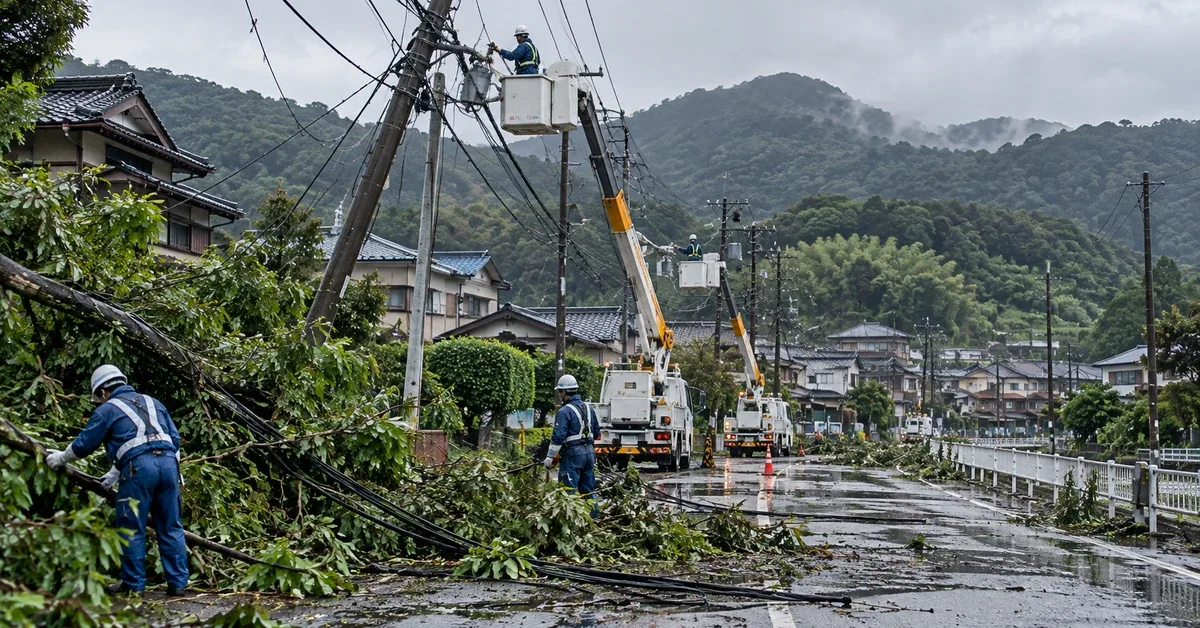
Japan is still dealing with serious power-supply consequences after a powerful typhoon. In Chiba Prefecture, around 17,000 households were still without electricity around midday on 24 September 2026. Tokyo Electric Power Company (TEPCO) is working to restore service, but landslides, fallen trees and impassable roads are making it difficult to reach damaged lines and utility poles in many areas. For roughly 185 to 190 affected locations, no reliable timetable for full restoration could initially be given.
The outages are a direct consequence of severe weather associated with Typhoon Dujuan, known in Japan as Typhoon No. 25. Heavy rain caused flooding and landslides, damaged transport routes and hit the electricity distribution system. On 23 September, according to TEPCO, more than 24,000 households in Chiba were still without power. The number fell significantly the next day but remained in the five-digit range. In areas that repair crews can reach, TEPCO aims to restore supply by 25 September.
Locations where emergency and utility vehicles cannot reach damaged infrastructure are especially difficult. Landslides, fallen trees and damaged roads can prevent crews from inspecting lines and poles properly. According to media reports, TEPCO deployed around 1,800 workers for restoration and is coordinating the work with affected municipalities.
The typhoon has not only affected the electricity network. Rail lines in Chiba were also disrupted by water, mud and damaged infrastructure. Some train services resumed on 24 September, while other sections remain subject to longer restrictions. The situation shows how a severe storm can simultaneously affect electricity, transport, communications and access for repair teams.
For households, that combination is important. After a storm, a power cut does not necessarily mean that one switch in the grid simply has to be turned back on. If trees damage lines, poles lean or fall, or access roads are blocked, repairs can take many hours or even days. Anyone prepared only for a brief outage may therefore underestimate how long disruption can last.
There is also a specific danger after severe weather: sagging or severed power lines may still be live. TEPCO explicitly warns people not to approach damaged lines or objects that are in contact with them. This can include trees, metal fences, antennas and vehicles. Visible damage should never be moved or cleared by residents themselves.
The situation in Chiba is not a nationwide blackout. It is a regional but in some places prolonged outage caused by a natural hazard. That makes it particularly relevant for preparedness and more realistic for many households than a rare nationwide grid collapse: many power cuts result from local damage that may be difficult to reach and repair.
For personal preparedness, battery lighting, charged power banks, a radio, drinking water, shelf-stable food and essential medicines should be available for several days. A household also needs a safety plan for the area around the home. After a storm or heavy rain, nobody should step over hanging cables, pull branches from lines or walk through flooded areas where electrical installations may have been damaged.
Updated: 24 September 2026. Sources: Tokyo Electric Power Company, Nippon TV, FNN Prime Online and TV Asahi.
Latest updates
General
24.09.2026
Japan: Around 17,000 Chiba households still without power after typhoon
Around 17,000 households in Chiba remain without electricity after Typhoon Dujuan as landslides, fallen trees and blocked roads delay repairs.