When people prepare for a blackout, they usually think first about drinking water, food, lighting and charged power banks. Pets can easily become an afterthought. Yet for dogs, cats, birds, small animals or aquarium inhabitants, a prolonged power outage can quickly become an emergency of its own. Heat or cold, failed water pumps, stopped filters, darkness, unfamiliar noises and nervous people can change a familiar environment within only a few hours.
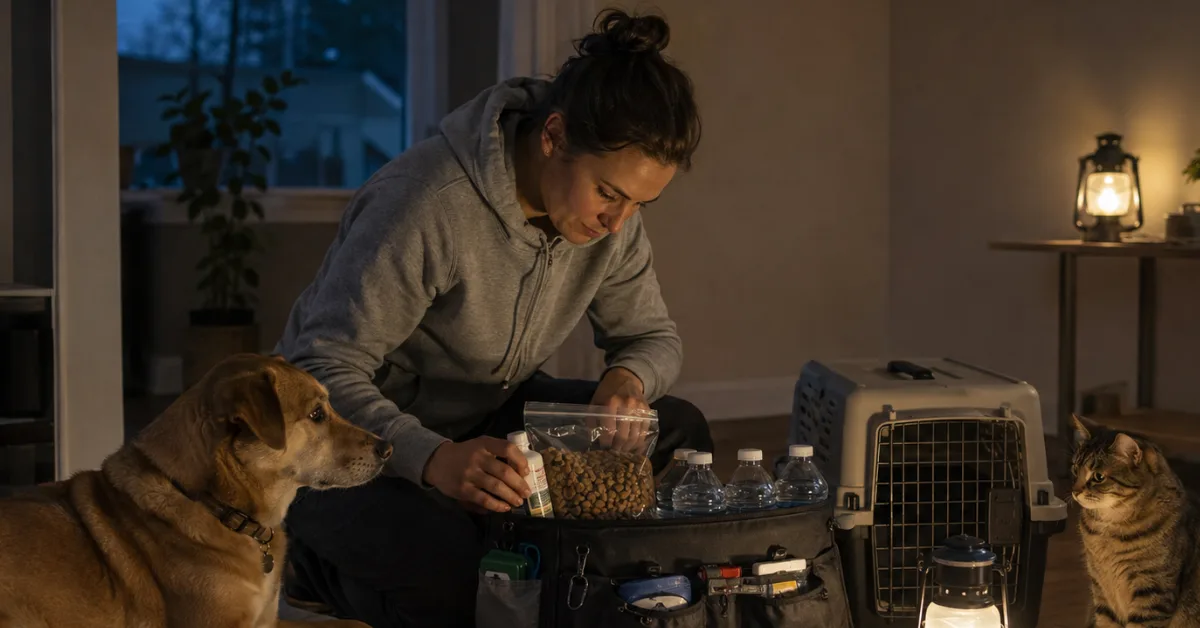
The most important step therefore starts before the blackout: keep a small emergency supply for every animal. It should include enough food and drinking water, required medications, bowls, waste bags or cat litter, plus a leash, harness or carrier. Keep vaccination and veterinary records, medication details and a recent photograph readily available. An identification tag and a registered microchip can be crucial if a frightened animal escapes.
During a power outage, preserve the normal routine as much as possible. Animals react strongly to changes and to the mood of the people around them. Regular feeding times, familiar sleeping places and calm handling can help limit stress. Dogs should remain on a leash outdoors. Cats and other animals likely to hide should be moved early to a secure area. Dark stairwells, open doors and unfamiliar visitors can otherwise increase the risk of escape and injury.
Animals whose environment depends directly on electricity need special attention. Aquarium filtration, oxygenation and temperature control may stop. Terrariums can quickly leave a safe temperature range when heating or lighting fails. Find out in advance which short-term backup measures are suitable for the species you keep. Do not improvise with combustion appliances indoors: generators, grills and other exhaust-producing equipment can create carbon monoxide and endanger both people and animals.
Heat is also often underestimated. Fans and air conditioning do not work in a powerless home, so provide shade, plenty of water and the coolest safe area available. In cold conditions, do the opposite: avoid drafts, insulate sleeping areas and keep pets with the family in a room that is easier to keep warm. Medicines that require refrigeration need a pre-planned cooling solution, just like human medications.
Plan for evacuation as well. Not every emergency shelter accepts pets. Decide beforehand which friends, boarding facilities, veterinary clinics or accommodations could take them. Keep the carrier, leash and emergency bag somewhere you can reach immediately even in darkness.
A pet cannot understand why everything has suddenly become dark, hot, cold or quiet. It depends on its owner being prepared. A dedicated blackout plan for animals takes little effort, but it can prevent many extra problems during the most chaotic hours.
Sources: CDC – Be Prepared: Pet Safety in Emergencies; CDC – Build a Pet Disaster Preparedness Kit; CDC – What to Do to Protect Yourself During a Power Outage.
Guides
General
08.08.2026
Pets in a blackout: the emergency plan many people make too late
When lights, air conditioning, water pumps and communications fail, pets are affected too. A dedicated pet plan can reduce stress, escape risks and supply problems.