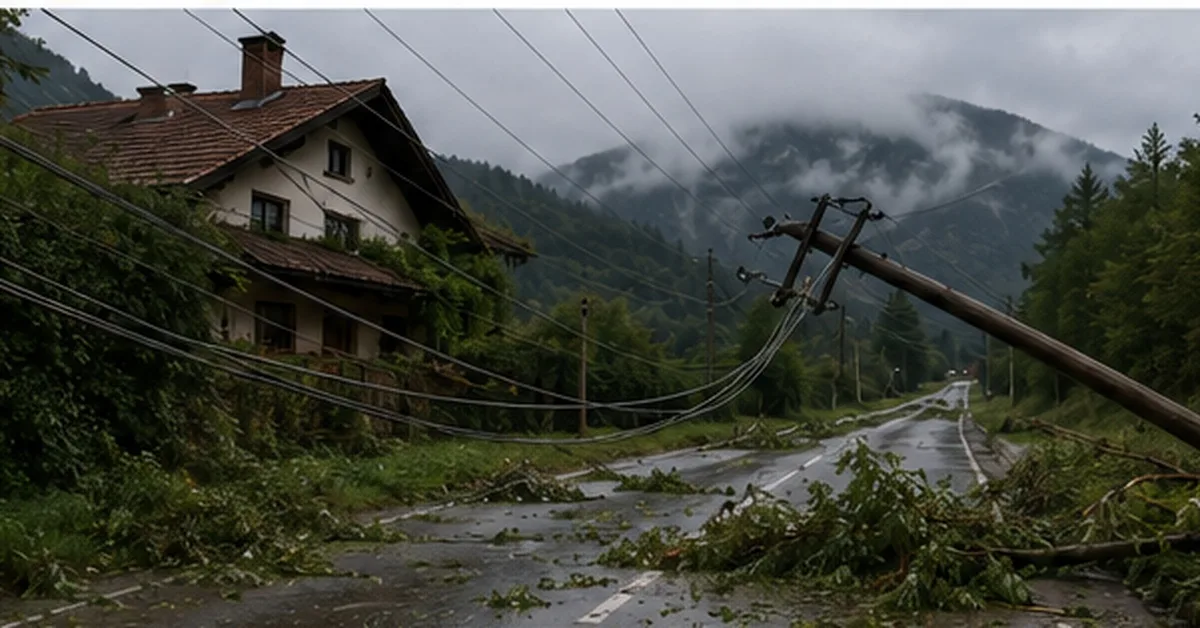
Electricity began returning to the last affected communities on the Maltese island of Gozo on Saturday evening, August 29, 2026, after two separate faults on underground 33 kV high-voltage cables had left large parts of the island without power since Friday evening. Enemalta said some households had been affected for more than 24 hours, while Energy Minister Miriam Dalli described the period after the repairs as a difficult 26 hours.
The first fault was located in Xewkija. Specialist teams worked through the night, excavated the damaged cable section and completed the repair by Saturday afternoon. That allowed part of the supply to be restored progressively. A second fault was found on the cable route near Comino. Equipment and personnel had to be transported to the island, the damaged area excavated and the high-voltage cable tested after repair before it could safely be energized again.
During the work Enemalta distributed the available electricity across different areas and connected mobile generators to substations. This meant some communities regained supply temporarily and later experienced further interruptions. Only late on Saturday evening did Enemalta report that the second fault had also been repaired and that electricity was being restored to the remaining areas.
The most instructive part of the incident was the knock-on effect beyond the power grid. Malta's three telecommunications providers reported disruption to mobile calls, text messages and data services. Their network sites have batteries and, in some cases, portable generators, but those reserves are designed for limited periods. GO said batteries at some sites are intended to bridge shorter cuts and may be exhausted during outages lasting more than twelve hours. Melita referred to roughly six hours of battery backup at individual sites. Epic also said contingency measures were being stretched by the unusual duration of the interruption.
This demonstrated a classic cascade: if electricity remains unavailable long enough, communications infrastructure begins to weaken as well. For residents that means not only darkness and heat, but potentially poorer contact with relatives, unreliable data connections and greater difficulty obtaining current information. The Gozo outage also occurred during a heatwave and a period of high national electricity demand. Enemalta had said summer peak demand in Malta was hovering around 680 to 700 megawatts.
Hotels, guesthouses, restaurants and small businesses were also affected. Some could not operate without generators, food was reportedly discarded, and guests demanded updates that operators themselves struggled to obtain as communications deteriorated. The Gozo Tourism Association subsequently called for an assessment of the economic impact and stronger contingency planning for the tourism sector.
The event was not a nationwide collapse of Malta's electricity system. It nevertheless shows clearly how two technical failures on important supply cables can disrupt most of an island for many hours and then pull other infrastructure into the problem. Household preparedness therefore needs more than spare electricity. It also needs a plan for the point at which mobile service and internet become unreliable several hours into an outage.
Sources: Enemalta, Times of Malta and MaltaToday, reports and updates published August 29, 2026.
Latest updates
General
30.08.2026
Gozo back online after 26 hours: two 33-kV cable faults knocked out much of the island
Two faults on underground 33 kV cables left large parts of Gozo without power for more than a day. As the outage dragged on, mobile-network backups also began to fail.