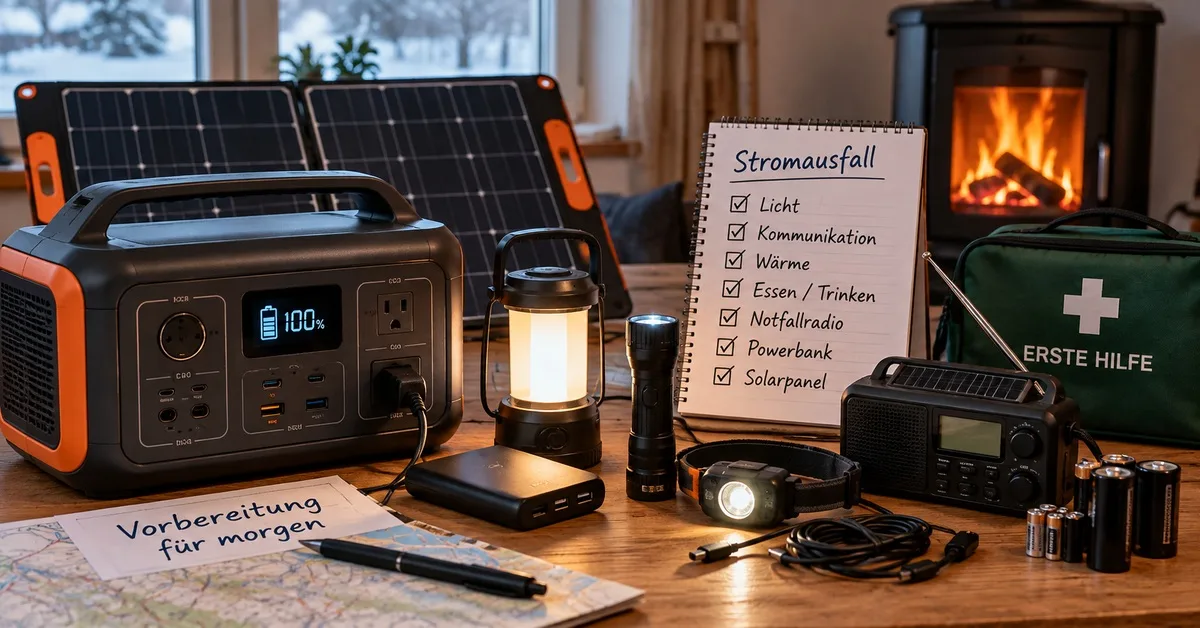
During a power outage, the amount of energy you have stored is only part of the equation. What matters just as much is how you use it. A large power station can be drained within hours if a refrigerator, coffee machine, television, lights and chargers are all connected at the same time. A simple three-level load plan prepared before an outage can make your stored energy last much longer.
Level one contains everything needed for safety and communication. Depending on the household, that can include a smartphone, radio, small LED light and medically necessary equipment. These devices receive power first. Write down their approximate power consumption and the amount of time you expect to operate them. This quickly shows how much stored energy must be reserved for genuinely critical functions.
Level two contains devices that are important but can be operated on a schedule. A refrigerator or freezer is a typical example. Such appliances do not necessarily need to remain connected to a power station continuously. Avoid unnecessary door opening and plan operating periods carefully. A router or laptop can also belong in this group when it is not required all the time. Switch these devices on during defined communication or work windows.
Level three is comfort. It includes appliances such as coffee machines, televisions, electric cooking devices, hair dryers and other equipment that can be avoided during a longer outage. Appliances that create heat often draw particularly high power. They can drain a small or medium battery surprisingly quickly.
The plan works best when you know the actual power ratings of your equipment. The wattage is usually printed on the device label or power supply. Multiply power by operating time to estimate energy demand in watt-hours. A device drawing 20 watts for five hours requires about 100 watt-hours. For equipment with varying consumption this is only an approximation, but it is usually sufficient for emergency planning.
Allow for conversion losses. A power station rated at 1,000 watt-hours will not normally deliver the entire 1,000 watt-hours as usable AC electricity. The inverter, electronics and conversion process consume some energy. Do not plan to use every theoretical watt-hour.
Set a reserve threshold as well. For example, you might decide that the final 20 or 25 percent of stored energy is reserved exclusively for communication, lighting and medically important equipment. Once that threshold is reached, level-two and level-three loads are no longer powered.
Put the load plan on paper and keep it with the power station. During an outage you do not want to calculate everything again or debate which appliance matters more. A small table listing the device, wattage, priority and maximum daily operating time is enough.
Test the plan once under normal conditions. Disconnect the selected devices from mains electricity for several hours and power them exactly as you intend to during a blackout. This quickly reveals missing cables, an overloaded power station or an unrealistic estimate of battery runtime.
A good load plan costs nothing and can substantially extend the useful duration of the energy reserve you already own. The main rule is simple: safety and communication first, necessary time-limited loads second, and comfort only after that.
Guides
General
15.09.2026
Blackout load plan: divide your stored power into three priority levels
A three-level load plan prevents comfort appliances from draining your power station too early. Safety and communications come first, scheduled essential loads second, and comfort last.