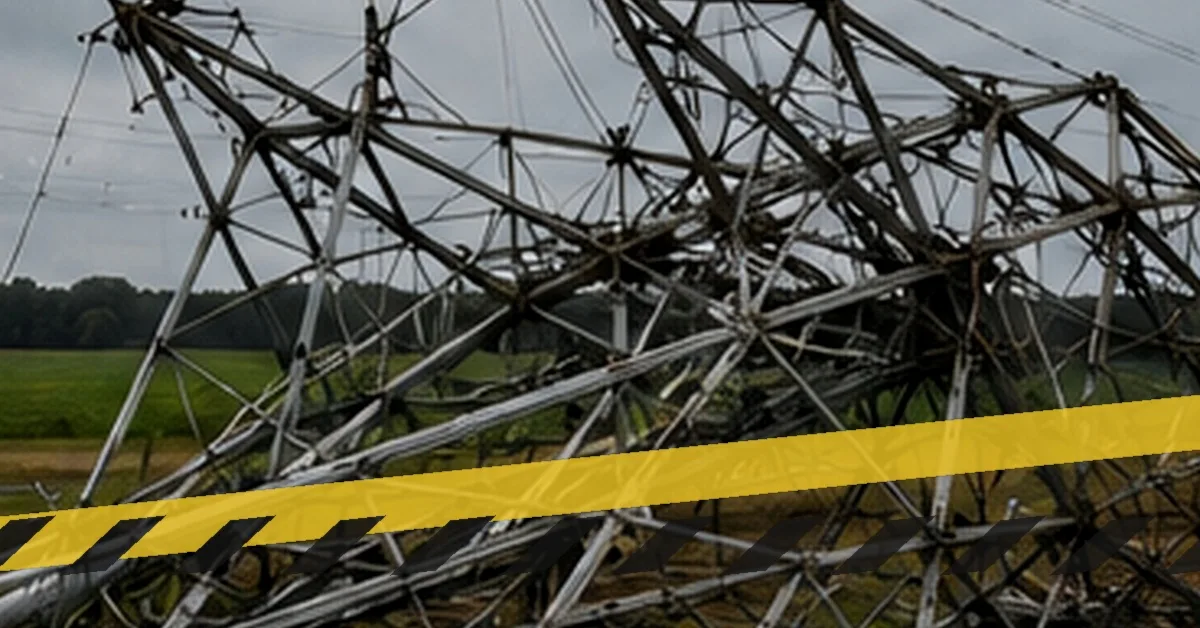
A downed power line can look harmless. It may lie quietly across a road, hang in a tree or droop from a damaged pole. Even so, it must always be treated as potentially deadly. The absence of sparks does not mean the line is safe. Even if electricity in the surrounding area has failed, the line may still be energized or may be switched back on automatically at any moment.
The most important rule is simple: keep your distance. Never approach a damaged line, touch objects near it or try to move branches, cables or metal parts. Fences, vehicles, puddles and wet ground can also conduct electricity. A safe distance matters far more than getting a closer look at the cause.
If you notice a damaged line or pylon, first protect yourself and other people. Keep children and pets away. If possible, warn approaching pedestrians or drivers from a safe location, but do not position yourself where you could enter the danger zone. Never cross barriers around substations, transformers or other electrical installations.
Then contact the emergency services or the local grid operator. Give the most accurate location you can, such as street name, house number, junction or a distinctive landmark. Briefly describe what you see: a cable on the ground, damaged pole, sparks, smoke or fire. If people are in immediate danger, emergency services take priority.
The situation is especially dangerous when a cable falls onto a vehicle. Occupants should normally remain inside unless there is fire or another immediate life-threatening hazard. The vehicle itself may be live while the interior provides protection. People outside must not touch it. Only emergency crews or the utility can determine when the area is safe.
If a vehicle absolutely must be left because of fire, special precautions are required: avoid simultaneous contact between the vehicle and the ground, jump clear if possible, and move away with very small steps or with the feet close together. This is an emergency procedure, not something to practice casually. Whenever possible, wait for instructions from trained responders.
Never assume a line is dead just because an outage has lasted for hours. Utilities may switch sections on and off repeatedly during fault finding and repair. Generators or solar installations can also, in some circumstances, feed energy into parts of an installation. Only qualified professionals should touch damaged electrical equipment.
For personal preparedness, store the local utility's fault-reporting number offline. Keep it both on paper and in the phone. It also helps to know the name of the nearest main road or another clear location reference so that you can report a fault accurately even without a mapping app.
Families with children or older relatives should discuss one clear rule: never touch a cable on the ground, keep away and tell an adult, the fire service or the utility. After a storm or a wider outage, curiosity can otherwise become dangerous very quickly.
The most useful preparation costs nothing: treat damaged electrical infrastructure with respect. Distance, warning other people and a fast report to professionals are far more valuable than trying to inspect or repair anything yourself.
Guides
General
02.09.2026
Damaged power lines: keep your distance and respond safely
After storms, accidents or sabotage, power lines and pylons may be damaged. Anyone who sees a downed line should keep away, warn others and notify only the appropriate authorities or grid operator.