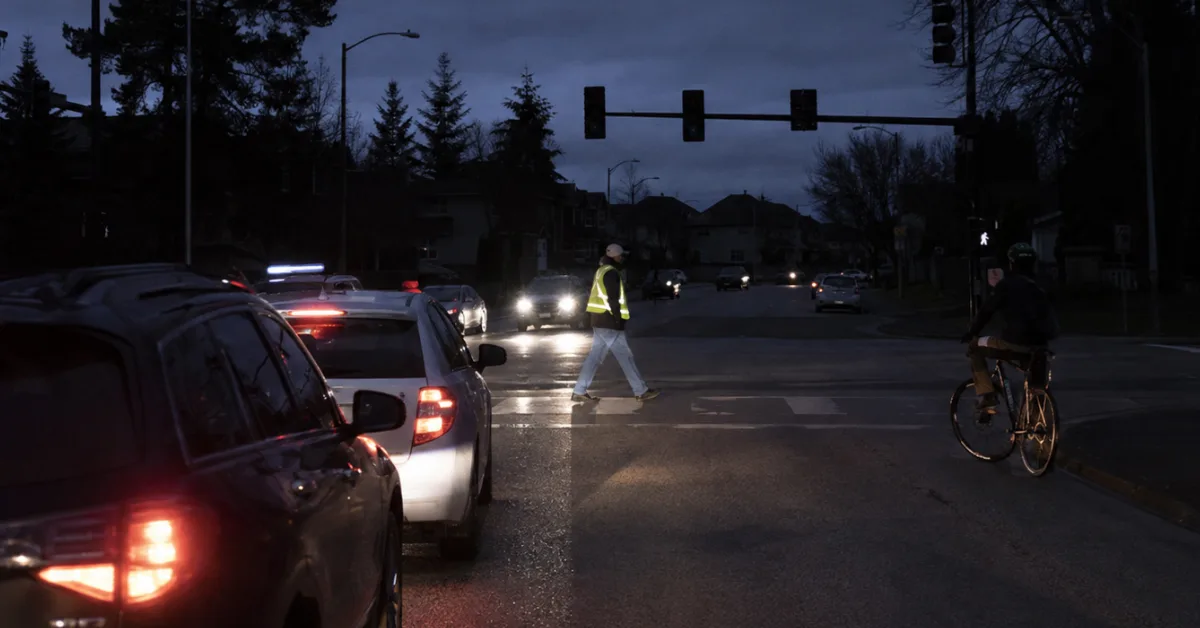
When traffic lights suddenly go dark during a blackout, road conditions can change within seconds. An intersection that was clearly controlled moments earlier can become confusing. Street lighting may also fail, while drivers, pedestrians and cyclists become uncertain and emergency vehicles may need to move through the same area. Anyone who reacts impatiently or simply assumes they have priority increases the risk of a collision.
The most important rule is therefore to slow down significantly and expect mistakes from others. A dark traffic signal does not mean the intersection is clear. Right-of-way rules vary by country and by the signs that remain in place. Follow local traffic laws, obey directions from police or emergency personnel, and continue only when you can properly assess the situation. When in doubt, waiting a few extra seconds is safer than making a risky move.
Pedestrians and cyclists are especially vulnerable. Without street lighting, dark clothing, bicycles and people near the edge of the road are noticed much later. Anyone who regularly walks or cycles should therefore keep a small flashlight, reflective items or a high-visibility vest accessible. When crossing a dark intersection, never assume that a driver has seen you. Eye contact can help, but it is no substitute for a safe distance.
Drivers should also make sure they are visible. Low-beam headlights are essential in darkness; hazard lights, however, are not a replacement for traffic rules and should only be used according to local regulations. Keeping windows clear, lowering the volume of music and avoiding distractions can help you notice sirens, shouted warnings or unusual traffic movements earlier.
Emergency vehicles can be under particular pressure during a blackout. Do not block intersections, entrances or emergency access routes even when traffic is backed up. If an intersection is already full, do not enter it. Giving up a few metres of progress may later be crucial if firefighters or ambulances need to get through.
Extra caution is needed in tunnels, underpasses, underground car parks and automatic entrances. Lighting, ventilation, barriers or payment systems may be affected. Do not enter an area if you cannot tell whether the exit is clear and the route is safe. If traffic stops inside a tunnel, follow the instructions of the tunnel operator and emergency services.
Railway crossings require special attention. A power outage does not mean trains have stopped running. Never assume that a dark signal or an absent warning automatically means it is safe to cross. Pay attention to barriers, road signs and local rules, and cross tracks only when you are clearly certain that no train is approaching.
Navigation can also become a problem. Mobile data may fail or networks may be overloaded. Save important maps offline or carry a simple paper map. If you can reach relatives, work, school or a meeting point without online navigation, you will need to improvise less during an emergency.
Finally, not every journey has to be completed. If roads are confusing, intersections are blocked or the route feels unsafe, it may be more sensible to park safely in a suitable place and wait, or continue a short distance on foot. The vehicle must not block emergency routes, driveways or traffic lanes.
A simple traffic check therefore belongs in blackout preparedness: a flashlight in the vehicle, reflective equipment, some cash, offline maps and a plan for important routes. In darkness, the person who becomes more cautious rather than faster has the decisive advantage in traffic chaos.
Guides
General
15.08.2026
Traffic lights out: How to move safely during a blackout
When traffic lights and street lighting fail, intersections become risky within seconds. Learn how to move defensively around roads, tunnels, rail crossings and blocked routes.