A common mistake in water preparedness is treating every stored litre as if it had the same purpose. Drinking water is too valuable to waste on toilet flushing or rough cleaning during an outage. A better approach is a two-water system: hygienically stored potable water for drinking and cooking, clearly separated from utility water intended for sanitation and cleaning.
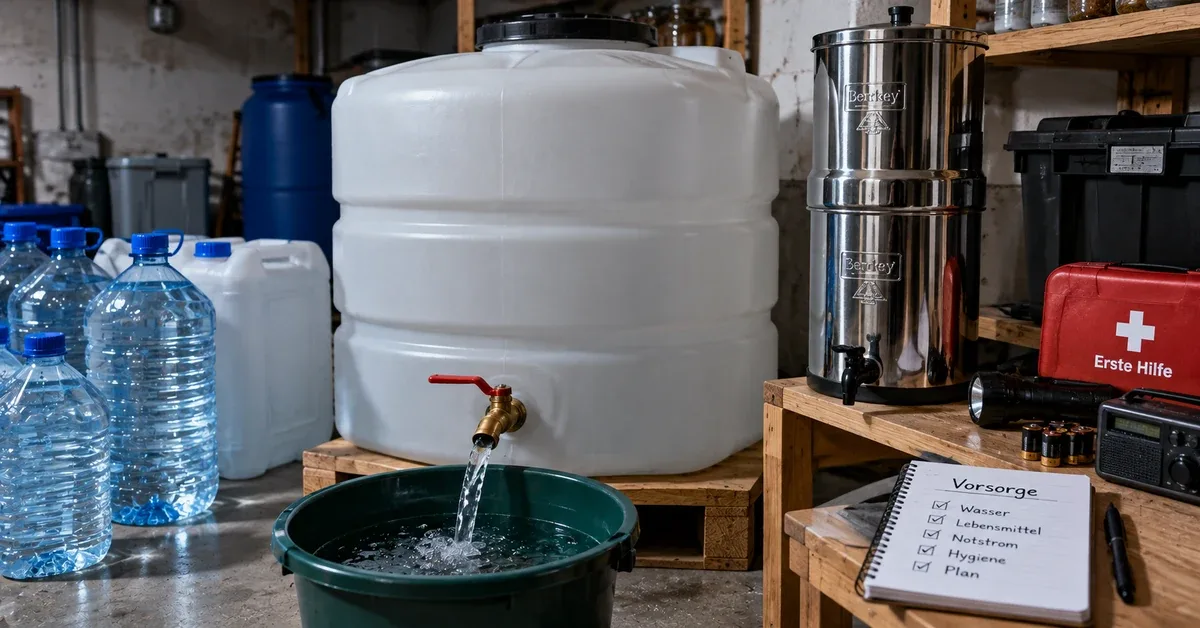
Start with drinking water. Use food-grade containers that close securely and store them in a cool, dark and clean place. The amount required depends on climate, household size and individual needs. Do not calculate only what people drink; include water for cooking, medication and minimal personal hygiene. Label containers with their contents and filling date, and inspect the reserve regularly.
Utility water can be stored separately in robust, clean containers that are clearly marked as not intended for drinking. Depending on its quality, this reserve can be used for toilet flushing, cleaning or certain washing tasks. The critical point is preventing any confusion between potable and non-potable water. Different container colours or large waterproof labels make that easier.
Why does this separation matter during a blackout? Many people assume tap water will continue as long as pipes are intact. That is not guaranteed. Waterworks, well pumps, pressure-boosting stations and domestic pumping systems need electricity. Larger utilities often have backup generators and reservoirs, but the duration and extent of service can vary considerably. Pressure may disappear earlier in elevated areas or upper floors.
Check your own building before an emergency. Is water supplied directly from the public network, or does the property use an electric booster pump? Do you rely on a private well? Is there an elevated tank? Can the toilet flush without power? These questions are much easier to answer while everything is operating normally. In apartment buildings, ask management or technical staff about pumps and backup power.
Plan how stored water will actually be dispensed. A large tank is of little value if its contents cannot be accessed without an electric pump. Containers should have a manual tap or be small enough to lift and pour safely. A clean funnel, spare caps and several smaller bottles can make daily use much easier.
Water filters are useful additions, but they are not a substitute for a basic reserve. Depending on the technology, a filter can reduce certain contaminants, but it does not automatically make every water source safe. Many simple outdoor filters do not reliably remove chemical contamination. When authorities issue water-quality warnings, their instructions take priority.
Hygiene also needs planning. Wet wipes, hand sanitiser, rubbish bags and a simple wash basin can significantly reduce water consumption. For toilets, determine in advance whether manual flushing is possible and how it should be done. Never pour unknown or heavily contaminated water into systems that could be damaged.
The purpose of a two-water system is not to store enormous quantities. It is to protect high-quality drinking water from unnecessary use while maintaining a separate reserve for other tasks. Preparing that separation in advance makes the drinking-water supply last longer and gives a household more options when electricity and water services fail at the same time.
Guides
General
22.09.2026
Two-water system: keep drinking and utility water separate
Separate potable water from utility water so valuable drinking supplies are not wasted on sanitation and cleaning during an outage.