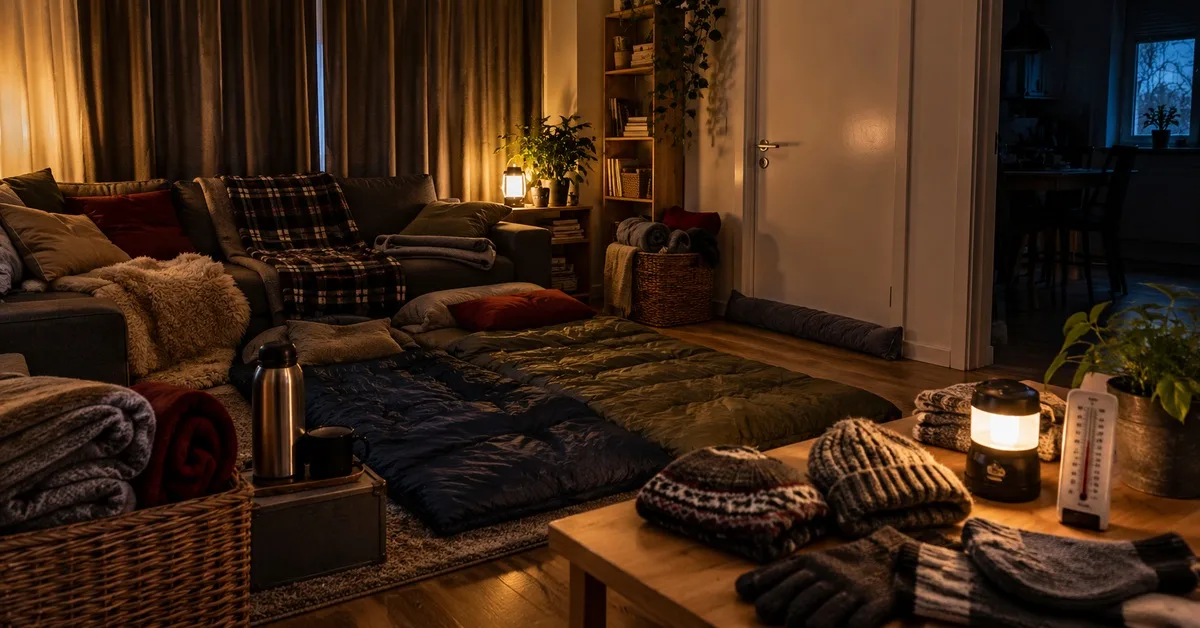
If a long winter power outage also stops the heating system, trying to keep an entire home warm is usually inefficient. A better approach is to choose one room in advance that can become the household's warm refuge. A small room, preferably toward the interior of the building with few outside walls and limited window area, generally loses heat more slowly than a large open living room with extensive glass.
Choose the room carefully. A bedroom, study or small living room may work better than a kitchen or hallway. It needs space for everyone, sleeping bags, water and essential equipment. Open stairways, large windows and several exterior doors increase heat loss.
Prepare simple materials that reduce heat loss. Heavy curtains, extra blankets, rugs, draft stoppers and rolled towels for gaps under doors can all help. Windows should not be permanently sealed with unsafe materials, but at night closed curtains or blankets over cold glass can reduce heat loss. During sunny periods, open the coverings and use solar warmth when conditions allow.
When everyone stays in one room, body heat, clothing and textiles help keep conditions tolerable for longer. Several thin layers of clothing usually work better than one bulky layer. A warm hat, dry socks and dry clothing are especially useful. Sleeping bags and blankets should be ready before the home has already become cold.
Keep a simple thermometer in the chosen room. It helps you make decisions based on temperature rather than guesswork. If the room becomes very cold and the household includes older people, babies or people with health risks, an evacuation option should already be known. That may be a heated home of relatives, a community warming centre or another location recommended by local authorities.
Heating safety is essential. Never use a portable generator, charcoal grill, camp stove or other unvented fuel-burning device inside a home, basement, garage or enclosed room. Carbon monoxide is invisible and odorless and can be fatal. A gas range or oven must not be used to heat a room. Public safety agencies including the CDC and CPSC specifically warn against these practices during outages.
If an approved heater is used, follow the manufacturer's instructions, maintain required distances from combustible materials and provide any ventilation the appliance requires. A battery-powered carbon monoxide alarm provides an important extra layer of protection whenever combustion equipment may be present. Candles are also poor heating devices and add fire risk.
Keep frequently needed supplies inside the warm room so doors are not opened constantly. Store drinking water, medicines, flashlights, a radio, power banks and some food within easy reach. The refrigerator and freezer should remain closed as much as possible so their stored cold lasts longer.
Test the plan on an ordinary cold evening. Do not make the home dangerously cold. Simply observe the chosen room, find drafts and check whether everyone has a workable sleeping place. The test often reveals missing curtains, a large door gap or equipment that has no fixed location.
A warm-room strategy does not replace reliable heating and cannot make a home safe through unlimited extreme cold. It can, however, buy valuable time. The rule is simple: concentrate warmth, avoid dangerous heating methods and relocate early if indoor cold is becoming a health risk.
Guides
General
13.09.2026
Winter blackout: how to create one safe warm room
If heating fails during a winter blackout, one prepared warm room is more practical than trying to heat the whole home. Insulation, clothing and safe heating methods matter.