Washington storm: more than 60,000 customers temporarily lose power
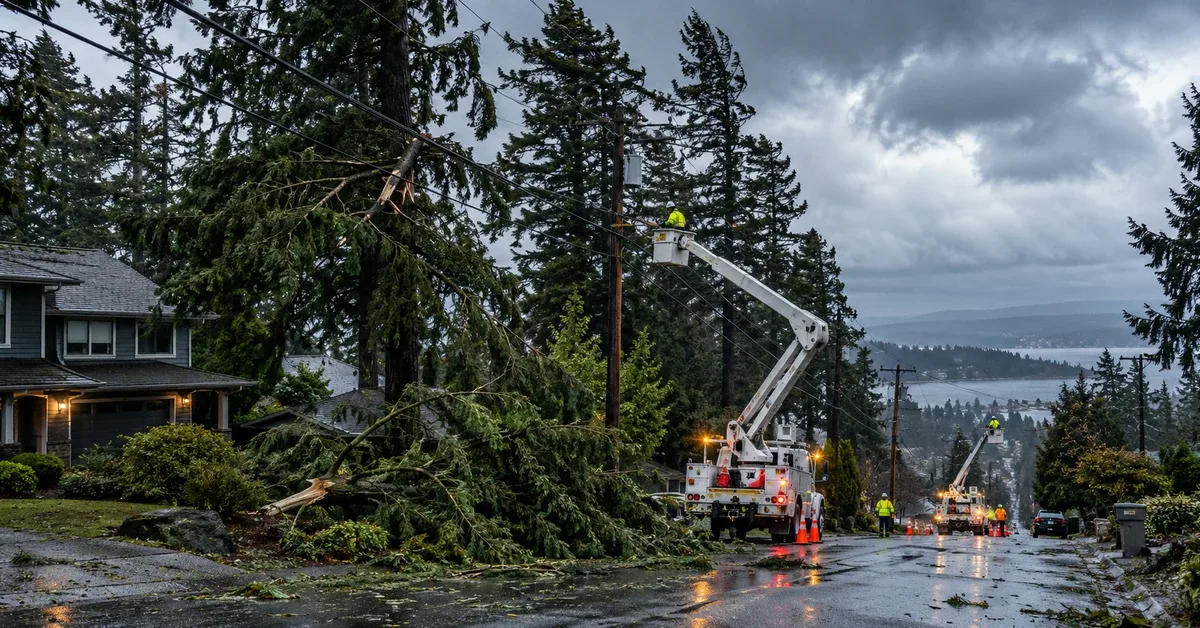
A powerful autumn storm system caused widespread power outages across western Washington state on Friday, 25 September 2026. At one point during the afternoon, more than 60,000 customers were without electricity. Areas around Puget Sound were among the hardest hit. Strong winds and steady rain brought branches and entire trees down onto power lines while electric utilities sent numerous repair crews into the affected areas.
Regional reports showed the number of outages rising sharply as Friday progressed. Puget Sound Energy accounted for the largest share of affected connections, while Seattle City Light and other utilities also reported interruptions. In Olympia and other parts of western Washington, strong gusts brought down trees and damaged distribution lines. Fire departments and utility crews worked at the same time to secure hazardous locations and carry out repairs.
The event is particularly relevant to blackout preparedness because it did not require a collapse of the entire power system. Many separate faults in the distribution network were enough to disconnect tens of thousands of households at the same time. Regional outages of this kind are among the most realistic scenarios for private homes: they begin with little warning, their duration is initially uncertain, and repair times depend heavily on how many damage sites can be reached and worked on safely at once.
Storms make restoration more difficult. A damaged line often cannot be repaired until fallen trees are removed, roads are cleared and the work area is made safe. Even a technically limited fault can therefore take several hours to resolve. When many incidents occur in parallel, network operators also have to prioritise. Critical infrastructure and repairs that can restore service to the largest number of customers usually come first.
For households, the lesson is clear: the first hours of a power outage should not be spent on frantic, uncoordinated actions. A simple sequence works better. First check for hazards such as damaged lines, a burning smell or water entering electrical areas. Then look for official information from the utility, protect sensitive equipment and use battery power carefully.
During a weather-related outage, unnecessary driving through the affected area should also be avoided. Fallen trees, low-hanging lines, flooded roads and failed traffic lights increase the risk of accidents. Anyone who can remain safely at home also leaves roads clearer for firefighters, emergency services and repair crews.
The storm in western Washington also shows why a modest emergency setup for at least several hours makes sense, even for households that do not expect a long blackout. Charged lamps, a radio or another independent source of information, power banks, essential medicines and a simple plan for refrigeration and communication are already useful in many regional incidents.
More than 60,000 affected connections does not mean that exactly 60,000 households remained without power for the whole event. Outage figures change continuously as repairs are completed and new faults appear. What matters is the scale: a single weather system was able to create a large number of local failures in a short period. For personal preparedness, that unpredictability is the key point.
Families also benefit from deciding before storm season which devices are genuinely essential. Not every socket needs to be replaced during an outage. Lighting, communication and medically necessary equipment come first. Some cash and an offline contact list can also help if card payments or mobile networks are temporarily unavailable. Agreeing on priorities in advance avoids arguments under pressure and turns general emergency supplies into a practical household plan that is useful even during short regional outages.
Updated: 26 September 2026. Sources: Puget Sound Energy, KING 5 and additional regional reports from western Washington.
Latest updates
General
26.09.2026
Washington storm: more than 60,000 customers temporarily lose power
A strong autumn storm caused tens of thousands of power outages in western Washington. The event shows how quickly many local grid faults can occur at the same time.