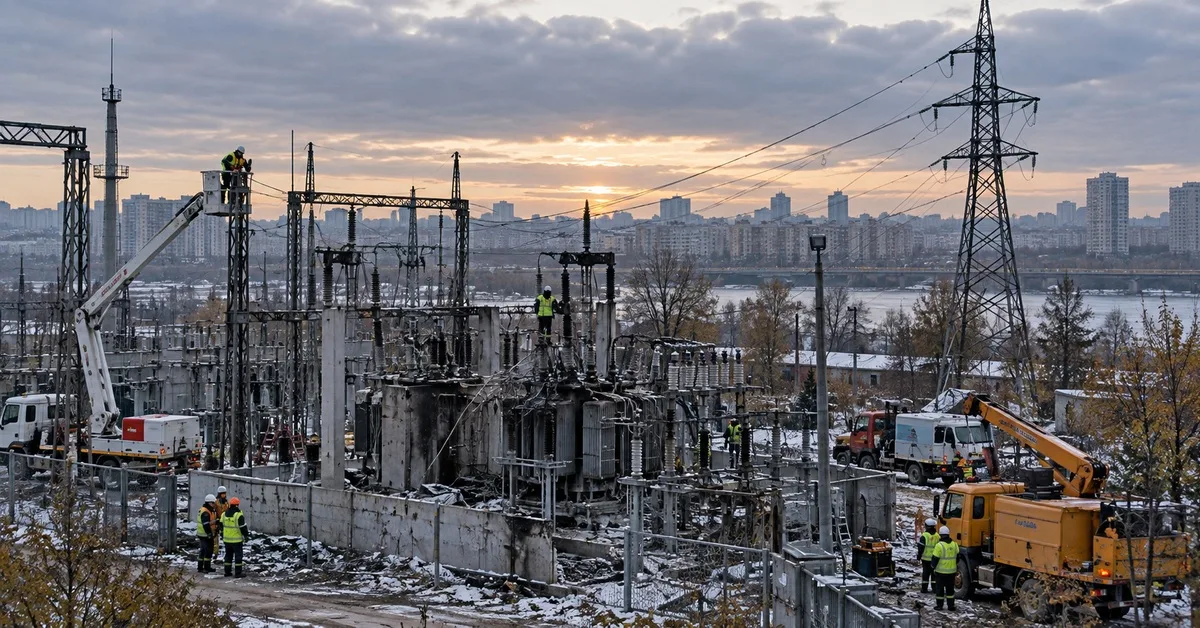
Ukraine is preparing for an especially difficult winter. Reuters reported on September 12, 2026 that intensified Russian attacks on critical infrastructure and major economic assets are adding to the pressure on the country. Economy Minister Oleksandr Kravchenko estimated damage to infrastructure and fixed assets from air strikes this year at close to ten billion U.S. dollars. He also warned that the coming winter could be very difficult both for critical infrastructure and for the broader economy.
For a blackout preparedness site, it is important to understand what the report does not say. Reuters did not report an imminent nationwide blackout or a new total collapse of Ukraine's electricity grid on September 12. The warning concerns the growing vulnerability of essential infrastructure after years of attacks and the ability of the country to get through the cold season. Energy facilities and high-voltage substations have repeatedly been attacked in recent months, making repairs, protection and reserve capacity critical.
The situation is harder because attacks no longer affect only individual energy assets. Ukrainian officials say logistics networks, ports, industry and other economically important facilities are increasingly under pressure. Russia has carried out near-constant attacks on Kyiv with faster jet-powered drones for more than two weeks. Southern regions and Black Sea ports have also faced heavier air attacks. The economic damage weakens the same resources needed for repairs, fuel, spare parts and emergency services.
Winter outages are more dangerous than summer outages. If electricity, district heating or pumps stop for long periods, indoor temperatures can fall, pipes can freeze and communication systems can exhaust their backup batteries. Lifts, electronic payment systems and parts of the water supply can also fail. Older people, small children, chronically ill people and anyone dependent on electrically powered medical devices may need assistance early.
Ukraine has gained extensive experience with decentralized power, generators, mobile heating points and rapid repairs. Even so, no technical preparation can guarantee that every line and facility remains available. Modern grids depend on reserves and alternative routes. When generation, distribution, communications and transport are all under pressure, every additional layer of resilience matters.
The lesson applies beyond Ukraine. A blackout does not need to begin with one spectacular technical failure. Supply can deteriorate step by step: first a plant or substation is lost, then spare parts become scarce, communications become unreliable, or a regional outage lasts longer than expected. Preparing only for a single moment of total grid collapse is too narrow.
Winter preparedness therefore involves more than power banks and flashlights. A warm room, blankets and sleeping bags, drinking water, shelf-stable food, safe lighting, a battery radio, cash, medicines and clear family arrangements all matter. Households should also know where they could go if the home cannot remain safely warm for many hours or days.
The current warning from Kyiv is not a prediction of a certain blackout. It is evidence that critical infrastructure has less margin for error in winter. Preparedness works best while heating, lighting and mobile networks are still operating.
Sources: Reuters, September 12, 2026; Reuters background reporting on attacks against Ukrainian high-voltage substations, July 10, 2026.
Latest updates
General
13.09.2026
Ukraine braces for a harsh winter as attacks increase pressure on critical infrastructure
Reuters says Ukraine is bracing for a difficult winter as attacks damage infrastructure and economic assets. The report does not predict an imminent nationwide blackout.