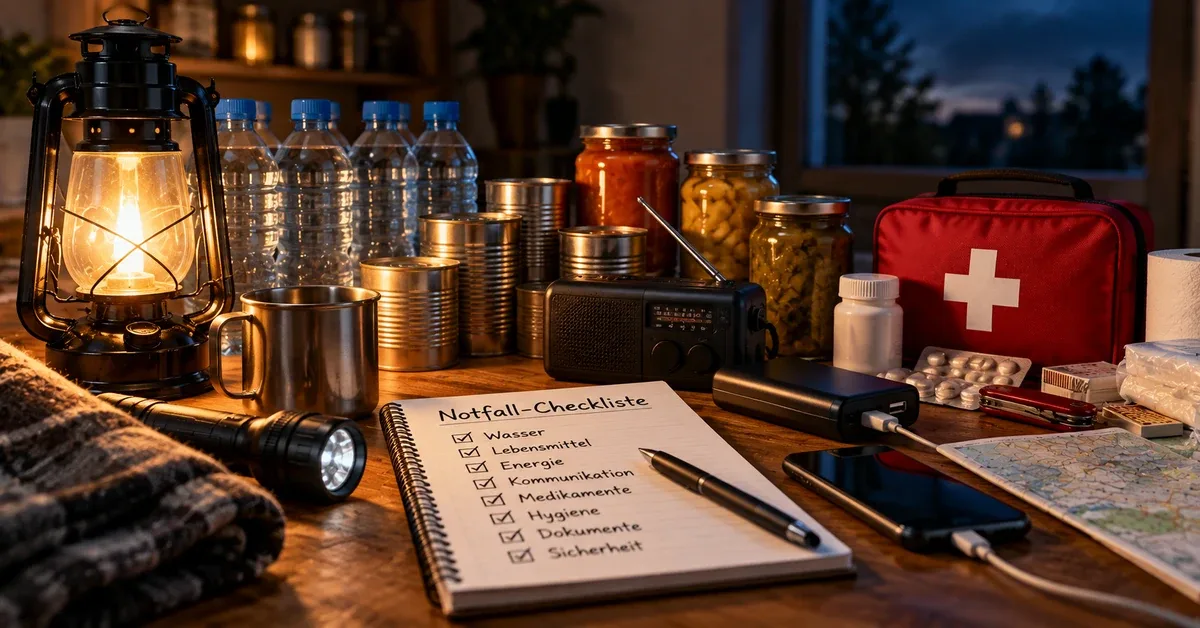
A power outage during a severe storm is more dangerous than an ordinary grid failure. Darkness, wind, falling branches, incoming water and damaged power lines can occur at the same time. It therefore makes sense to set up a fixed emergency station in a safe interior room before the storm arrives. This place should contain everything that is needed during the first hours, so nobody has to search through a dark house.
Choose an interior room or an area away from large windows if possible. If tall trees stand close to the building, avoid a room directly beside the most exposed outside wall. Keep the route to the room clear. Store several torches, spare batteries, a battery-powered or hand-crank radio, charged power banks, mobile phones, drinking water, essential medicines, first-aid supplies, sturdy shoes, work gloves and a paper list of important telephone numbers there. A paper street map can also be useful if navigation and mobile service fail.
Prepare the station early, not when the wind is already strong. Fully charge batteries and check that torches work. Bring loose objects from balconies, terraces or gardens to a secure place while conditions are still safe. Garden furniture, plant pots, tools and light containers can become dangerous projectiles. Close windows and doors, but never block an escape route.
If the electricity fails, use battery-powered lighting first. Candles should not be the main light source because an open flame adds a fire risk in a confusing situation. Wear sturdy shoes if broken glass, branches or other debris may be present. Children and pets are safest in the prepared area. Keep refrigerator and freezer doors closed as much as possible so food stays cold longer.
One particularly important rule concerns fallen power lines. Treat every cable outdoors as if it were energised. Keep well away, stop other people from approaching and report the location to the electricity utility or emergency services. Never try to move a cable with a stick, tool, vehicle or other object. Water near electrical equipment can also be deadly. Do not enter a flooded basement until it has been confirmed that the electrical installation is de-energised.
If you use a generator, operate it only outdoors and well away from doors, windows and ventilation openings. Carbon monoxide is invisible and odourless and can quickly build up to dangerous levels in enclosed or partly enclosed areas. A generator therefore never belongs in a garage, basement, corridor or enclosed balcony. Follow the manufacturer’s instructions for cables, load and fuel.
After the storm, do not go outside immediately simply because the wind suddenly becomes quieter. Check official warnings first. Trees may remain unstable, roads may be blocked and power lines may stay damaged. Once conditions are safe, restock the emergency station: replace drinking water, recharge batteries, check spare cells and replenish medicines.
The greatest advantage of this simple preparation is order. In an emergency, every household member knows where lighting, communication equipment, water and essential supplies are located. A prepared emergency station does not replace an evacuation order or official instructions, but it reduces unnecessary movement and improvisation during the most dangerous phase of a storm-related blackout.
Check the station at least twice a year and again before every forecast period of severe weather. That keeps the equipment complete, accessible and ready for use.
Guides
General
28.09.2026
Storm blackout: Prepare a safe emergency station at home
When a storm and power outage occur together, a fixed emergency station keeps lighting, communication, water, medicines and protective equipment in one safe place.