When the lights suddenly come back after a power outage, the natural reaction is to switch everything on and return to normal immediately. That is not always the best approach. After a larger grid disturbance, local supply may still be undergoing switching, and thousands of refrigerators, air conditioners, pumps, chargers and other appliances may restart at the same time.
A simple restoration plan helps. During the outage, switch off or unplug large appliances that are not needed. When electricity returns, begin with only a few essential devices. Lighting, necessary communications and medically important equipment receive priority. Refrigerators and freezers can come next. Other appliances can be added gradually with a few minutes between groups.
The purpose is not that one household can save the public electricity grid. There are two practical reasons. First, you avoid an unnecessarily high simultaneous starting load inside your own installation. Motors and compressors can draw significantly more power during startup than during normal operation. Second, gradual restoration makes it easier to notice when one appliance behaves abnormally after the outage.
Pay attention to smell, sound and unusual heat. A humming power supply, a burnt smell, sparks, repeated breaker trips or equipment that becomes very hot are warning signs. Switch the device off, unplug it and do not continue testing. Problems involving the house wiring, fuse box or distribution board should be handled by a qualified electrician.
Refrigerators and freezers deserve special attention. If they remained closed during the outage, they do not have to restart in the exact second power returns. A short delay of several minutes is normally not a problem. Once switched on, keep the doors closed as much as possible until normal temperatures are restored.
Routers, computers and sensitive electronics also do not need to start immediately. Wait briefly and observe whether the supply appears stable. Then reconnect them deliberately. If power fails again or voltage fluctuates, this reduces unnecessary restarts. Equipment handling important data should be started in a controlled manner.
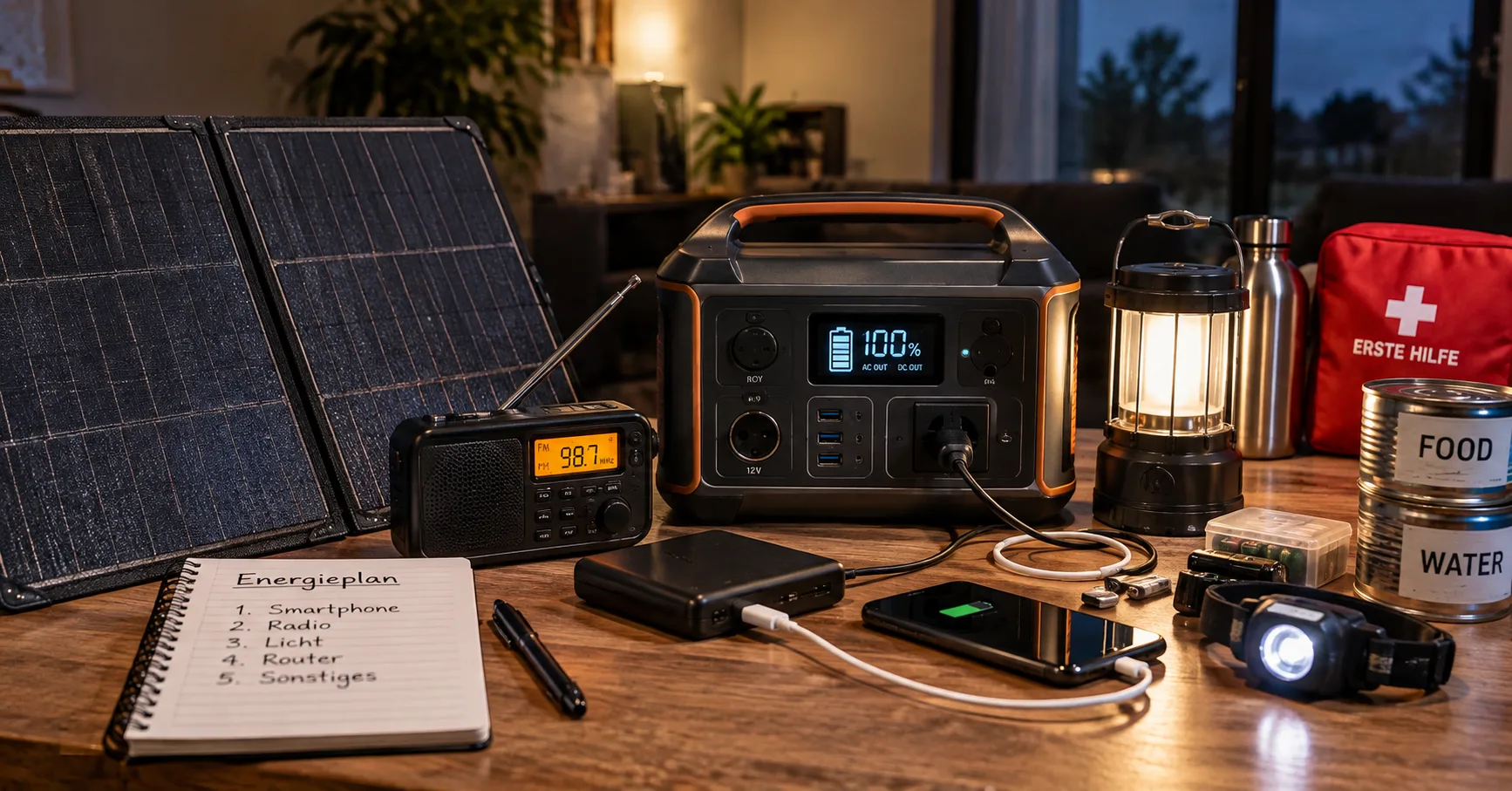
If you use a portable power station, UPS or home battery, check its charge level and operating mode before changing back to mains supply. Not every unit can charge while simultaneously supporting high loads. Follow the manufacturer's limits for output, grounding and permitted operating conditions. A fuel-powered generator must never be used indoors or inside a closed garage.
A small sequence written near the electrical panel can help: first light and communications, then refrigeration, then other necessary loads, comfort devices last. You do not have to invent a plan while under stress, and other family members know what to do.
If the electricity disappears again after only a few minutes, switch additional loads back off and wait for official information. Repeatedly turning every appliance on and off provides no benefit. A calm, staged return is simpler, safer and easier on the household installation.
This advice does not replace professional electrical inspection. It simply turns the moment when power returns into a planned procedure instead of an uncontrolled restart of the entire home.
Guides
General
07.09.2026
When power returns: do not switch every appliance back on at once
After a larger outage, restoration is a critical phase of its own. Bringing important appliances back gradually reduces unnecessary load spikes and makes faults easier to notice.