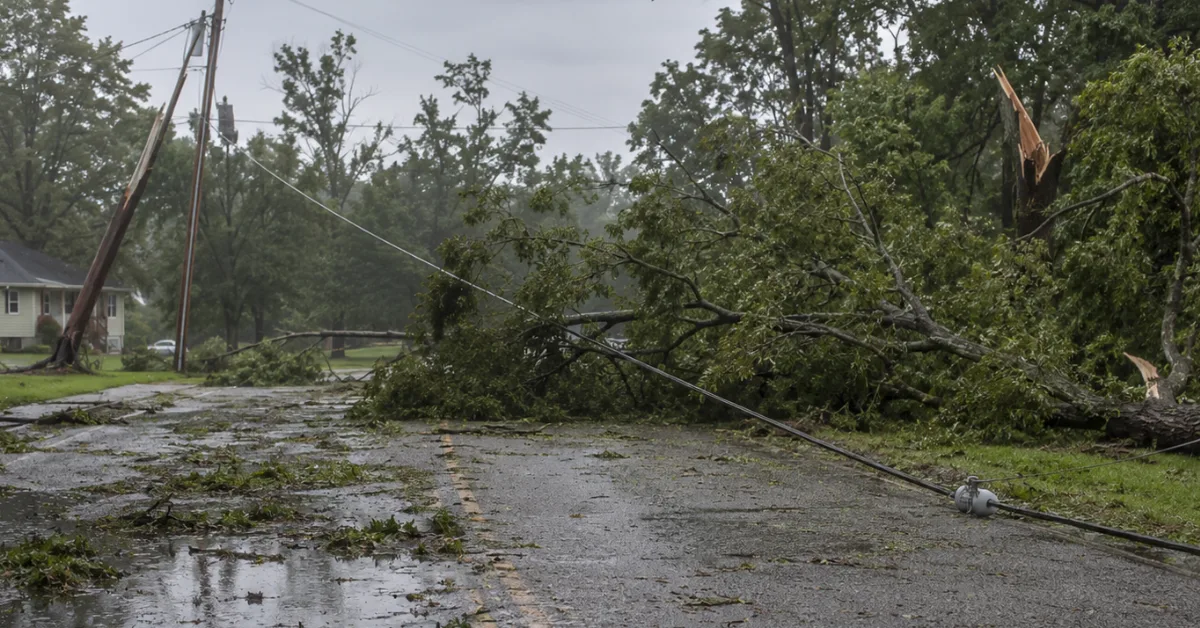
After a storm, a downed power line can look surprisingly harmless. It may lie quietly across a road, produce no sparks and make no sound. That is exactly what makes it dangerous: a line can still be energized even when there is no visible sign. After a storm, severe weather or blackout, the rule is simple: keep your distance and never try to move a damaged line yourself.
Hawaiian Electric recommends staying at least about 30 feet, or roughly nine metres, away from downed power lines. Nearby objects can also become dangerous. If a line touches a metal fence, guardrail, vehicle or other conductive object, electricity can travel beyond the cable itself. Avoid not only the line, but also anything that may be in contact with it.
Water requires particular caution. Flooded streets, puddles or standing water can become electrically energized by damaged overhead or underground power lines. You cannot see this hazard. Never walk or drive through suspicious water where electrical infrastructure may have been damaged. Wet electrical equipment or installations should also not be touched.
A common mistake is trying to push a line aside with a branch, broom, piece of wood or tool. Do not do this. Materials that appear harmless when dry may conduct electricity when wet or dirty. Moving damaged power lines is a job only for the utility company or qualified electrical personnel.
If a power line falls onto a vehicle, the vehicle is often the safer place at first. Unless there is an immediate danger such as fire, occupants should remain inside and wait for help. Nobody outside should touch the vehicle. If fire or another urgent hazard makes exit unavoidable, do not touch the vehicle and the ground at the same time. Hawaiian Electric advises jumping clear with both feet together and then shuffling away with small steps, keeping the feet close together and in contact with the ground.
The reason is step potential. When electrical current flows into the ground, different points on the surface can have different voltages. The farther apart your feet are, the greater the possible voltage difference across your body. For that reason, do not walk normally or run while still in the danger zone.
The same caution applies to injured people. Do not immediately grab someone who may still be in contact with an energized line or object. Touching them can make you part of the electrical path. Keep your distance, warn others and call the local emergency service and the electricity provider.
After a storm, children and pets should not be allowed into damaged areas unsupervised. Fallen trees, branches, fences and metal objects may also be touching electrical lines. Even a cable that appears disconnected from a pole must not be assumed safe.
The key rule is simple: see it, stay back, secure the area from a safe distance and report it. Do not touch the line, pull anything away or attempt an improvised repair. If possible, warn other people before they approach. A silent cable can be just as dangerous as one that is visibly sparking.
Sources: Hawaiian Electric – Downed Power Line Safety; Ready.gov – Floods and Power Outages.
Guides
General
17.08.2026
No sparks, still deadly: Downed power-line dangers after storms and blackouts
Downed lines can remain energized even without sparks. Learn how to avoid step potential, energized water, dangerous vehicles and other hidden electrical hazards.