When electricity is limited, not every appliance in a home has the same priority. This matters during a stressed grid situation, but it is even more important when you rely on a generator, portable power station or small solar system with limited output. A simple priority list helps you switch off unnecessary loads and reserve available energy for essential tasks.
Start with large appliances that can easily wait. Tumble dryers, dishwashers, washing machines, electric heaters, electric water heaters, air conditioning units, pool pumps and similar high-load equipment are usually the first candidates. Electric ovens and hobs also draw a great deal of power. If cooking can be delayed or done with a smaller alternative, this can free significant capacity.
Fridges and freezers are usually not among the first appliances to switch off. They consume electricity regularly but protect food. If mains power is still available, keeping them running generally makes sense. When operating from backup power, refrigeration can sometimes be supplied in intervals as long as safe temperatures are maintained.
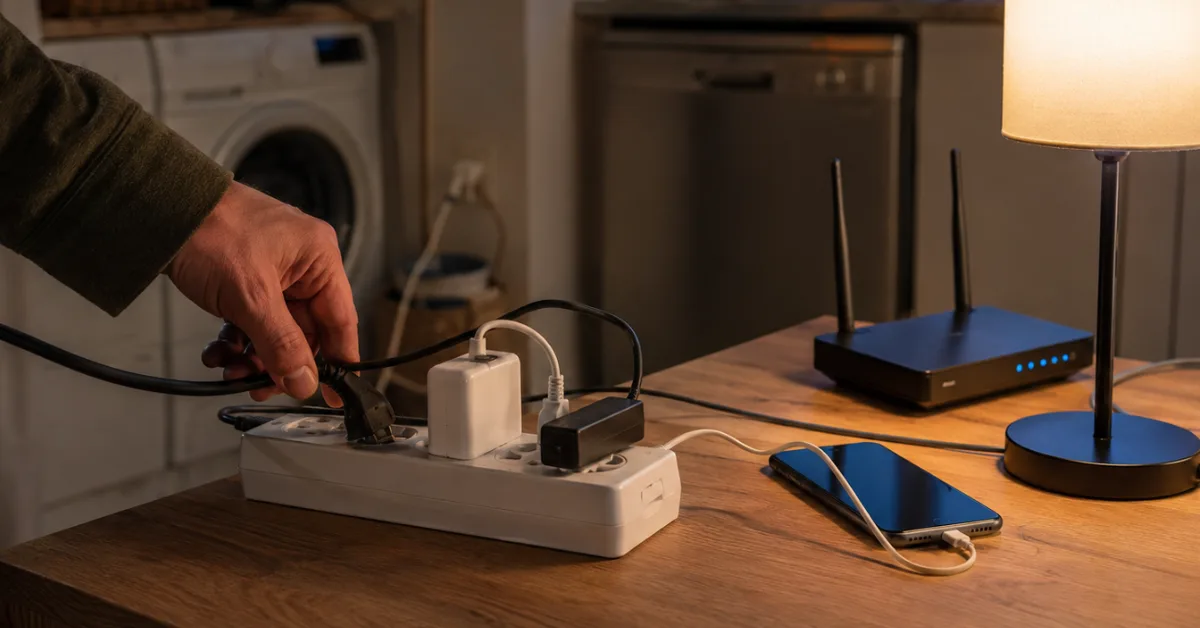
Communication equipment often deserves a high priority because it uses relatively little electricity. An internet router, mobile charger or small radio uses far less power than a heater or oven. If you must choose what stays on, communication and access to information can provide a lot of benefit for very little power.
Lighting is another easy area to reduce. Use only the rooms you actually need and rely on LED lamps wherever possible. A few lights do not consume much individually, but unnecessary lighting still wastes limited backup capacity.
The moment electricity returns is also important. Do not restart every large appliance at once. Water heaters, air conditioners, washing machines, dishwashers and cooking appliances can create a high combined load. Bring them back online gradually and allow the grid or your backup system time to stabilise.
A simple three-level system can help. Priority 1 includes essential loads such as basic lighting, communication, critical water equipment and refrigeration. Priority 2 includes useful devices such as a laptop, fan or selected small kitchen appliances. Priority 3 includes everything that can wait, such as dryers, dishwashers, auxiliary heaters, pool pumps and entertainment electronics.
The key principle is simple: limited power should first be used where it provides the greatest benefit. If you decide this order before an outage, you will not have to improvise when every watt suddenly matters.
Guides
General
21.08.2026
Cut electricity use strategically: Which appliances should go off first?
When grid conditions are tight or backup power is limited, a clear priority list helps. Some appliances can wait while others should keep running.