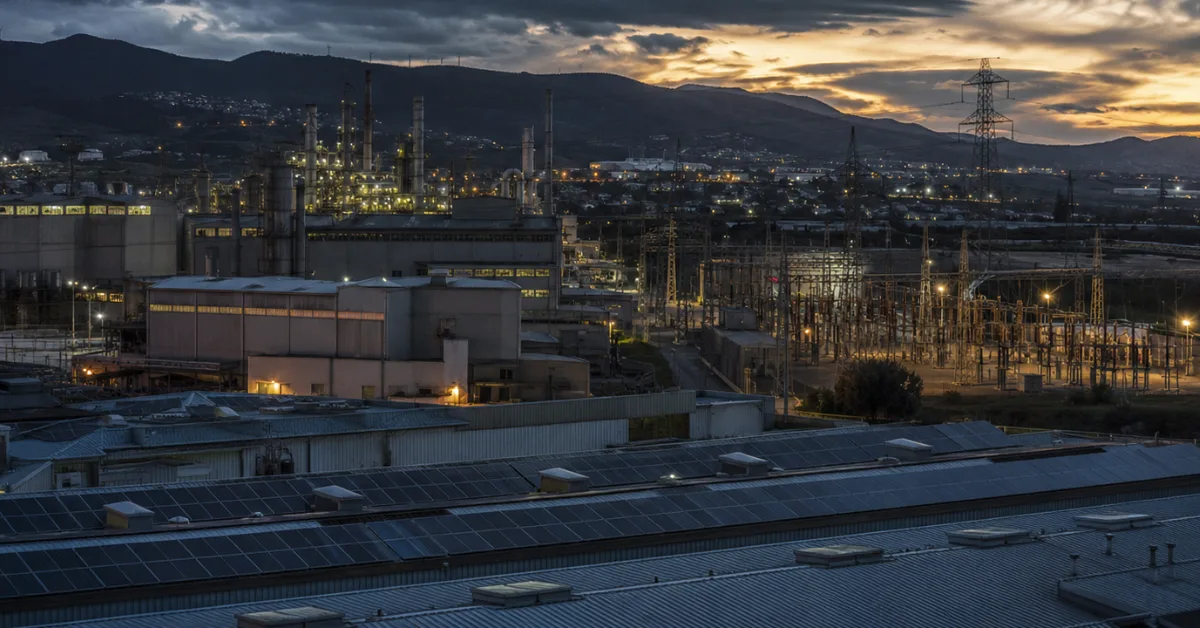
Spain's electricity system again relied on a special security tool on Thursday evening. Red Eléctrica activated the Servicio de Respuesta Activa de la Demanda, or SRAD, at about 18:03 on 20 August 2026. Under this mechanism, large electricity-intensive companies temporarily reduce consumption when instructed by the system operator, creating additional reserve for the grid.
Red Eléctrica initially requested up to 832 megawatts of demand reduction. Published data show that 613 MW were actually mobilised, around 74 per cent of the requested volume. Households were not disconnected. The intervention targeted participating industrial demand in order to strengthen the balance between generation and consumption.
The distinction is important. Red Eléctrica stated that electricity supply was not in immediate danger at any point. The purpose of SRAD is precisely to prevent a temporary imbalance from developing into a larger incident. This was therefore a preventive grid measure, not a blackout already under way.
What stands out is how often the mechanism has been used. This was the fifth SRAD activation of 2026 and the fourth in roughly 35 days. Earlier activations occurred in January, several times in July and again on 11 August. Repeated use during the summer highlights the importance of flexible reserves in a power system where both generation and demand can change quickly.
Spanish energy publication El Periódico de la Energía pointed to a substantial deviation between forecast and actual solar generation during the latest event. Nearly 20 GW of photovoltaic output had been expected, while the figures it analysed from Red Eléctrica showed actual output of 17,152 MW, almost 3 GW lower. The publication suggested storms and cloud development in parts of Spain as one possible explanation. At the time of reporting, however, no final official cause had been published.
Other parts of the generation mix also moved sharply. Hydropower output fell, while Spain simultaneously increased electricity exports to Portugal. Red Eléctrica also ordered additional gas-fired generation to ramp up.
For blackout preparedness, the event is useful because it shows what can happen before residential customers notice anything at all. Modern power systems use reserve tools to respond to unexpected deviations. That can mean increasing generation, but it can also mean reducing demand in a controlled way.
Repeated SRAD activations do not automatically mean that Spain is on the verge of a blackout. They do show that grid stability is not static. Generation and consumption must remain balanced at every moment, and when forecasts suddenly miss the mark, additional reserves may be needed within minutes.
Sources: El Periódico de la Energía, 21 August 2026; Vozpópuli, 20 August 2026.
https://elperiodicodelaenergia.com/red-electrica-vuelve-a-parar-la-industria-por-quinta-vez-en-un-mes-esta-vez-ha-sido-a-las-18-00-y-ha-pagado-mas-caro-que-el-precio-del-mercado/
https://www.vozpopuli.com/economia/empresas/el-sistema-vuelve-a-temblar-y-red-electrica-activa-de-nuevo-el-mecanismo-contra-apagones.html
Latest updates
General
21.08.2026
Spain turns to demand response again as industry cuts electricity use
Red Eléctrica activated demand response again on 20 August. Industrial users delivered 613 MW of demand reduction to reinforce system reserves.