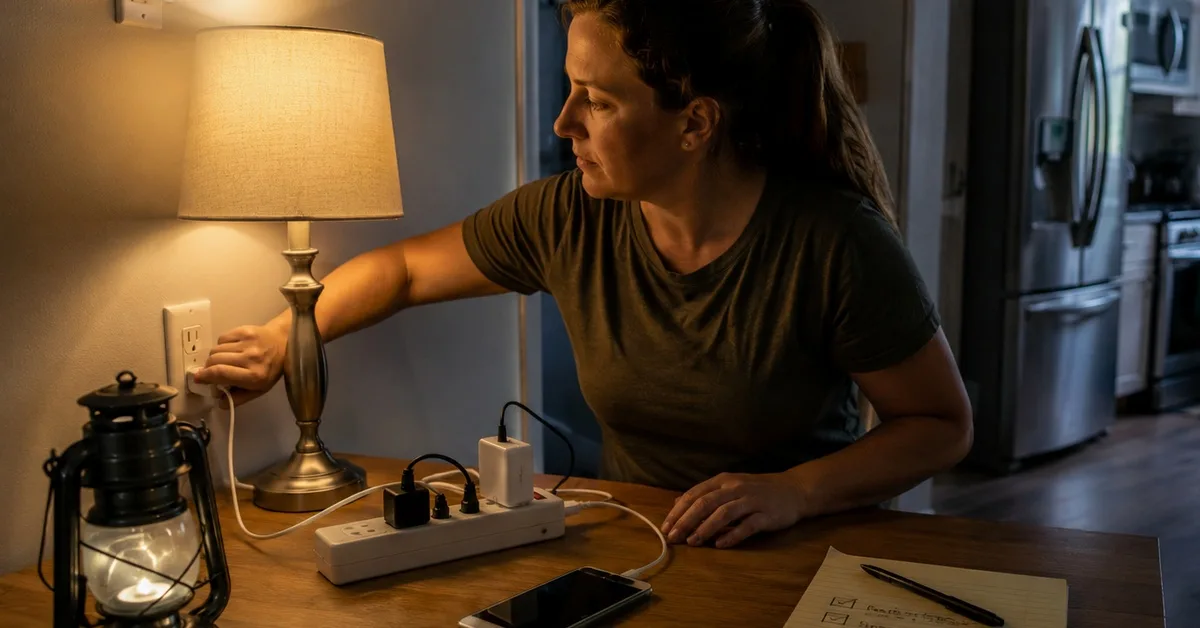
Smart-home technology makes daily life convenient, but a power or internet outage can expose dependencies that are easy to overlook. Electronic door locks, garage gates, shutters, heating controls, alarms, cameras, intercoms and smart lighting may depend on mains electricity, a router, Wi-Fi and sometimes an external cloud service. A controlled offline test is therefore worth doing before a real blackout makes the test for you.
Start with a list of functions that matter for access, heat, safety or communication. Do not begin with every decorative smart bulb. Prioritise systems whose failure would have consequences: the front door, driveway gate, heating, hot water, alarm system, shutters, lift access, medical equipment or an electric water pump. Note beside each item whether it works locally, through Wi-Fi, through a dedicated hub or only through an app and remote service.
The first test is simple: remove internet connectivity without switching off household electricity. Disconnect only the router’s external internet link or use the system’s intended offline mode. Then check which functions continue to work on the local network. Some smart-home platforms can still be controlled through physical switches or a local hub. Others immediately report an error because commands are routed through an external server. Knowing the difference is valuable.
Next, simulate loss of power for individual non-critical devices, never for medical or safety-critical equipment. Following the manufacturer’s instructions, disconnect a smart lamp, shutter controller or another harmless device and observe what happens when power returns. Does it restart automatically? Does it remain off? Does it lose its clock, schedules or Wi-Fi connection? This tells you which systems will require manual attention after a real outage.
Access systems deserve special attention. Electronic door locks should have a mechanical or battery-powered fallback. The correct key must be reachable and must not be stored in a room that itself cannot be entered without electronics. Garage and driveway gates need the same thinking. If shutters are electric, make sure at least one practical exit can still be opened without a motor.
Be cautious with heating and hot-water systems. Do not randomly switch off boilers or alter safety settings. Instead, use the manual to learn how controls and thermostats behave after loss of power. Some retain their settings, while others need a router, time server or cloud connection. Anyone dependent on electric heating should also know what safe backup arrangement is available during cold weather.
Write the results on paper: mechanical keys, manual releases, battery types, local control methods and the most important steps after power returns. A printed note is more useful in a blackout than instructions stored only in a cloud app. Photograph important mechanisms as well and save the images offline on a phone.
Repeat the test after major smart-home changes or at least once a year. The goal is not to reject modern technology. The goal is to know which essential functions remain controllable when the app, internet connection and wall socket all fail at the same time. A household with clear manual fallbacks stays far more capable during a blackout.
Guides
General
29.08.2026
Smart home without power or internet: test the manual fallback now
Doors, heating, shutters and alarms increasingly depend on apps, routers or cloud services. A controlled offline test shows what still works when both electricity and connectivity fail.