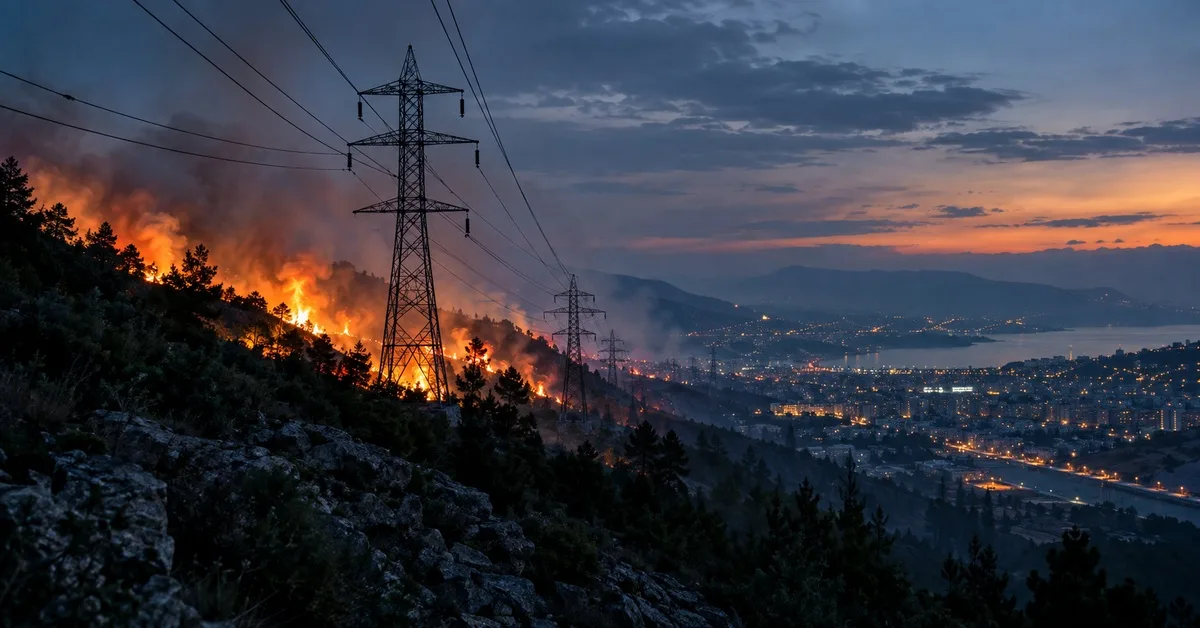
The situation at Ukraine’s Zaporizhzhia nuclear power plant has become more serious again. According to the International Atomic Energy Agency and a Reuters report published on 5 September 2026, Europe’s largest nuclear plant has been completely disconnected from off-site electricity since 20 August. Essential safety functions are therefore relying on emergency diesel generators. The IAEA has warned that fuel reserves are declining and that the plant could face a station blackout within days unless external power is restored or more diesel can be delivered.
A station blackout at a nuclear plant is far more serious than ordinary lights going out. Even reactors in cold shutdown and spent-fuel pools still require electricity for monitoring, cooling, pumps, instrumentation and control systems. Emergency generators are designed as a final safety barrier, not as a permanent replacement for the public grid over many weeks.
On 5 September, a local ceasefire brokered by the IAEA took effect. It is intended to allow Ukrainian technicians to repair the damaged Ferosplavna power line. Mines in the area first have to be cleared before work can proceed. Russian officials have said the ceasefire is expected to last roughly a week. It is still uncertain whether repairing the line will immediately restore usable external electricity to the plant.
All six reactor units remain in cold shutdown. That significantly reduces heat production but does not eliminate the need for electricity. Cooling spent fuel, maintaining instrumentation and preserving the ability to respond to technical faults remain essential. The longer diesel generators operate without normal grid supply, the more important maintenance, spare parts and reliable fuel deliveries become.
The plant sits in an active war zone and since 2022 has repeatedly experienced lost power lines, shelling, drone incidents and restricted access. Russia and Ukraine regularly blame each other for threatening the plant’s safety. For an objective assessment, the independently verifiable facts matter most: off-site power is unavailable, emergency diesel generators are running, and repairs to an important line are urgently needed.
For blackout preparedness, the event carries a broader lesson. Every form of backup power has a finite operating time. A system can bridge an outage while fuel, working equipment and qualified people are available. When emergency power becomes the normal supply for too long, the margin of safety gradually shrinks.
A private household is obviously not comparable with a nuclear facility, but the basic principle is the same. Backup power is not infinite. Power banks, batteries, home storage systems and generators should not merely exist; their realistic runtime should be understood. Knowing how long lighting, communications and essential devices can operate makes it easier to ration energy and set priorities during a prolonged outage.
Sources: Reuters, 5 September 2026; IAEA information on the situation at the Zaporizhzhia Nuclear Power Plant, status 5 September 2026.
For households, backup energy should not be spread equally across every device. Communications, essential medical equipment and safe lighting deserve priority; entertainment electronics can wait. A simple real-world test is often more useful than a label on the box. Testing a power bank with the phone, radio or lamp you actually use gives a much more realistic picture of available reserve.
Latest updates
General
06.09.2026
Zaporizhzhia: Europe’s largest nuclear plant faces station-blackout risk as diesel reserves fall
The plant has lacked off-site power since 20 August and is relying on emergency diesel generators. An IAEA-brokered ceasefire is intended to enable repairs while fuel reserves decline.