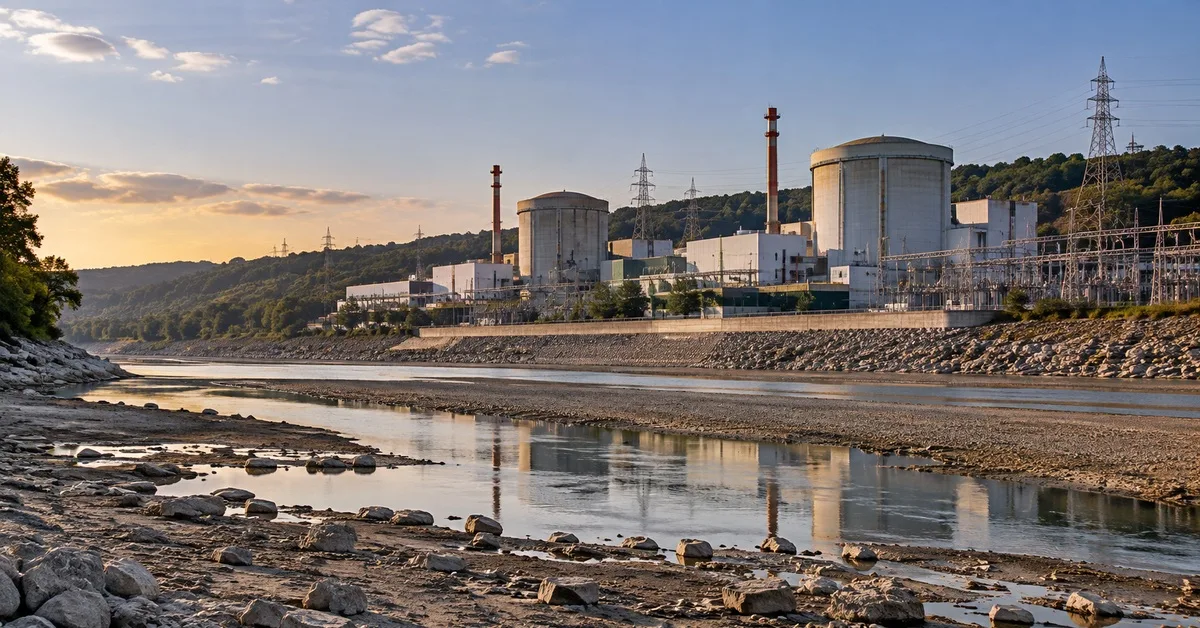
Romania is likely to remain without electricity from its only nuclear power plant for longer than previously expected. New reports on 9 September 2026 confirmed that both reactors at the Cernavodă nuclear station remain shut because of exceptionally low water levels in the Danube. A restart before the middle of September is now considered unlikely.
Cernavodă is a major part of Romania’s electricity system. Its two CANDU reactors normally provide roughly 1.3 to 1.4 gigawatts of generation and account for about one fifth of the country’s electricity. Unit 1 was shut down in a controlled manner on 28 July, followed by Unit 2 on 13 August. Since then, Romania has been operating without domestic nuclear generation.
The immediate problem is severe hydrological drought. The Danube is carrying so little water near Cernavodă that conditions are insufficient for safe cooling. Authorities are dredging the river to improve water access near the plant. A restart, however, cannot be approved until river conditions rise enough and remain stable.
For the national grid, this creates an unusual stress test. Romania has relied more heavily on electricity imports during the evening peak. Officials have described a peak-hour gap of roughly 1,200 to 1,300 megawatts. At the same time, the Energy Ministry says security of supply is not currently in danger. Coal reserves, gas-fired plants, hydropower, renewable generation and cross-border imports are being used to compensate for the missing nuclear output.
The event demonstrates how modern power systems depend on several types of infrastructure at once. A nuclear plant needs fuel and functioning equipment, but it also needs reliable cooling conditions. Extreme drought can therefore remove a large block of national generation even when the reactors themselves have not suffered a conventional technical failure. This is not a nationwide blackout, but it is exactly the type of situation in which reserve capacity, imports and flexible generation become essential.
For households, the combination of heat, high demand and reduced generation is particularly important. Electricity use rises during hot weather because of air conditioning and refrigeration. Low river levels can also reduce hydropower and restrict thermal generation. When several pressures occur together, the risk of high prices, demand management or local supply restrictions increases.
This does not mean that a nationwide blackout is imminent in Romania. That would be an unsupported claim. Officials have repeatedly said the system is operating normally and supply is secure. The lesson is instead about resilience: households benefit from being able to manage several hours without the grid, prioritise essential appliances and keep lighting, communications, water and batteries ready before a warning is issued.
A simple emergency power priority list is especially useful. Refrigeration, necessary communications, medically important equipment and basic lighting should come first. Kettles, electric heaters, coffee machines and other high-wattage appliances can empty a small power station surprisingly quickly.
Cernavodă therefore shows that an energy crisis does not always begin with a dramatic technical collapse. Sometimes nature removes a central source of generation and forces the entire electricity system to operate with less reserve for weeks.
Sources: Energynomics, 9 September 2026; Power Trading News Europe, 9 September 2026; Reuters background reporting of 13 August 2026; statements from Romania’s Energy Ministry on 8 September 2026.
Latest updates
General
10.09.2026
Romania without nuclear power: Cernavodă stays offline as Danube drought persists
Both Cernavodă reactors remain offline because of exceptionally low Danube levels. Romania is covering roughly 1.3 to 1.4 GW of missing nuclear output with imports and other generation.