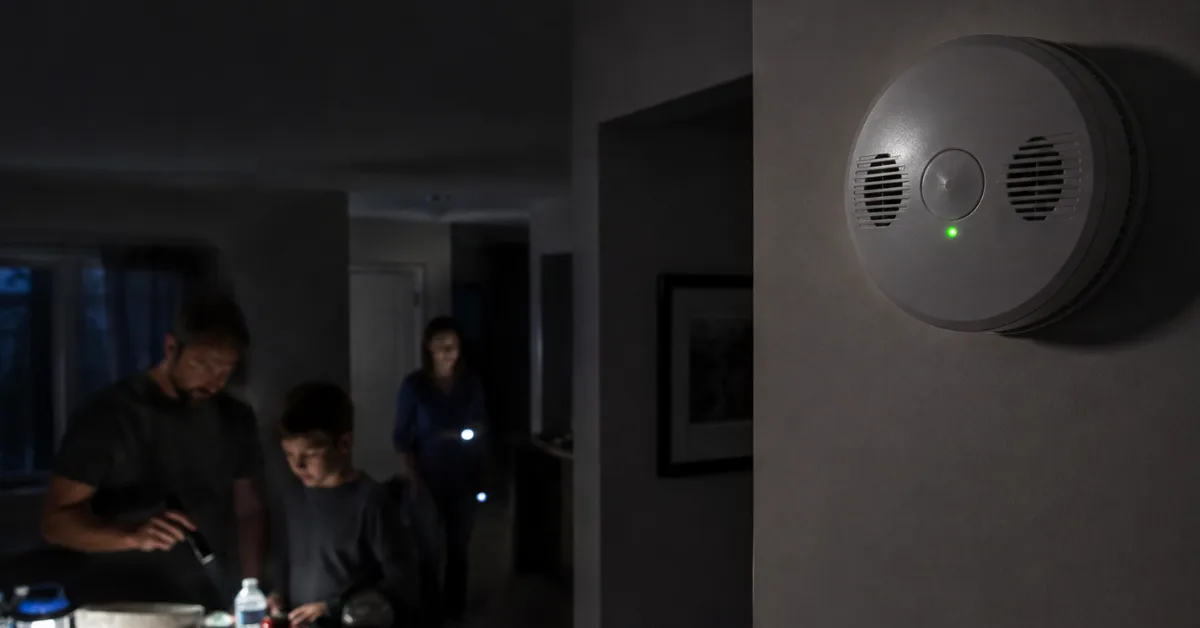
During a blackout, many people think first about torches, power banks and food. One safety system is easily forgotten: smoke alarms and carbon monoxide alarms must still work when the mains supply is dead. Their importance can actually increase during a prolonged outage because people are more likely to improvise with candles, camping stoves, fuel-burning heaters, fireplaces or generators.
Smoke alarms and carbon monoxide alarms have different jobs. A smoke alarm warns of a developing fire. A CO alarm detects carbon monoxide, a colourless and odourless gas that can be produced by incomplete combustion. You cannot reliably see or smell CO. A smoke alarm therefore does not replace a CO alarm, and a CO alarm does not replace a smoke alarm.
First check how your existing alarms are powered. Some units run entirely on batteries, while others are hard-wired to the building's electrical system and have a backup battery. During a blackout, that backup matters only if it is actually present and working. A mains-powered alarm without a functioning backup battery may lose its protection when electricity fails.
Test smoke and CO alarms regularly using the intended test button and follow the manufacturer's maintenance and replacement intervals. The NFPA recommends regular testing of smoke alarms and replacing them at the end of their intended service life; for many smoke alarms that is around ten years. CO alarms also have a limited service life, which varies by model. Write the replacement date on the unit or keep it in your emergency records.
CO alarms become especially important when fuel-burning equipment is involved. Generators must never be operated inside a home, basement or garage, even with doors open. The CDC recommends operating portable generators outdoors and more than 20 feet, roughly six metres, from windows, doors and vents. Charcoal grills and portable camping stoves also do not belong indoors. A CO alarm is an additional layer of protection, never permission to use combustion equipment inside.
Plan alarm coverage around sleeping areas as well. People cannot reliably detect carbon monoxide themselves, and someone who is asleep can be poisoned before noticing typical symptoms. Exact alarm locations depend on the device, the building and local regulations. Follow the manufacturer's instructions and local fire-safety rules instead of improvising placement.
If a CO alarm activates, do not dismiss it as a technical fault. Leave the potentially affected area, move other people and pets outdoors or to a safe location, and contact the appropriate emergency services. Do not return until the cause has been investigated and the area has been declared safe. Medical attention is particularly important if anyone develops headache, dizziness, nausea, weakness, chest pain or confusion.
The same principle applies to a smoke alarm: safety first, investigation second. Leave the building if there may be a fire and do not go back for appliances, documents or supplies. Never remove an alarm battery simply because the unit is making an annoying chirp during an outage. A regular single chirp can indicate a low battery or end-of-life condition and should be handled according to the manufacturer's instructions.
Add alarms to your blackout checklist alongside torches and spare batteries. Which alarms are installed? Which have battery backup? When were they last tested? When must they be replaced? Working smoke and CO protection requires little attention, but it can become decisive on the very night the power grid fails and unusual heating, cooking or backup-power methods suddenly come into use.
Sources and further guidance: Centers for Disease Control and Prevention (CDC) – What to Do to Protect Yourself During a Power Outage and Carbon Monoxide Poisoning Basics; National Fire Protection Association (NFPA) – Smoke Alarms and Carbon Monoxide Safety.
Guides
General
12.08.2026
Silent guards in a blackout: smoke and CO alarms must keep working
During an outage, candles, stoves and generators can increase fire and CO risks. Check that smoke and carbon monoxide alarms remain reliable without mains power.