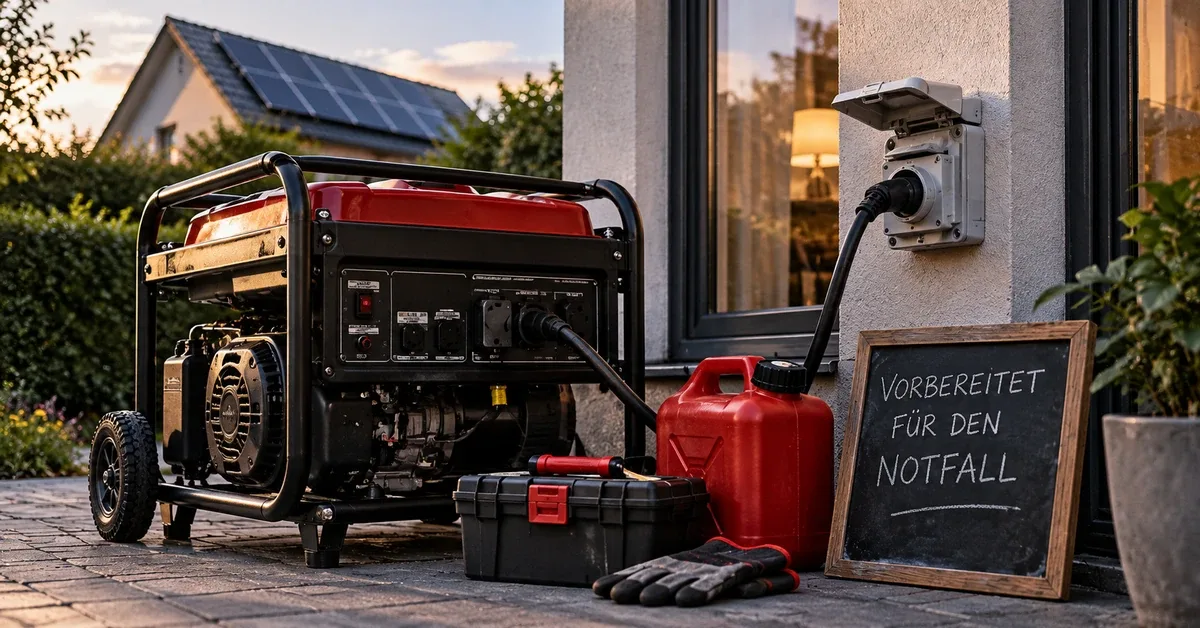
A portable generator can be extremely useful during a longer power cut, but if it is used incorrectly it becomes a hazard itself. Anyone who owns one, or plans to buy one, should not wait for a blackout to decide where it will stand, how it will be connected and which appliances it will supply. A safe plan begins well before the first emergency start.
The most important issue is location. Combustion engines produce carbon monoxide, a colourless and odourless gas that can become fatal very quickly. Petrol, diesel and gas generators must therefore never be operated inside living areas, basements, garages, poorly ventilated carports or directly beside open windows and doors. They belong outdoors with adequate distance from buildings. The manufacturer’s instructions for minimum clearances, weather protection and ventilation must always be followed.
The electrical connection is just as important. A generator must never be back-fed into a home through an improvised cable and an ordinary wall socket. Back-feeding can energise wiring that utility workers believe to be isolated. It can also damage appliances, cause fire and create dangerous voltages when public power returns. Anyone who wants to supply fixed household circuits needs a professionally installed inlet and transfer arrangement that reliably separates the property from the public grid. Design and installation belong to a qualified electrician.
Before an emergency, decide which loads are genuinely necessary. A refrigerator, freezer, a few lights, communication equipment or an essential pump normally take priority over an electric cooker, space heating or other high-power appliances. The combined demand must remain within the generator’s continuous rating. Motors and compressors can also require substantially more power for a short time when starting than during normal operation.
Fuel needs its own plan. Use approved containers, observe legal storage limits and local fire rules, and never store fuel in living areas. Switch the generator off and allow it to cool before refuelling. Fuel spilled onto a hot engine can ignite. A suitable fire extinguisher or other appropriate firefighting means should be accessible, but not stored immediately beside the generator.
A test run every few months is sensible. Check starting, cables, protective devices and the appliances you intend to power. The test also reveals whether extension leads are adequately rated and free from damage. It should be carried out under the same safe conditions that would apply during an outage. Maintenance intervals, oil level and the manufacturer’s instructions belong on a simple checklist.
The return of grid electricity also needs a clear procedure. Before switching back to public supply, the generator and household installation must be separated or transferred exactly as intended by the installed changeover equipment. This is not a place for improvisation.
A generator is not an automatic blackout solution. Properly prepared, it can keep important equipment running for hours at a time. Without a safe location, professional connection and a clear load plan, however, it creates new risks. Good preparedness therefore means not merely owning a generator, but knowing how to operate it safely before an emergency.
Guides
General
20.09.2026
How to operate a portable generator safely during a blackout
A generator can keep essential equipment running, but only with a safe location, proper grid isolation, sensible load planning and safe fuel handling.