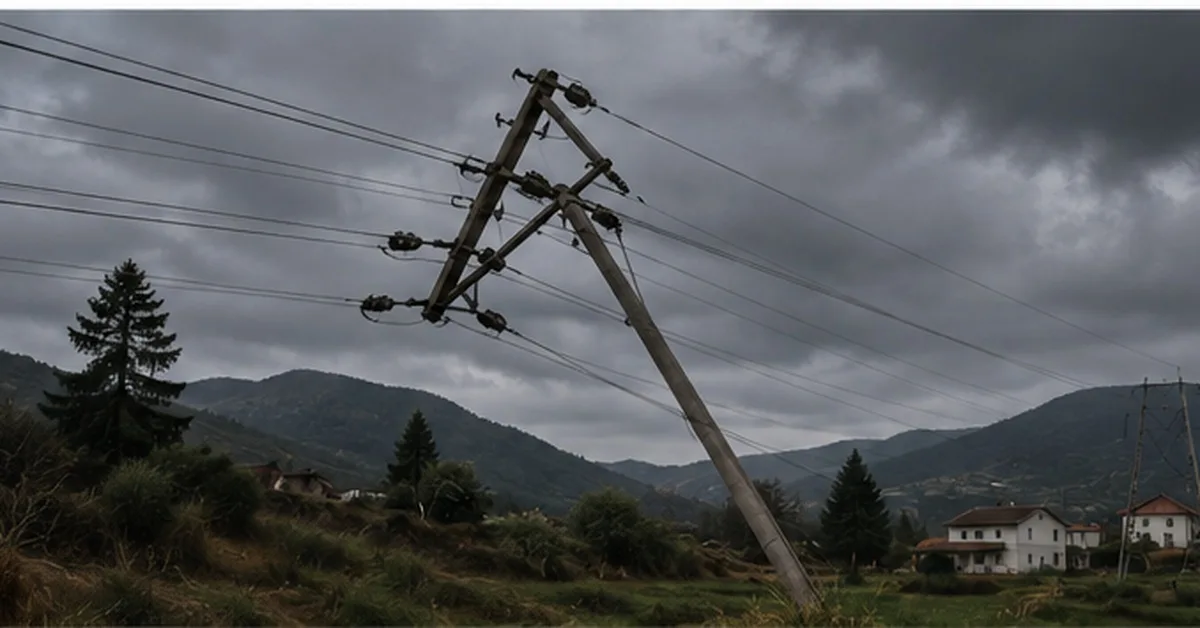
Nine days after the severe storm of 22 August 2026, electricity had still not been restored everywhere in Lithuania. On Monday evening, 31 August, public broadcaster LRT reported that more than 10,000 active electricity users remained without power. Earlier that morning, distribution operator ESO had counted around 17,000 properties without supply, although the company said roughly 10,000 of those were active electricity consumers. More than 268,000 customers were affected when the storm initially struck.
The most important new development is a decision by Lithuania’s National Energy Regulatory Council, VERT. At an extraordinary meeting it formally classified the storm as an accident affecting energy facilities. That classification clears an important legal path for compensation to customers whose electricity supply was interrupted for more than 72 hours. VERT said the scale of the damage was exceptional and also opened an investigation into ESO’s preparedness and its actions during the emergency.
Repairs are taking much longer than first expected. ESO had initially forecast an earlier full restoration, but now says all remaining faults should be cleared by 3 September. The company’s chief executive explained that crews were discovering damage that was more extensive and technically difficult than the first inspections suggested. In some areas, infrastructure cannot simply be repaired and effectively has to be rebuilt.
Lithuania has also opened state emergency reserves to provide additional generators to heavily affected areas while permanent repairs continue. ESO had already deployed or distributed several hundred generators. One major complication is that in many rural locations electricity powers private or local water pumps. A long power outage can therefore become a water-supply problem at the same time.
Private customers may also qualify for a simplified process covering direct losses in addition to statutory compensation. Under the published rules, eligible costs can include spoiled food, generator purchase or rental, generator fuel and necessary temporary accommodation. LRT reports that the simplified direct-loss scheme has a maximum payment of €220. Exact eligibility, however, depends on the individual circumstances and the evidence provided.
That detail makes the Lithuanian case especially relevant for household blackout preparedness. A long outage is not only about storing water, light and backup energy. Anyone who later wants reimbursement for losses or necessary expenses may need to show when the outage began, how long it lasted, what was purchased and what property or food was damaged. Receipts, photographs and a simple timeline can therefore become nearly as useful as a power bank or flashlight.
This was not a sudden nationwide collapse of Lithuania’s electricity grid. Instead, it illustrates the difficult second phase of an extreme weather event: most customers have been reconnected, but thousands are still waiting, restoration deadlines move, and temporary generators have to bridge the gap for days. That long tail of an outage is often underestimated in personal preparedness.
Households elsewhere should not assume Lithuanian compensation rules apply to them. The practical lesson is broader: know the rules where you live before an emergency, preserve evidence while the event is still unfolding, and keep essential records available offline if internet access later becomes unreliable.
Sources: VERT, ESO and LRT, reports dated 31 August 2026, plus current ESO guidance on restoration times and compensation.
Latest updates
General
01.09.2026
Lithuania: more than 10,000 still without power as regulator clears way for compensation
Nine days after the severe 22 August storm, more than 10,000 active customers in Lithuania were still without electricity on 31 August. VERT has now officially classified the event as an energy-system accident.