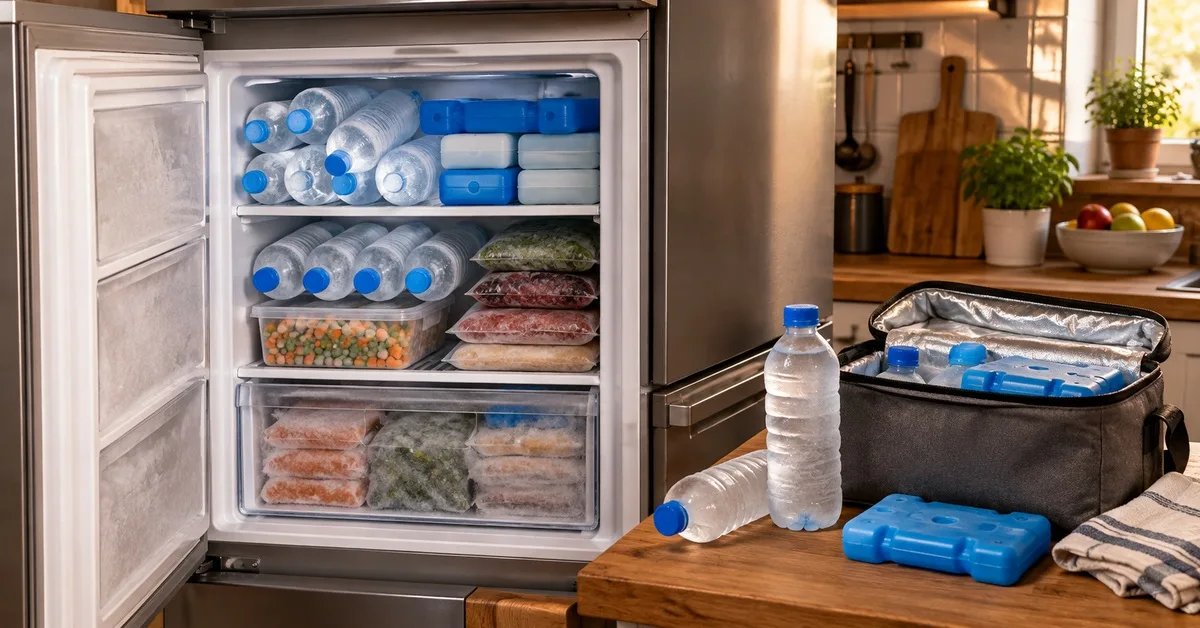
During a power outage, every hour matters inside a refrigerator. Once the compressor stops, the temperature begins to rise. Even without a large backup power system, you can prepare a simple reserve: frozen water bottles and ice packs in the freezer. They store cold energy and release it slowly after the electricity fails, helping the interior stay cooler for longer.
You do not need special equipment. Use sturdy plastic bottles with screw caps or suitable freezer containers. Fill them only about three quarters full. Water expands when it freezes, so a completely full bottle can deform or burst. Glass bottles are unsuitable because pressure may crack them. Place the containers upright in the freezer and allow them to freeze completely.
The number of bottles depends on freezer size. Make sure air can still circulate and food is not crushed. A well-filled freezer generally stays cold longer than an almost empty one. Frozen bottles fill unused space and act as additional thermal mass. If storage space is needed, individual bottles can be removed.
When the power fails, open the refrigerator and freezer as rarely as possible. Every opening lets warm room air enter. Decide beforehand which foods you are most likely to need first. Particularly sensitive products can be moved into an insulated cooler bag with one or two frozen bottles. This avoids repeatedly opening the main refrigerator.
Do not immediately move every cold pack into the refrigerator. While the freezer remains cold, the frozen containers help stabilize it. If the refrigerator begins warming noticeably, move one or two frozen bottles onto a stable shelf or lower section. Put them in a tray if condensation may form. Never block air vents or temperature sensors.
A refrigerator thermometer is very useful. Without a measured temperature, it is difficult to judge whether food is still safely cold. Do not rely only on a bottle feeling cool. Follow normal food-safety rules for perishable products. If you are uncertain about meat, fish, dairy products or other sensitive foods, discarding them is safer than risking illness.
Frozen water bottles offer a second advantage. If they thaw slowly and the water was clean and drinkable, they become a small additional water reserve. Use only food-safe, clean containers. Mark them with a date and replace the water regularly. If bottles are intended only as cold packs, label them accordingly.
Also plan what happens when electricity returns. If power comes back only briefly, allow the freezer to cool again as efficiently as possible. Do not place warm food inside. Check that doors close properly and use available grid time to recharge essential batteries and communications equipment.
This method does not replace a generator or a large power station. It works without fuel, electronics or ongoing operating costs. A few prepared bottles can increase your cold reserve and give valuable extra time before food temperatures become critical.
The key is preparing before the outage. Freezing water after the electricity has already failed is obviously impossible. Use otherwise empty freezer space as a permanent cold reserve. During a blackout, keep doors closed, monitor temperature and use the stored cold deliberately.
Guides
General
12.09.2026
Build a cold reserve: Frozen water bottles can buy extra time in a blackout
Frozen water bottles and ice packs can help keep refrigerators and freezers colder for longer during an outage, without a generator.