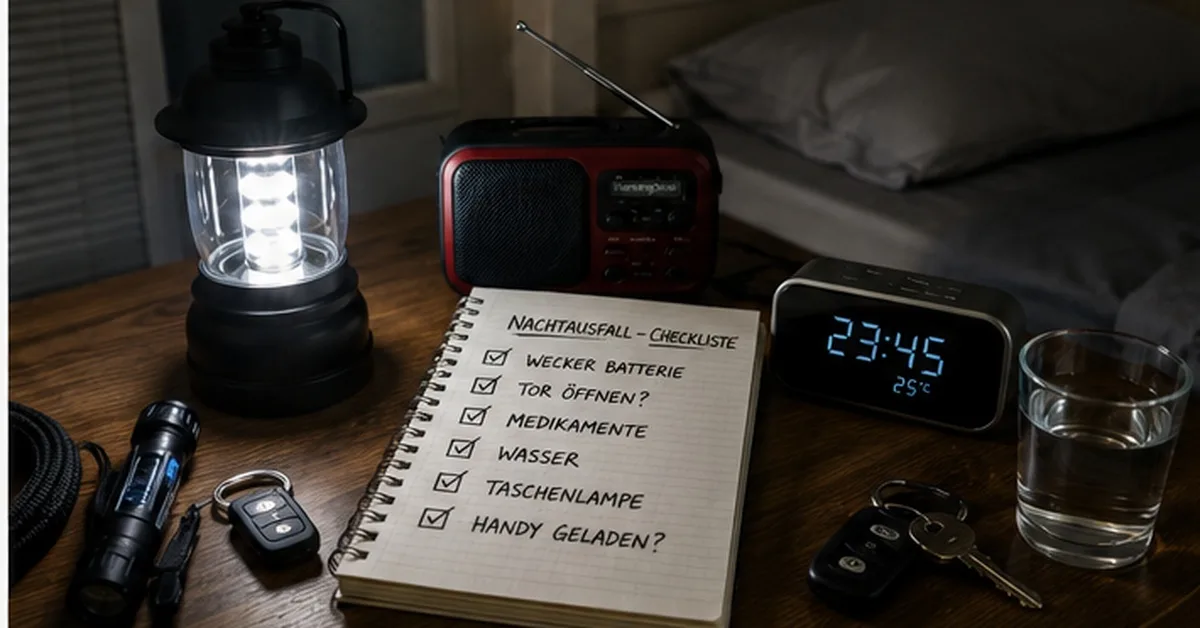
A planned power outage at night is different from an interruption in the afternoon. If electricity disappears around midnight, many people are already asleep. Problems may therefore become visible only in the morning: a mains-powered alarm clock shows the wrong time, the phone did not finish charging, an electric gate cannot open, or a medical device lost its normal power supply during the night. When an outage is announced in advance, these specific risks can be prepared for.
Start with waking up the next morning. Do not rely entirely on an alarm clock that depends on a wall socket. Use the alarm on a fully charged phone or, even better, a battery-powered alarm clock as an independent backup. Check the volume and make sure battery-saving settings will not interfere with alarms. If someone must leave early for work, an airport or an appointment, two independent wake-up methods are sensible.
Next, think about access. Electric garage doors, driveway gates, electronic door systems and lifts may not operate without grid power. Learn how to release a garage door or gate manually before the outage begins. Keep a mechanical key available and, if necessary, park a vehicle where it can leave without an electric gate. In apartment buildings, know which staircase or exit remains usable when lifts are unavailable.
Medical equipment deserves the highest priority. CPAP machines, oxygen concentrators, powered care beds, refrigerated medicines and other devices may require a proper backup supply. A normal phone power bank is often unsuitable. Use only solutions approved for the equipment and test batteries or backup systems before the shutdown. If electricity is medically essential and no safe backup exists, arrange professional support in advance rather than improvising after midnight.
For lighting, place a flashlight directly beside the bed. Walking through a dark home to search for a lamp increases the risk of falls. A small battery nightlight in a corridor or bathroom can also be useful. Candles are a poor choice for a bedroom because an open flame combined with tiredness or sleep creates an unnecessary fire hazard.
Refrigerators and freezers normally need no special equipment for an announced two-hour outage. The important step is to keep their doors closed. Take out a drink or late-night snack beforehand if you are likely to need it. That keeps cold air inside. Temperature-sensitive medicines must be stored according to their specific requirements, following manufacturer or pharmacy guidance.
Before going to bed, fully charge phones, power banks, hearing devices, flashlights and other necessary batteries. Save the utility notice as a screenshot so the start time, expected duration and contact details remain available without internet access. Keep drinking water beside the bed, especially in buildings where an electric pump could affect water pressure.
A planned overnight outage is not a reason for stress. It is a rare opportunity to test household resilience with advance warning. If waking, access, lighting, communication, refrigeration and medical needs are prepared, a short interruption can remain almost uneventful. The experience is also useful preparation for the day when the next outage arrives without any warning at all.
Guides
General
26.08.2026
Planned overnight power cut: What to prepare before going to bed
An announced overnight outage creates different problems from a daytime cut: alarms, electric gates, medical devices, lighting and refrigeration should be prepared before bed.