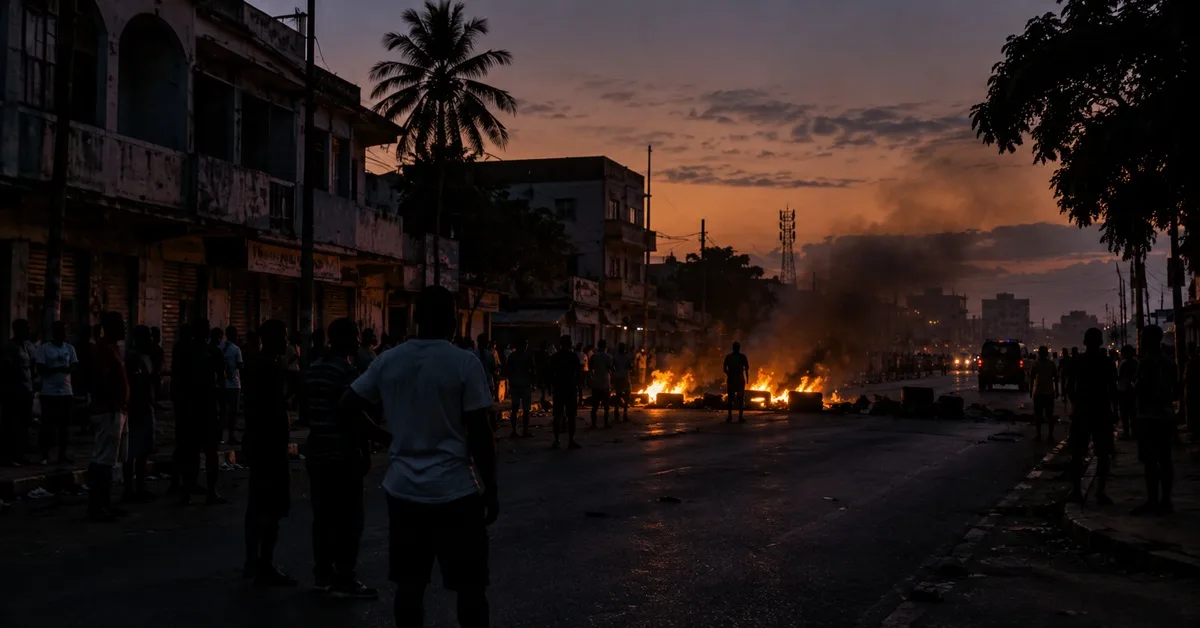
In The Gambia, a strained electricity supply has developed into a political and social crisis. During the night of 7 to 8 September 2026, people took to the streets in Banjul and several communities around the capital. The trigger was persistent electricity cuts which residents said had lasted as long as 48 hours in some areas. Reuters reported burning tyres, barricades and demonstrations at multiple locations.
In the Westfield area, police used tear gas as crowds moved toward the headquarters of the state electricity and water utility, NAWEC. Protests were also reported in Farato. At the time of the available reporting, there was no reliable official nationwide total for arrests or injuries. That distinction matters, because unverified claims circulating during a tense situation should not be presented as established fact.
The power problems did not begin this week. On 15 August, NAWEC had already warned of an unforeseen increase in electricity demand during peak periods, linking the surge mainly to high temperatures. The utility also reported a technical incident affecting a major generating unit on the import side. It said the situation required load shedding affecting several parts of the country.
President Adama Barrow responded publicly on 8 September, describing the electricity crisis as an emergency and a national security issue. During visits to NAWEC facilities in Brikama and Kotu, he announced additional generation capacity. According to his statement, an additional 24-megawatt generating machine is expected to be commissioned by the end of October. He also said a contract had been awarded for a 50-megawatt solar power plant in Soma.
The causes cannot be reduced to one simple failure. NAWEC has pointed to high demand, constrained electricity imports and technical problems. The utility’s managing director also discussed reduced regional hydropower availability and climate-related pressures. The exact contribution of each factor to the present shortage has not been publicly quantified in full.
For blackout preparedness, The Gambia is a particularly useful example because this is not one brief grid collapse. Repeated cuts lasting many hours, or even much of two days in some places, place different pressure on households. Food spoils, fans and air conditioners stop, batteries eventually run low and small businesses lose refrigerated goods. During extreme heat, electricity demand rises precisely when available supply is limited.
The events also show how quickly electricity becomes a question of public safety and trust. When people do not know when the next interruption will begin or end, frustration grows. For households, preparedness therefore has to work through repeated outages rather than a single dark hour. Drinking water, shelf-stable food, safe lighting, charged batteries, some cash, a radio and a simple charging plan belong together.
Anyone living with frequent outages should also test equipment regularly and decide which devices receive priority. A fully charged battery is of little value if the lamp is broken or the radio has not been switched on for months. A short recurring functionality check is therefore more useful than an emergency box that remains unopened for years.
Sources: Reuters, 8 September 2026; NAWEC statement of 15 August 2026; public statements and local reporting surrounding the NAWEC facility visits on 8 September 2026.
Latest updates
General
09.09.2026
The Gambia: outages lasting up to 48 hours trigger protests as government calls it an emergency
Persistent power cuts in The Gambia, which residents say have lasted up to 48 hours in some places, triggered protests. High demand, technical problems and constrained imports are straining supply.