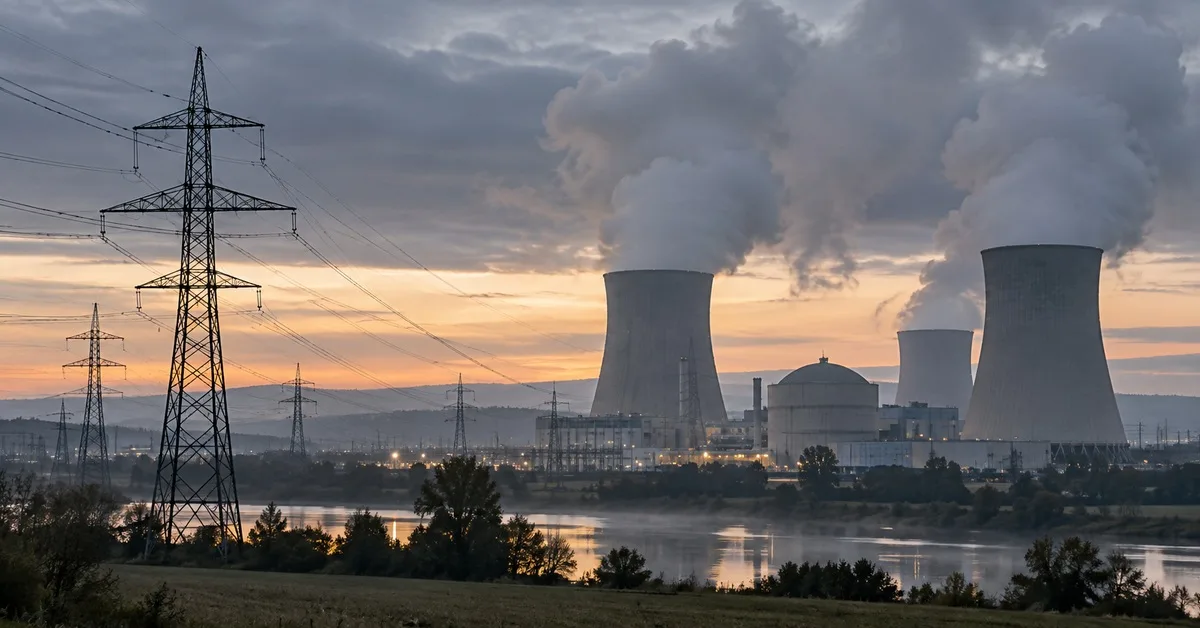
France's electricity system came under significant pressure from industrial action on September 14, 2026. According to data from state-controlled utility EDF, about 6.5 gigawatts of generating capacity was taken offline overnight. Most of the reduction came from seven nuclear reactors, while several hundred megawatts of gas-fired and hydroelectric generation were also unavailable. Reuters reported the development on September 14. The strike was expected to continue on Tuesday, meaning that further or larger reductions could occur.
The situation requires careful interpretation. No nationwide blackout was reported. A reduction of 6.5 gigawatts in available generation does not automatically mean that the same amount of electricity demand went unserved. Power systems use reserves, imports, exports and operational measures to keep supply and demand balanced. Nevertheless, the scale matters because France occupies an important position in the European electricity system.
Reuters notes that roughly 70 percent of French electricity is generated by the country's nuclear fleet. France is also an important exporter of electricity to neighboring countries. That role is particularly relevant while European power prices remain high and countries that rely more heavily on gas, including Germany, face higher generation costs. When several large French generating units reduce output at the same time, the effect can therefore extend beyond France by reducing the margin available for exports and cross-border trading.
The industrial action is linked to a dispute over benefits for workers and retirees in the French energy sector. They receive discounted electricity and gas tariffs, which unions consider part of their compensation. France's Court of Auditors recommended in July that these benefits be phased out and that annual wage increases at EDF be constrained. According to the court, the discounted-energy arrangement cost EDF more than 700 million euros in lost revenue in 2024.
For blackout preparedness, the labor dispute itself is less important than the technical lesson. An electricity system must remain stable even when several major generating units become unavailable at the same time. Reserves, interconnectors and operational intervention by grid operators exist for exactly that reason. The larger the simultaneous loss, however, the smaller the margin available to absorb another unexpected failure.
The current event is therefore not a reason for panic and it is not evidence that a Europe-wide blackout is imminent. It does show clearly that electricity security depends on more than technology, weather and fuel. Industrial action can also remove several gigawatts of generation from the market at short notice.
For households, the practical conclusion is straightforward: preparedness should not begin only after an official warning is issued. A working radio, charged phones and power banks, some cash, drinking water, shelf-stable food and an independent light source cover many consequences of a power outage lasting several hours. Anyone using emergency electrical power should also know which devices have genuine priority.
By Tuesday morning, the capacity that had been reduced overnight was initially available again, according to Reuters. Because the strike was expected to continue, the situation remained dynamic. The key is to distinguish between a major reduction in electricity generation and an actual blackout. France experienced a substantial loss of available capacity, but its electricity system continued to operate.
Latest updates
General
15.09.2026
France: power-sector strike takes 6.5 gigawatts of generation offline
A French power-sector strike temporarily reduced available generation by about 6.5 gigawatts. No nationwide blackout was reported, but the scale highlights the importance of reserves and European interconnections.