Blackout tip: plan the first 15 minutes after a power outage
When the electricity suddenly fails, many households start doing several things at once. One person looks for torches, another checks the breaker panel, someone opens the refrigerator, and several phones begin refreshing news and social media. Battery power, time and attention are quickly wasted. A pre-arranged 15-minute routine makes the first stage of an outage much calmer and more efficient.
Minutes one to three are for safety only. Check for a burning smell, smoke, unusual noises, water near electrical equipment or visibly damaged lines. If any of these warning signs are present, do not touch anything and keep your distance. If the immediate area is safe, check whether only your home is affected or whether neighbours and street lighting are also without power. This helps distinguish a problem inside the building from a wider grid outage.
Minutes four to six are for information. Open the official outage page of your electricity network operator or use its SMS service. If mobile service or internet access is already disrupted, switch to a battery-powered radio. Avoid using several phones for the same search. Let one device handle information gathering while the others remain in power-saving mode.
Minutes seven to nine are for protecting the household. Switch off or unplug sensitive and non-essential electrical devices. Leave one lamp switched on so that you immediately notice when power returns. Keep the refrigerator and freezer closed. Every unnecessary opening allows cold air to escape, raises the temperature faster and shortens the time that food can remain safely chilled.
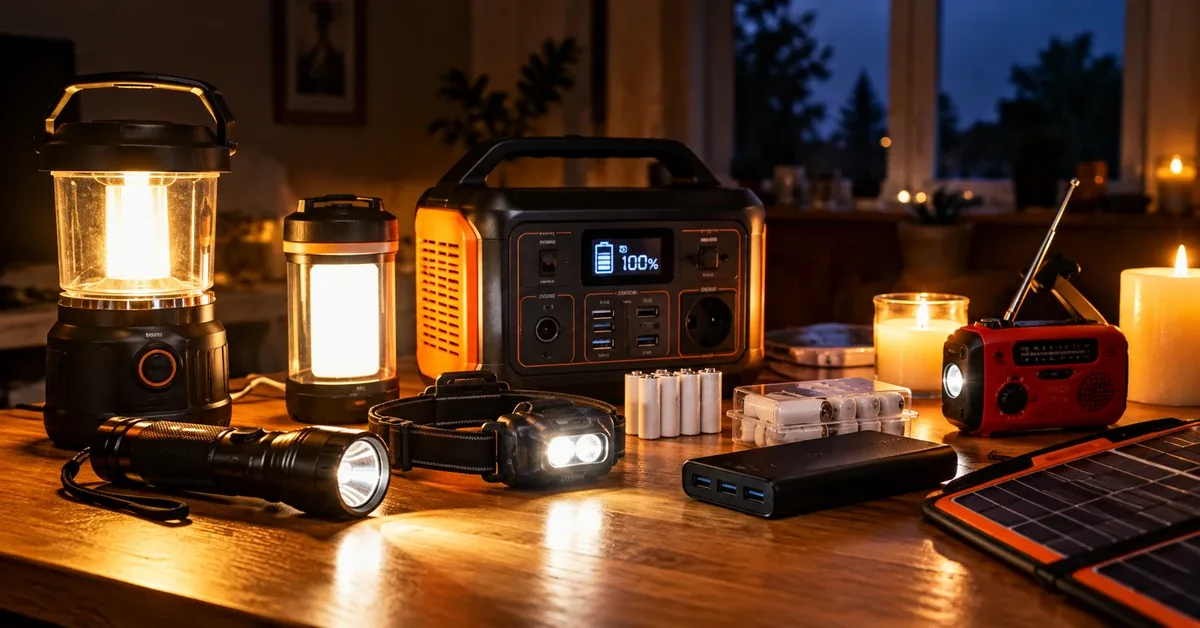
Minutes ten to twelve are for managing energy. Check the charge levels of phones, power banks, lights and, if available, a portable power station. Do not automatically connect everything for charging at once. Communication, essential medical equipment and lighting have priority. Entertainment electronics can wait. Deliberately rationing stored energy makes the same batteries last much longer.
The final three minutes are for making a decision. If the utility already gives a short estimated repair time, waiting may be enough. If the duration is unknown or several hours are expected, activate the household plan you prepared earlier: check water and food, consider medical needs, inform family members and, if necessary, prepare an alternative place to stay.
This routine should also exist on a small sheet of paper. In the dark, a printed checklist is more reliable than a file stored on a phone whose battery may be empty. Keep it near the torch, radio or breaker panel. It does not need to be complicated: safety, check the surroundings, get official information, protect devices, manage batteries, then decide on further action.
It is especially important that everyone in the household does not improvise at the same time. Decide in advance who will check information and who will look after children, older people or animals. This prevents tasks from being duplicated and reduces the risk of important steps being forgotten.
A 15-minute plan does not replace emergency supplies or technical preparation. It simply ensures that the equipment you already have is used well. During storm-related outages, it is often impossible at first to know whether power will return after twenty minutes or only after several hours. Using the first quarter of an hour in a structured way protects equipment, saves battery power and gives you a clearer picture of the situation more quickly.
Test the routine once while the electricity is working normally. Actually set a timer for 15 minutes and check whether the torch, contact details and information sources are immediately available. Small problems discovered during the exercise are much easier to fix before a real outage turns them into wasted time.
Guides
General
26.09.2026
Plan the first 15 minutes after a power outage
A fixed 15-minute routine helps households check hazards first, obtain reliable information and use battery power wisely after an outage.