A power cut does not need to last long for an electric driveway or garage gate to become a problem. When the motor loses power, the gate remains wherever it was. Someone inside may be unable to drive out; someone outside may be unable to reach the garage, courtyard or main entrance. The situation becomes especially frustrating when a manual emergency release exists but nobody in the household has ever tested how it works.
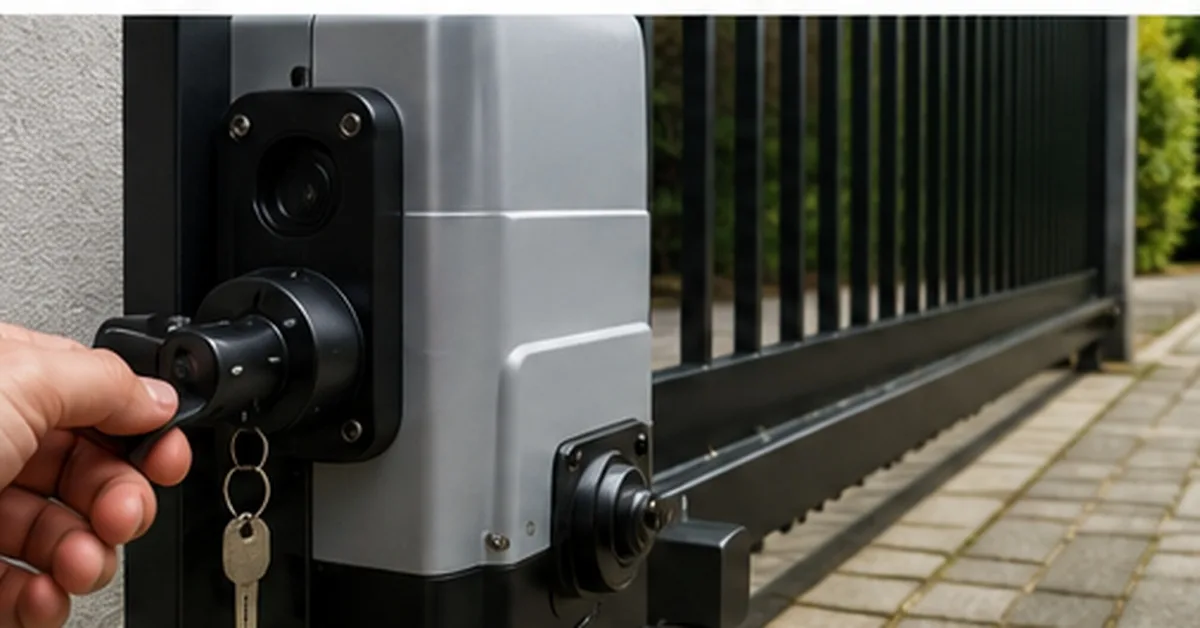
The most important preparation is therefore not buying new equipment but testing the existing system while normal electricity is available. Check the operator manual for terms such as emergency release, manual release or disengagement. Many garage doors have an internal cord or lever that separates the motor from the door. Sliding and swing gates often have a mechanical release lock on the drive unit, usually operated by a dedicated key.
Follow the manufacturer’s instructions and never force the mechanism. Switch the drive off in a controlled way if the instructions require it, then check whether the gate can be opened and closed by hand. A heavy garage door must not suddenly drop. Springs normally balance the weight; if they are damaged, manual movement can be dangerous. If the door needs excessive force, stop and have the mechanism checked professionally.
Accessibility matters just as much as the release itself. An internal pull cord is of little use if nobody can get into the garage during an outage. Garages without a second pedestrian door may need an external keyed emergency release. With driveway gates, the special release key must not be stored in a drawer that is itself behind the locked gate.
Keep the mechanical key in a fixed, secure location known to all adult household members. Label it clearly, but do not make the storage place obvious to strangers. Add a small flashlight because outages also happen at night. If the release is behind a protective cover, everyone who may need it should know how that cover opens.
The test should include the area around the gate. Can a car actually leave once the gate is moved manually? Does a bicycle, planter or parked vehicle block the swing path? Is a sliding gate so heavy that one person cannot move it safely? These details are much easier to discover during a calm practice run than when someone urgently needs to leave during a blackout.
You also need to understand how the system re-engages afterwards. Some operators reconnect automatically; others require a lever, key or specific movement. Incorrect re-engagement can damage the drive. Include that step in the test. Photograph the important actions and save the pictures offline on a phone, or keep a short written instruction near the mechanism where it can be read with a flashlight.
A battery backup or small emergency power supply for the gate motor is useful, but it should not replace the mechanical release. Batteries age, may be empty, and do nothing if the motor itself has failed. The manual option remains the essential fallback.
A ten-minute drill is often enough: find the manual, locate the key, disengage the motor, move the gate by hand, re-engage it and put everything back. Afterwards you know whether your access still works without mains electricity. That preparation can preserve mobility during a short power cut.
Guides
General
27.08.2026
Electric gate during a power cut: test the manual emergency release before you need it
Electric garage and driveway gates can become a trap during a power cut. Test the release, key and manual movement in advance so you can still get in or out without mains power.