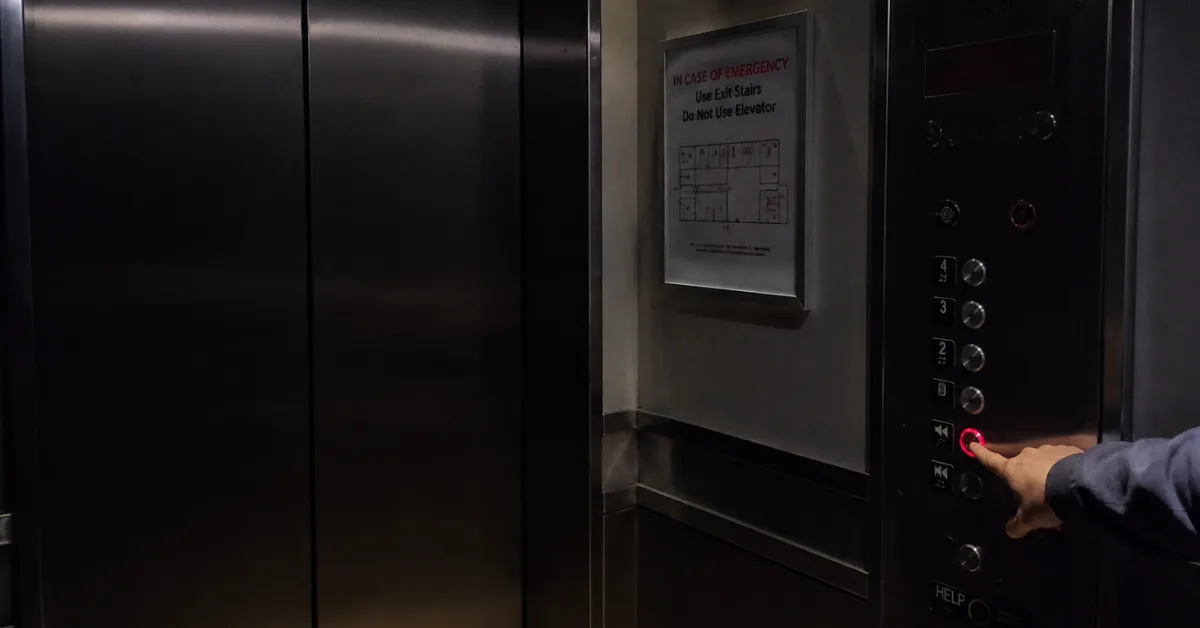
A power outage may last only a few minutes. If you are inside an elevator at that moment, however, you experience it very directly: the lighting may switch to emergency mode, the car can stop and the doors may not open. The situation becomes especially uncomfortable when the elevator stops between floors. That is exactly when it is important not to try to become your own rescuer.
If the elevator stops, first press the alarm or emergency call button and follow the instructions posted inside the car. Many systems have a two-way communication or emergency call function. If it does not work and you have mobile reception, contact the elevator operator, building management or, in an emergency, the local emergency services. State which building you are in, which elevator is affected and how many people are inside.
Never try to force the doors open or climb out between floors. Even a partially open door is not an invitation to exit. The elevator may move unexpectedly when utility power or backup power returns. Safe release should therefore be left to trained technicians or emergency responders.
Stay as calm as possible inside the car. Jumping, shaking the elevator or pushing together against the doors does not help. If several people are trapped, divide tasks: one person maintains contact through the emergency system, another checks mobile reception, and someone else looks after children, older people or anyone who is becoming unwell in the confined space. If there is an acute medical problem, say so clearly when requesting help.
The same rule applies to people outside the elevator: do not force doors open and do not attempt an improvised rescue. Inform building management, the elevator service company or emergency responders and, if possible, speak with the people inside. Simply knowing that help has been organised can make the situation much easier.
People living in high-rise buildings should consider before a blackout what the loss of the elevator would mean. People with limited mobility may need an individual plan involving relatives, neighbours or building management. This does not mean carrying someone down many floors without training. It means deciding in advance who can be contacted, where a safe place to wait is and what professional assistance can be requested.
If a power outage begins while you are still outside the elevator, use the stairs where possible. This is especially sensible if lights are already flickering, power is repeatedly cutting out for a few seconds or building systems are behaving erratically. A flashlight or headlamp should therefore be quickly accessible, not buried somewhere in the apartment.
When electricity returns, an elevator may not immediately resume normal operation. Some systems restart automatically, while others remain out of service or require inspection. If the elevator displays an error, behaves unusually, does not align properly with the floor or has been closed by the operator, do not use it and report the fault.
Blackout preparedness in an apartment building should therefore include a simple elevator plan: know the operator’s emergency number, keep a flashlight ready, know the stair routes and speak in advance with people who have difficulty leaving their home without a lift. Being stuck in an elevator is unpleasant. The situation becomes far more dangerous when impatience leads people to try to rescue themselves.
Guides
General
16.08.2026
Stuck between floors: What to do when an elevator stops during a blackout
If an elevator stops during a power outage, self-rescue is the wrong response. Learn how to call for help, wait safely and prepare your building in advance.